Upload / Capture
If you have narrow feet, you probably already know the routine. Shoes that, on paper, should fit but somehow they still feel sloppy at the heel or in the midfoot. More often than not, you end up cranking the laces tight enough to rival a medieval torture device just to keep your foot from sliding around.
And while narrow feet are not quite as common as wide feet, there’s no shortage of “best running shoes for narrow feet” lists online. So why did we create another one? We noticed that most lists rely on brand specs, fit notes from professional testers, and whether a shoe is offered in a narrow width.
This guide takes a slightly different approach.
Rather than starting from scratch, we looked at which shoes are most commonly recommended for narrow-footed runners across major running publications, including our very own 2025 guide for narrow feet from shoe expert, Hollie Sick. Then, we asked a group of WeeViews community members who self-identify as having narrow feet to share what running shoes actually worked for them over real training blocks, not just short test runs.
11 self-identified narrow-footed runners
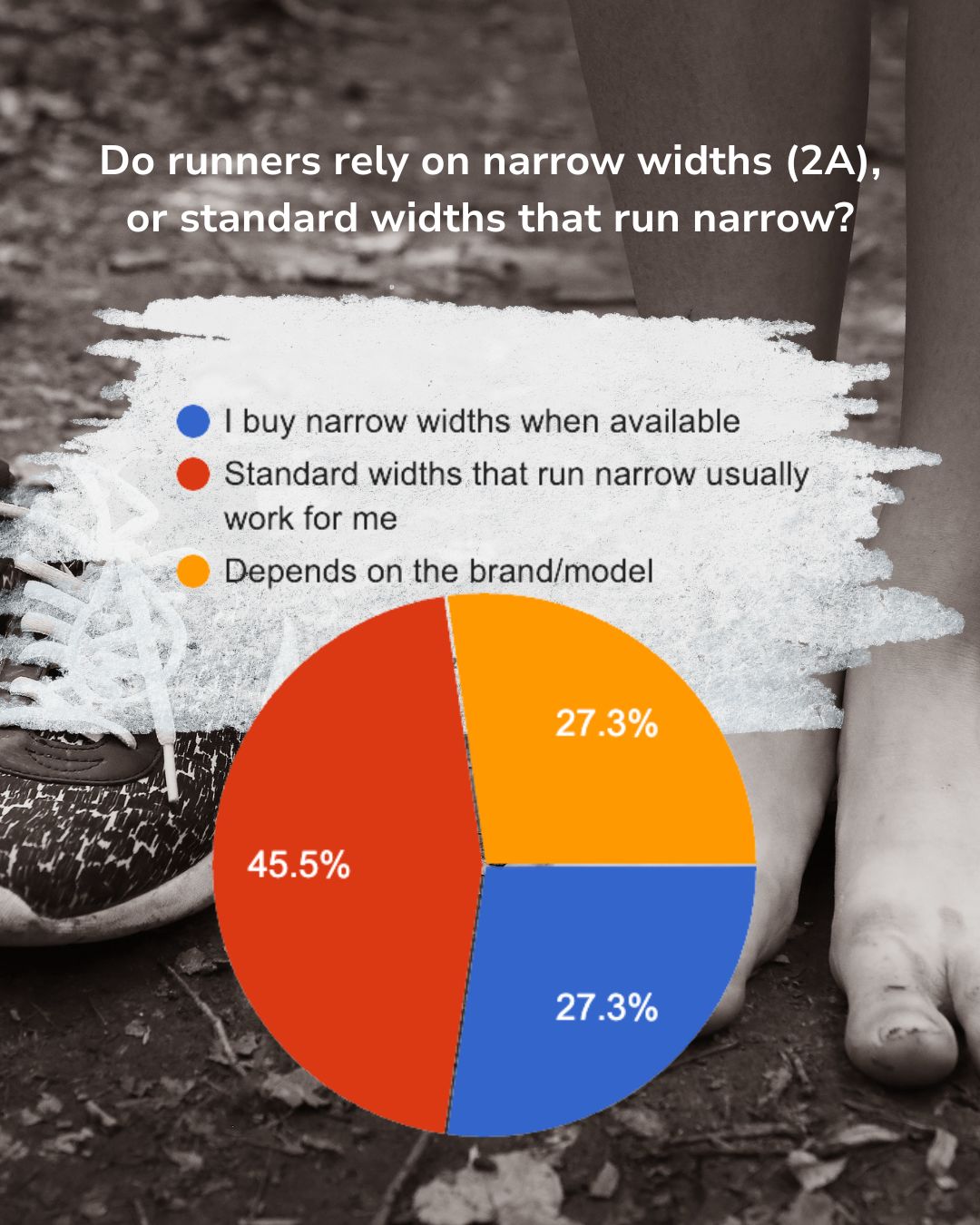
Majority wear standard width, not 2A
Heel and midfoot security ranked above toe box width
Both road and trail models evaluated over real mileage
Several mainstream “narrow-friendly” shoes failed dynamically

The goal here isn’t to crown a single “best” shoe, because let’s be real: there is not a single best shoe for every narrow-footed runner. The goal is to add context, to highlight patterns, and to help runners spend less time guessing, returning shoes, or trying to convince themselves something will break in eventually (we’ve all been there).
Related Reading: Best Wide Running Shoes (2025)
Before we talk about the best running shoes for narrow feet, it helps to clarify what “narrow” actually means in the context of running shoes.
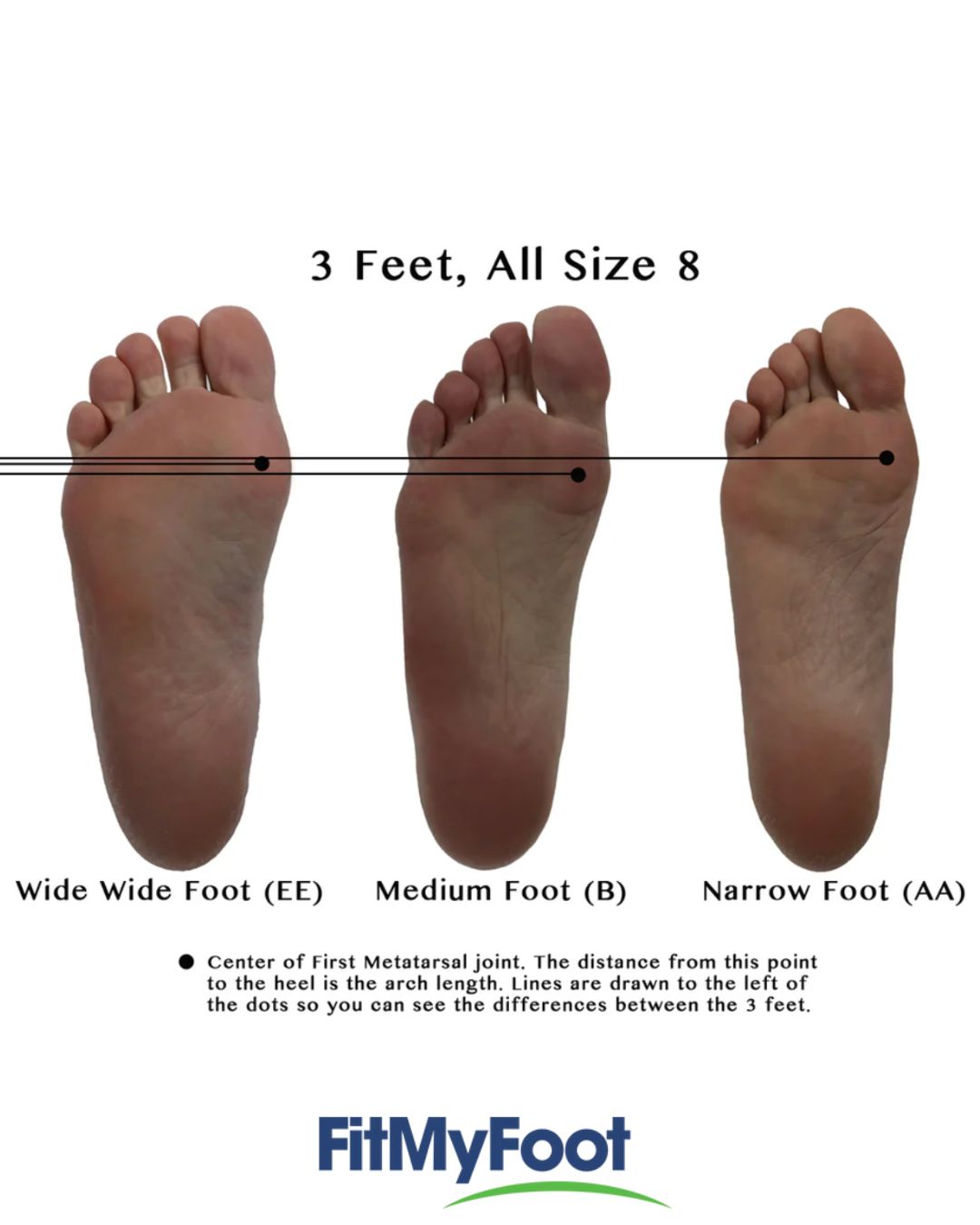
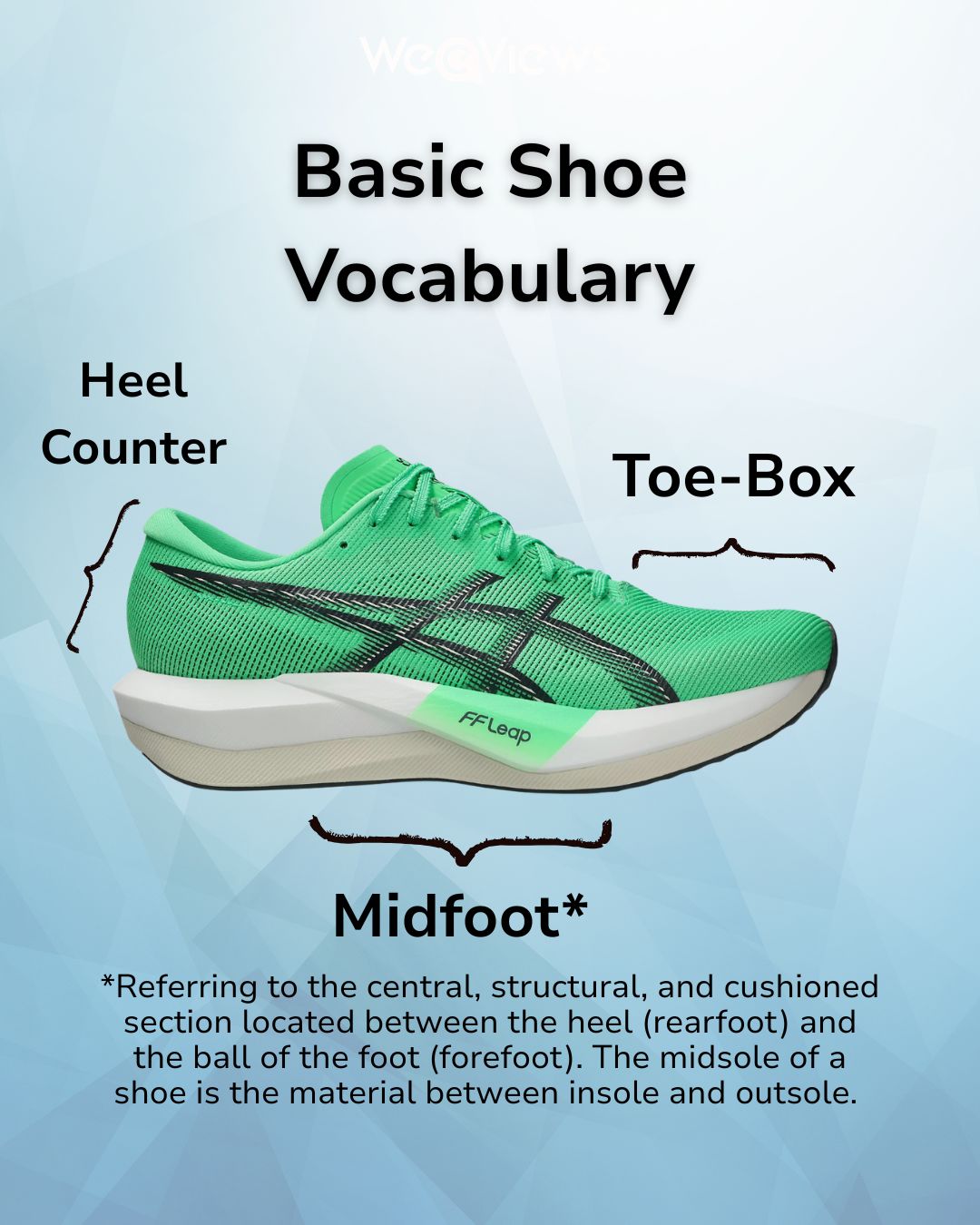
Having narrow feet doesn’t always mean your foot is dramatically different from the next runner’s. More often, it means standard-width shoes leave extra space where you don’t want it, namely in the heel and midfoot (the central, arched section of the foot).
In footwear terms, “narrow” can refer to two different things.
You might have narrow feet if you’ve experienced any of the following:
It’s also worth noting that narrow feet don’t automatically mean low volume, high arches, or lightweight builds. Two runners with the same measured width can still prefer very different shoes based on instep height, toe splay, and how they load the foot while running.
If you’re still unsure, a professional fitting can still be helpful. Just remember: a good measurement is a starting point, not a guarantee.
That’s why this guide focuses less on labels and more on how shoes actually feel in the heel, midfoot, and forefoot once real miles are involved.
With that foundation in place, let’s look at which running shoes are most commonly recommended for narrow feet across major review sites and brand guides.
Before getting into runner feedback, it helps to understand which shoes dominate narrow-foot conversations online. These models appear frequently across major review sites and brand guides like…
Runner’s World – for mainstream editorial testing and widely available models
RunToTheFinish – for coach-led, buyer-focused guidance and narrow-width availability
Solereview – for category-based analysis across daily, cushioned, racing, and trail shoes
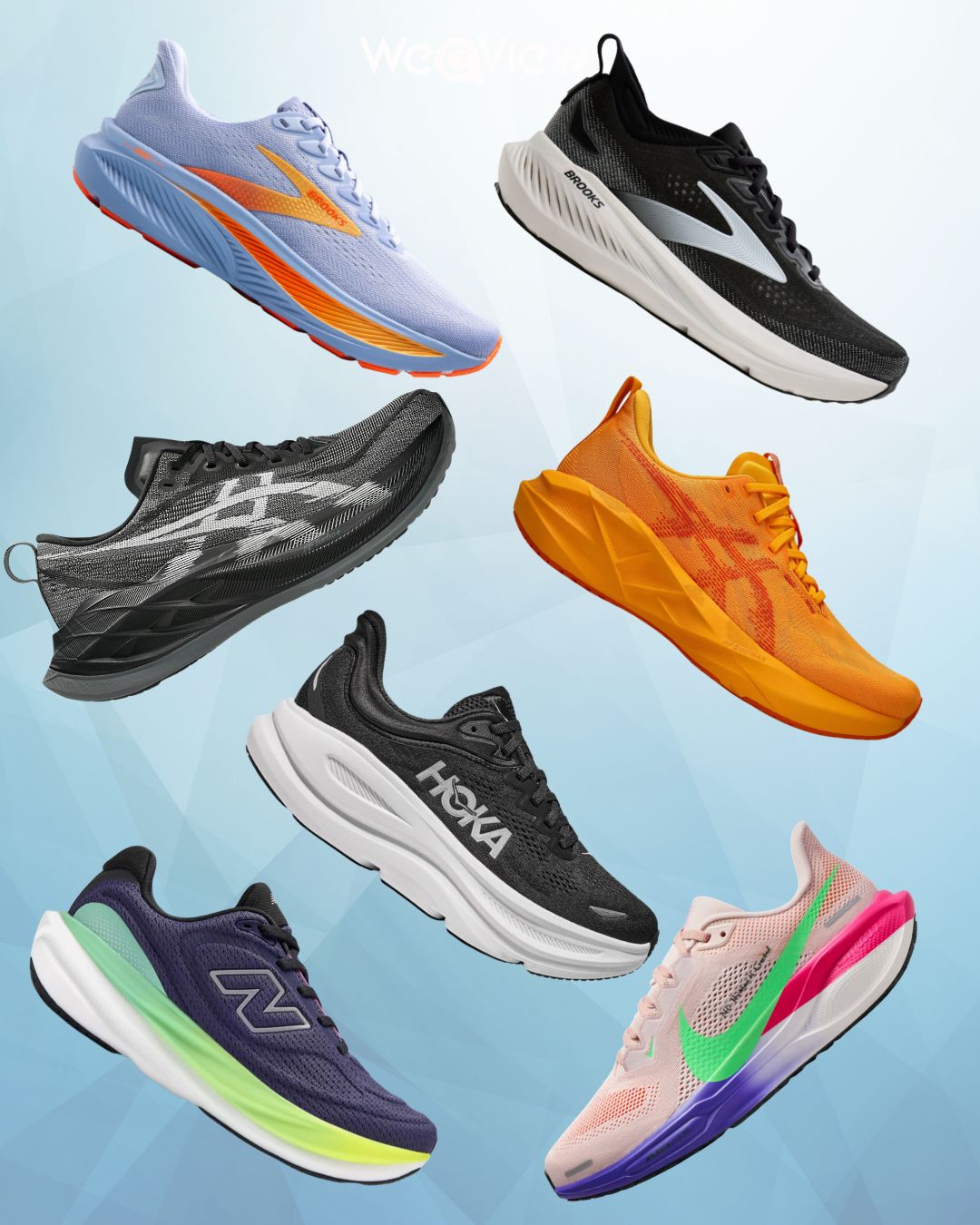
Related Reading: Best Asics Running Shoes, Best Brooks Running Shoes, Best Nike Running Shoes, Best Hoka Running Shoes, Best New Balance Running Shoes
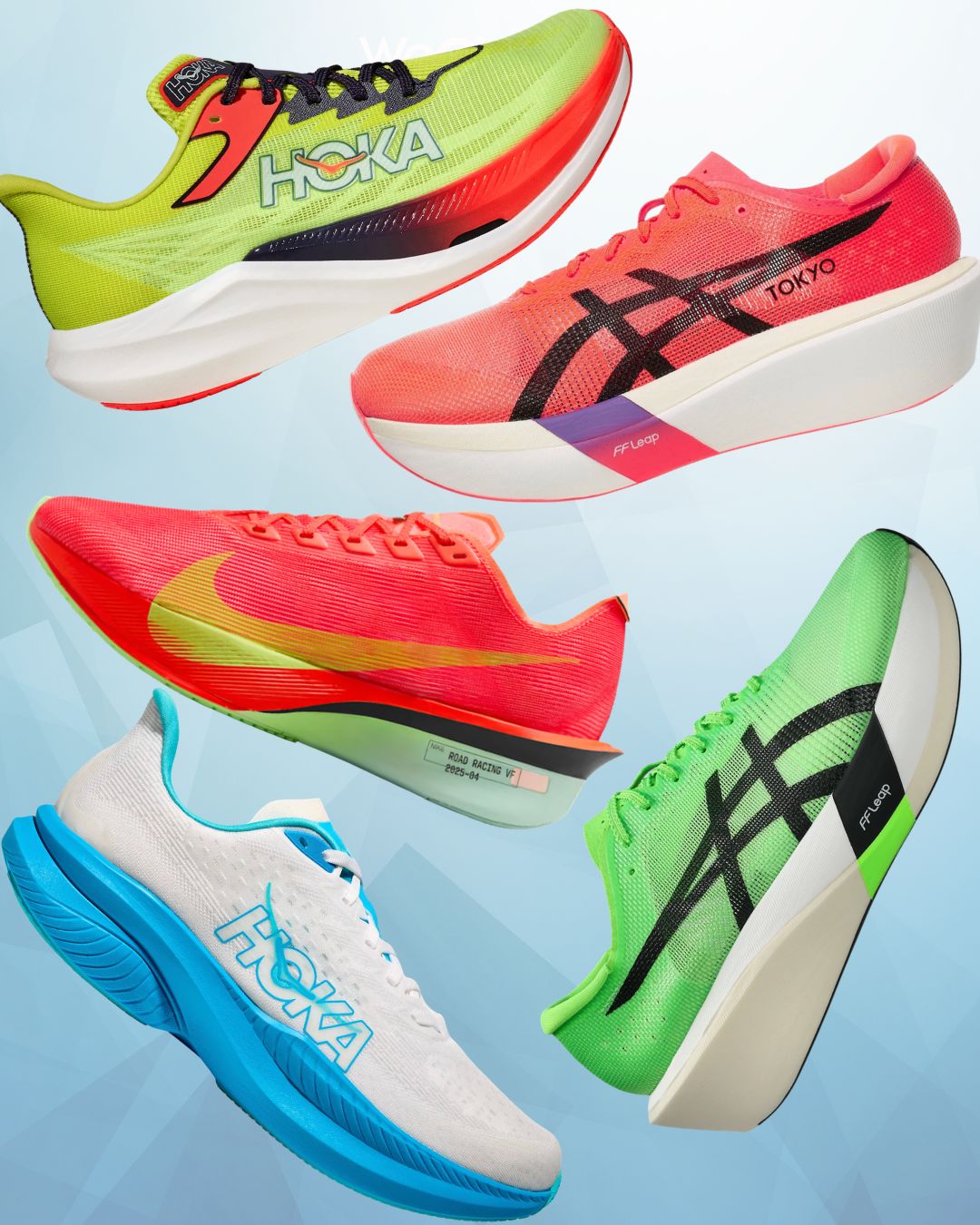
Related Reading: Best Carbon Plated Racing Shoes, Best Non-Plated Racing Shoes
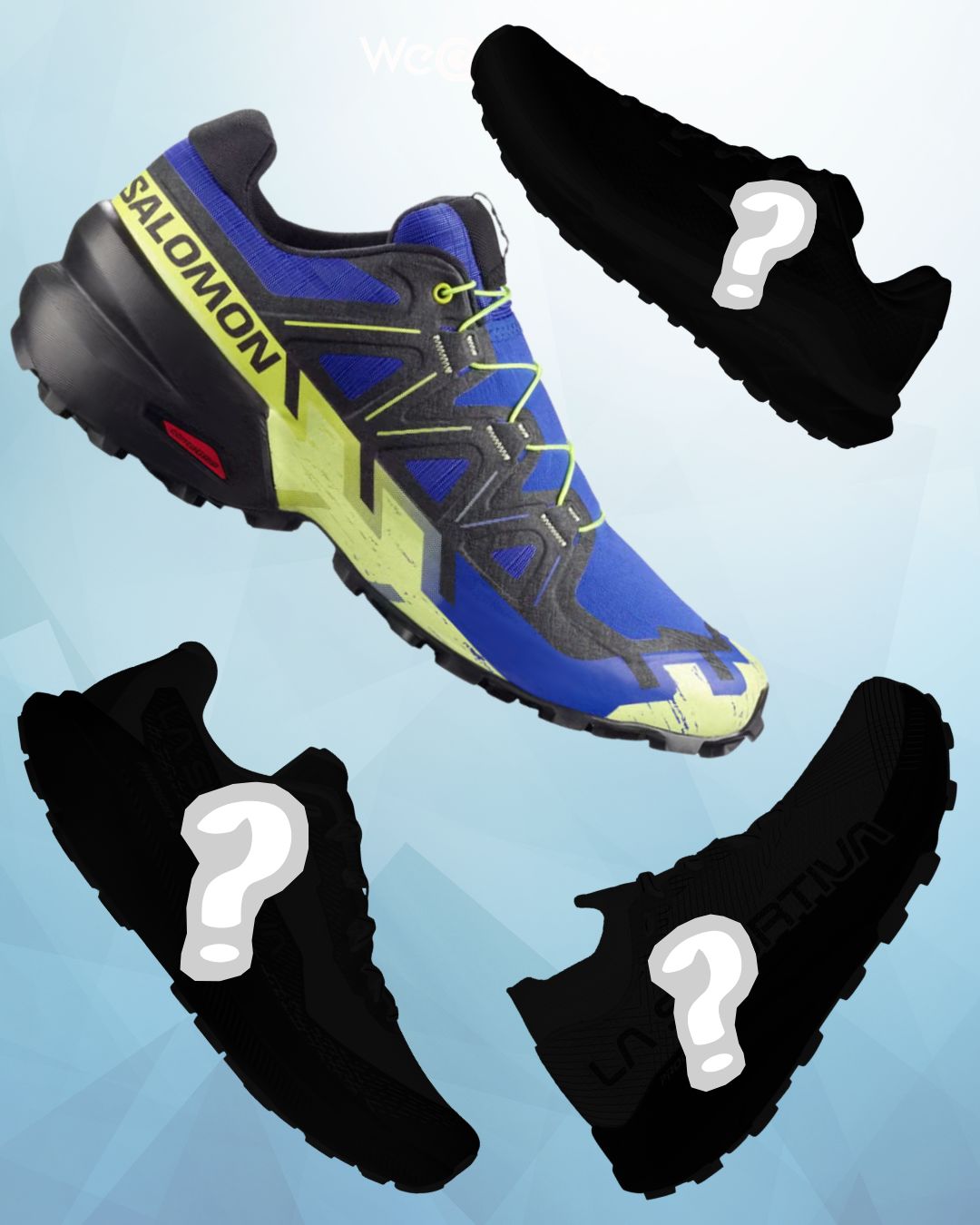
This list is just a snapshot of what narrow-footed runners are most often told to try. We asked our community about these models AND invited them to suggest other options based on firsthand experience.
That’s the industry view. Now here’s what real runners with narrow feet actually noticed after logging real mileage.
Across survey responses, one theme showed up again and again: overall width mattered less than where a shoe held the foot securely.
Runners were far more likely to talk about heel structure, midfoot containment, and how the upper wrapped the foot under load than whether a shoe was technically labeled narrow.
1. Width labels don’t always paint the full picture: even though it might make sense to seek shoes that are available in narrow widths, our survey indicates that most narrow-footed runners do not use 2A shoes, but instead reach for standard widths that are structurally able to accommodate a narrow midfoot and heel. This means that as a narrow-footed runner, you aren’t limited to shoes that only come in narrow widths; you just have to be willing to do some research to find standard widths that run on the narrow side.
2. Heel and midfoot lockdown are the real non-negotiables: many runners noted that they can often make shoes work with aggressive lacing strategies, but that will only get you so far. If you frequently experience heel slip in running shoes, you likely need stronger heel counter structure rather than simply a narrower width. Shoes with stiffer, more structured heel counters and strong midfoot wrapping technology tend to treat narrow feet better.
3. Toe-box preferences are highly individual: responders to our survey ranged from loving roomy toe-boxes to relishing tapered fits. This reinforces the idea that there is no single ideal toe-box shape for runners with narrow feet.
4. Brand reputation does not guarantee fit consistency: While certain brands were mentioned more frequently as narrow-foot-friendly, no brand was universally successful across all runners. Some brands showed up in both “worked well” and “didn’t work” responses, depending on the model and the runner’s priorities.
5. Gaps exist in mainstream advice for narrow footed runners: A few runner responses pointed to issues that are rarely addressed in typical “best of” lists, including:
Related Reading: How to Choose Running Shoes

So which of these commonly recommended shoes actually held up once narrow-footed runners put in serious mileage?
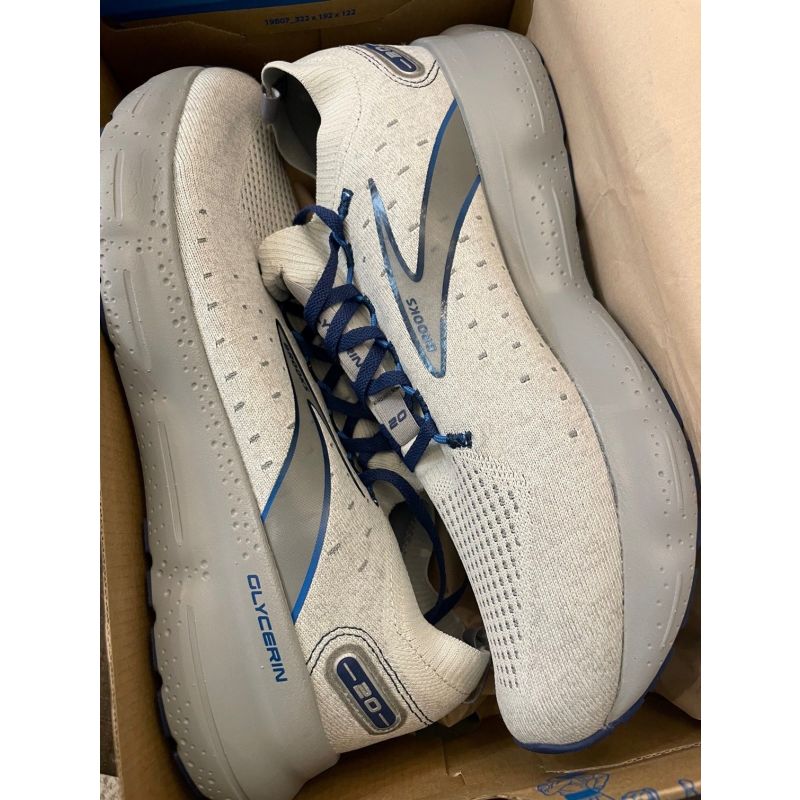
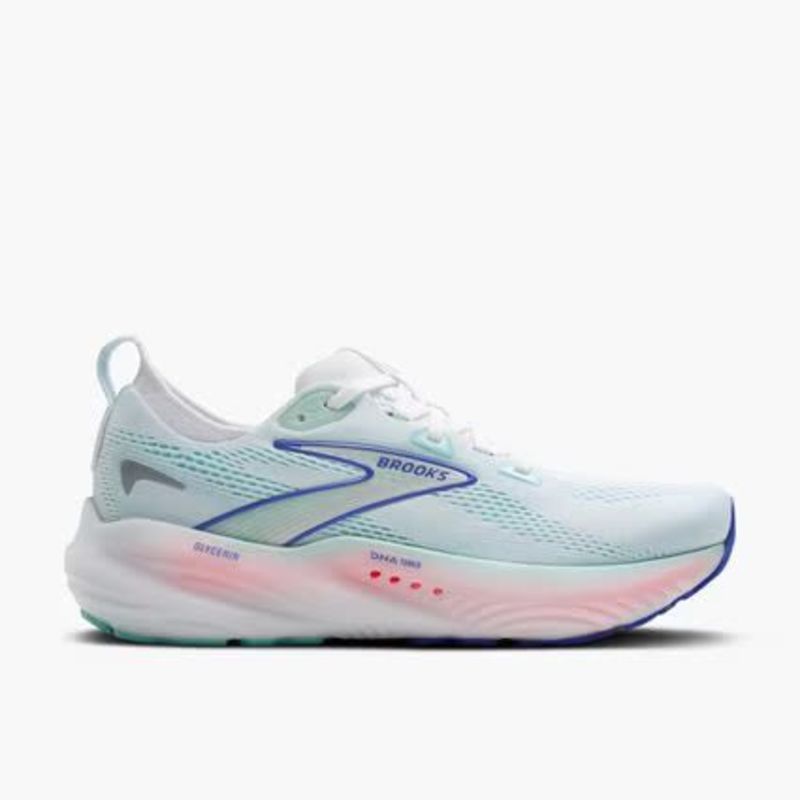
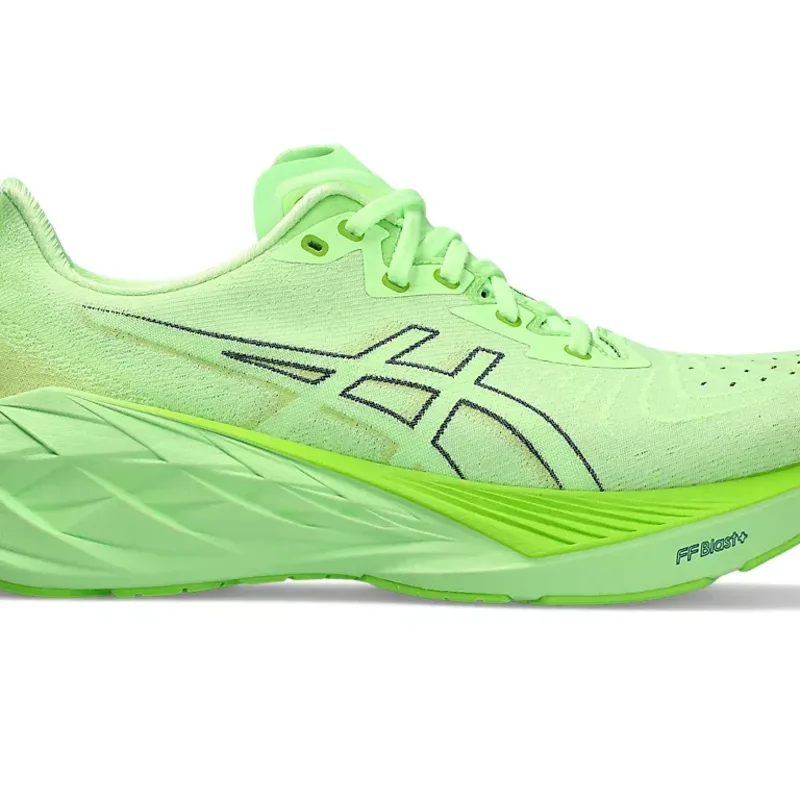
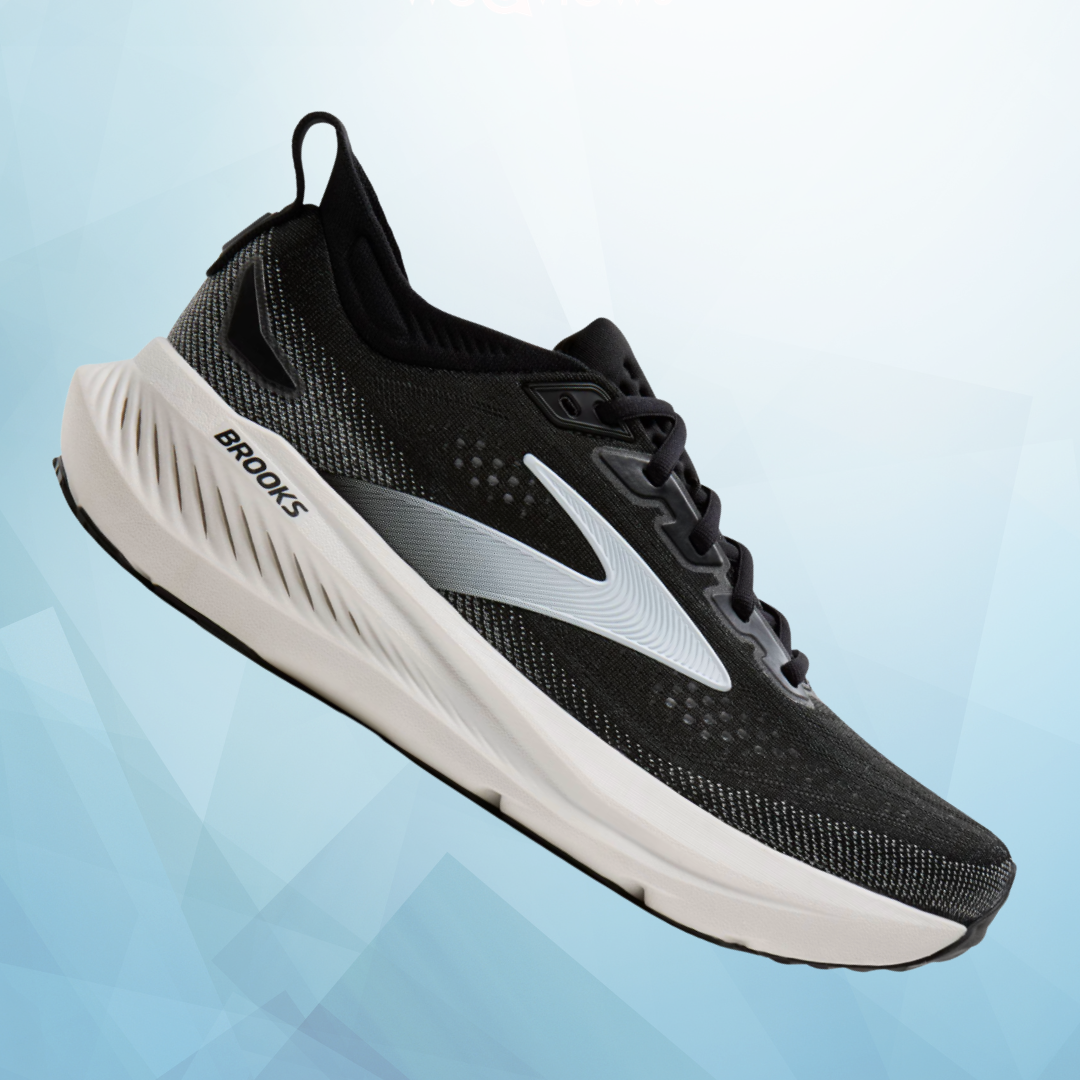
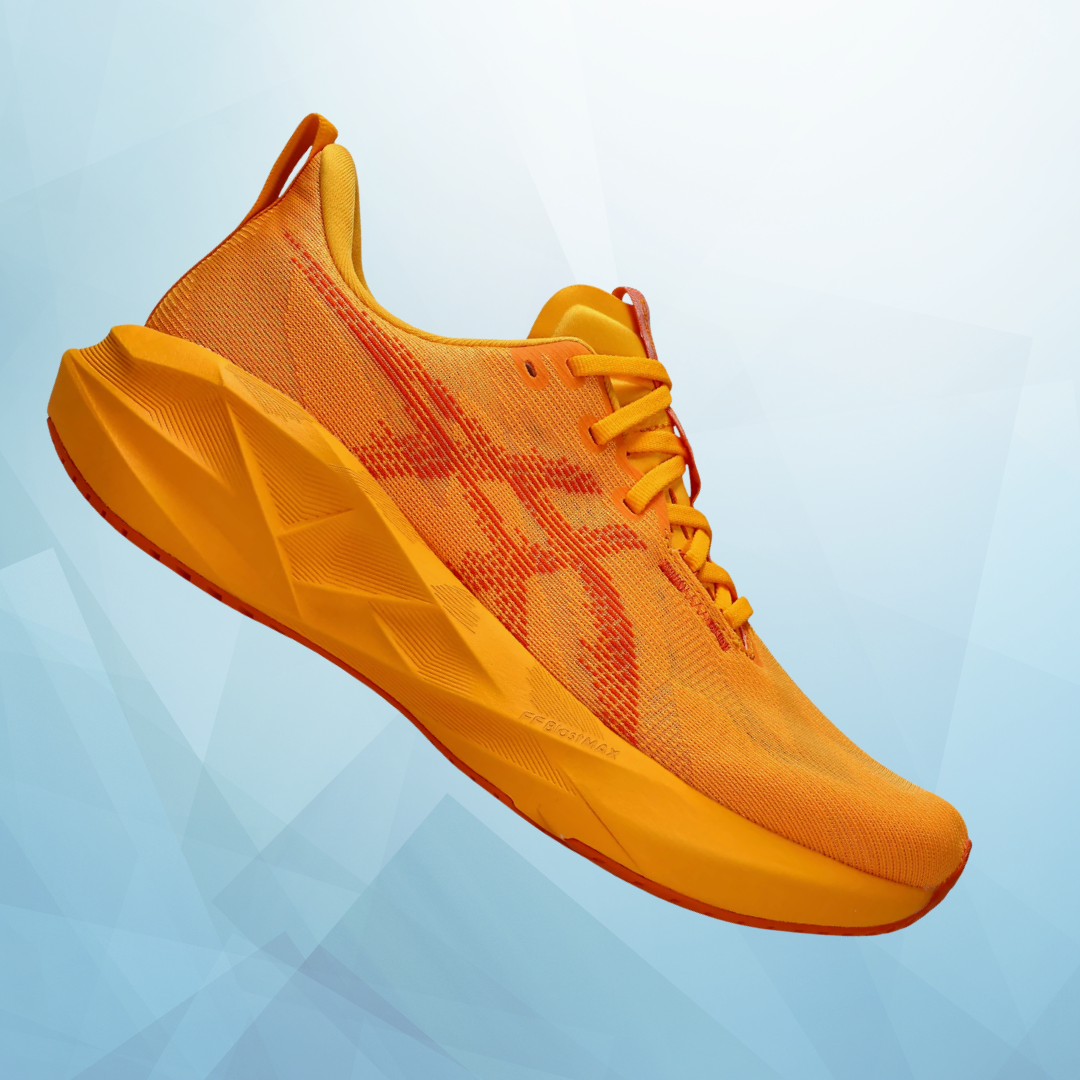
Of the most popular daily trainer models listed for narrow feet in most guides, the Brooks Glycerin and Asics Novablast stood out as the most frequently purchased by our community of narrow-footed runners.
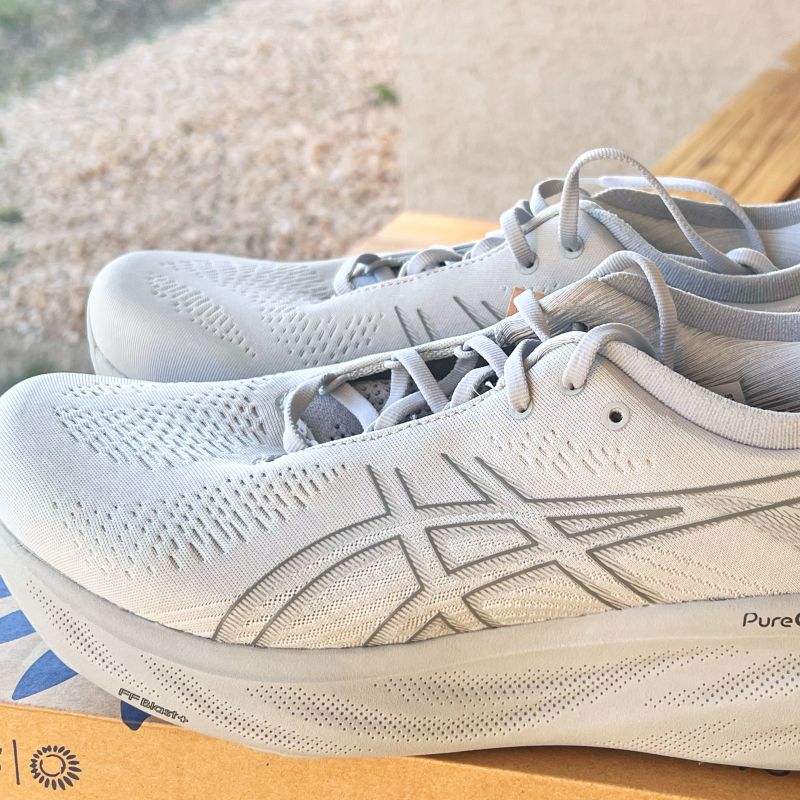
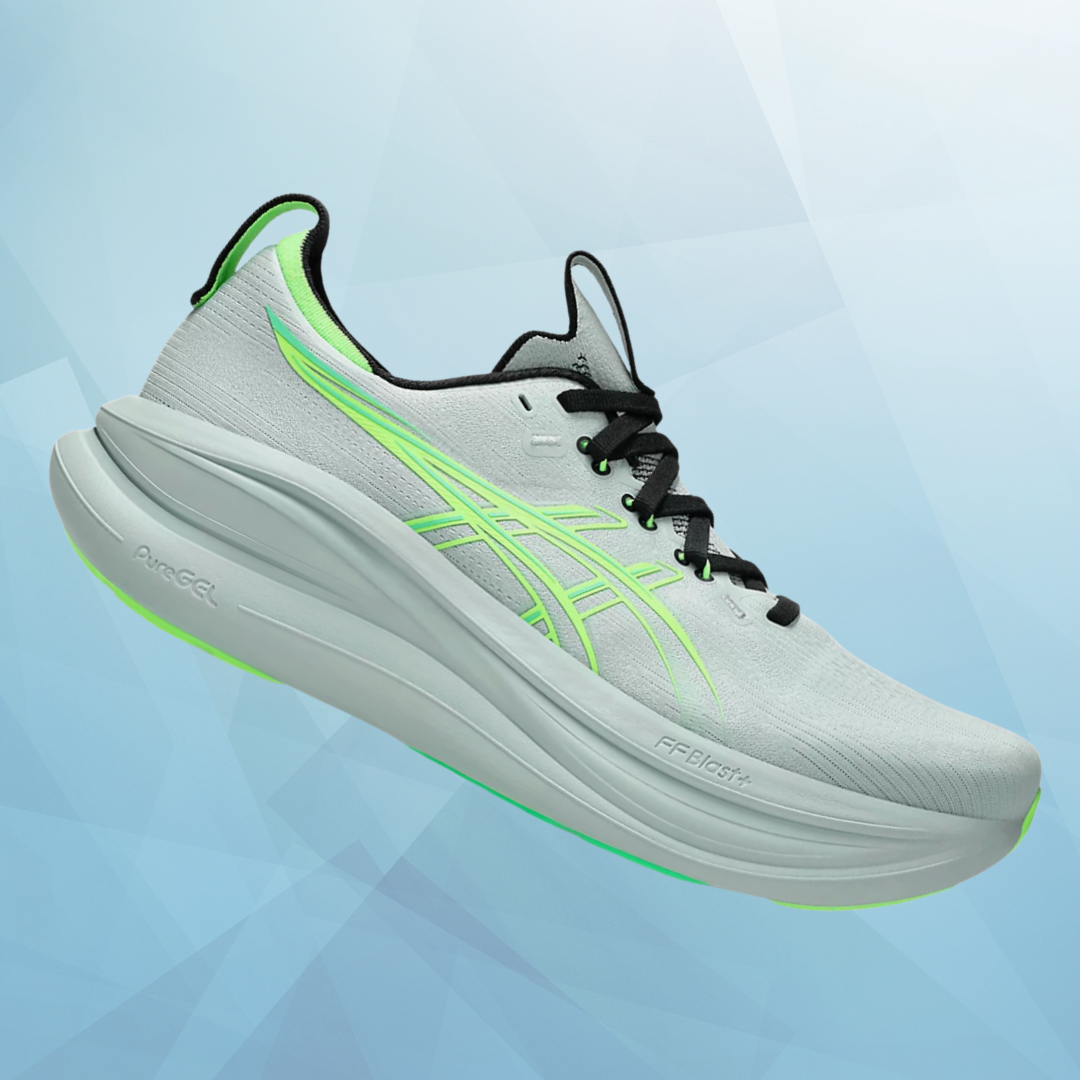
We did have a surprise daily trainer emerge from our survey...the Asics Gel Nimbus consistently earned shoutouts by narrow-footed runners. This goes to show that the mainstream lists can miss hidden gems.
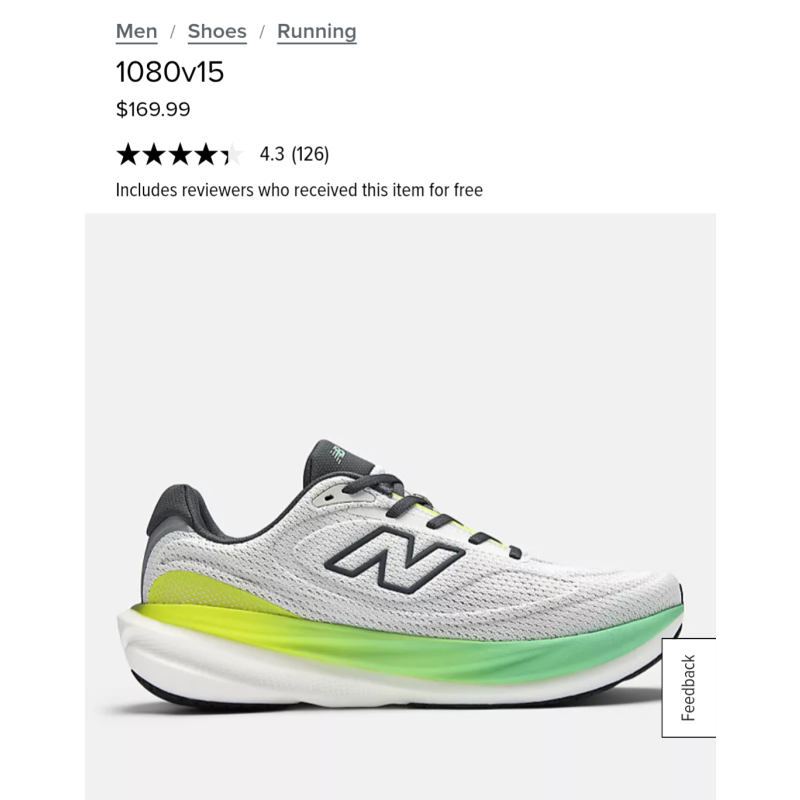
A premium, max-cushioned daily trainer designed for runners who prioritize softness and smooth transitions over long miles.
A lightweight, high-energy neutral trainer that blends soft cushioning with a bouncy, versatile ride for daily miles and uptempo efforts.
A plush, comfort-focused neutral trainer built for high mileage with a soft underfoot feel and protective cushioning.
With this robust list of daily trainers, the narrow-footed runner might be wondering what the best options are for race day. When it comes to the best racing shoes for narrow feet, the conversation shifts slightly. At higher speeds, heel security and midfoot lockdown matter even more, especially in carbon-plated super shoes.
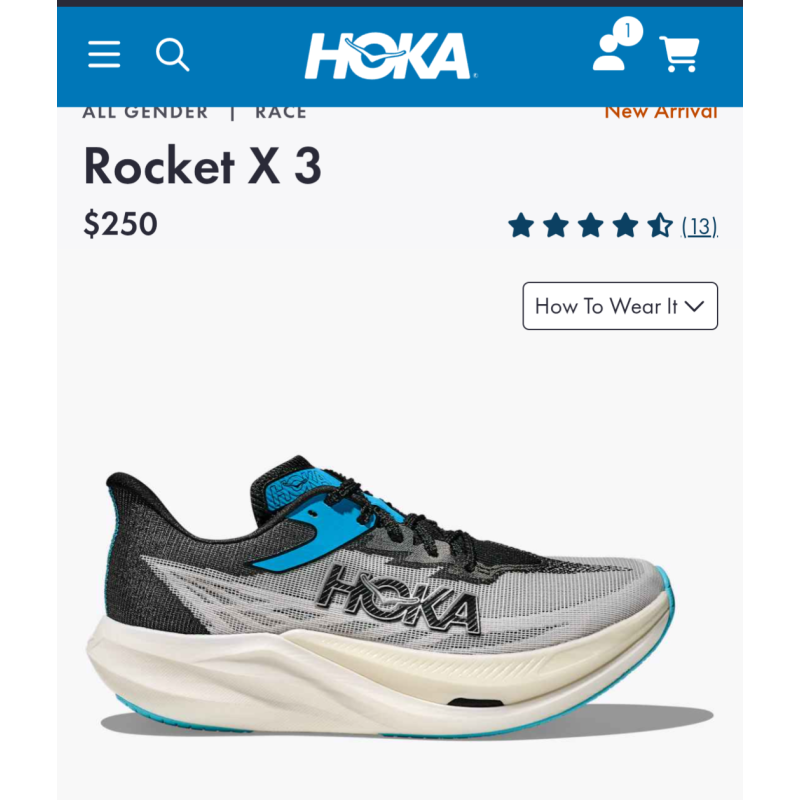
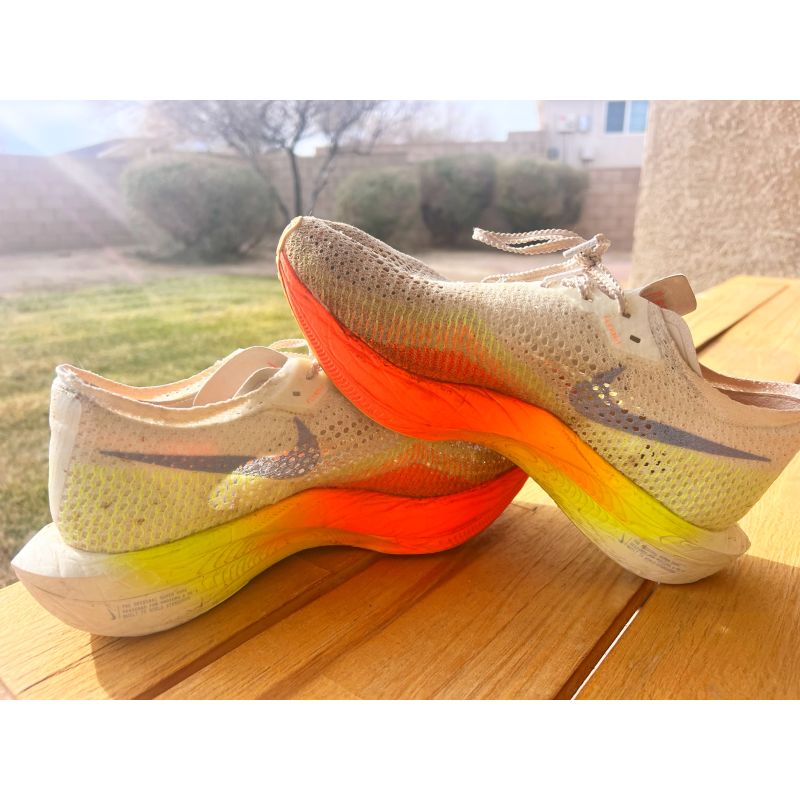
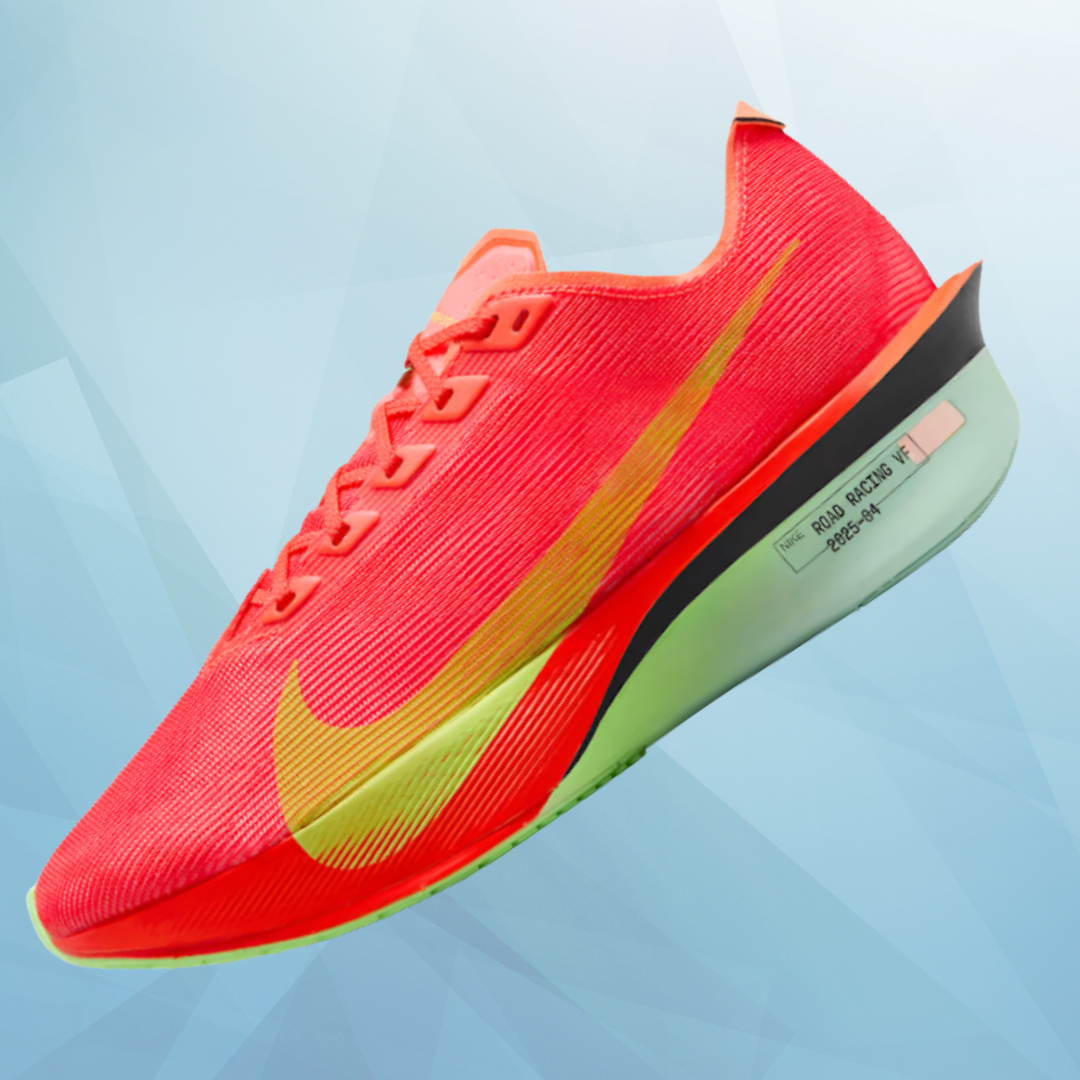
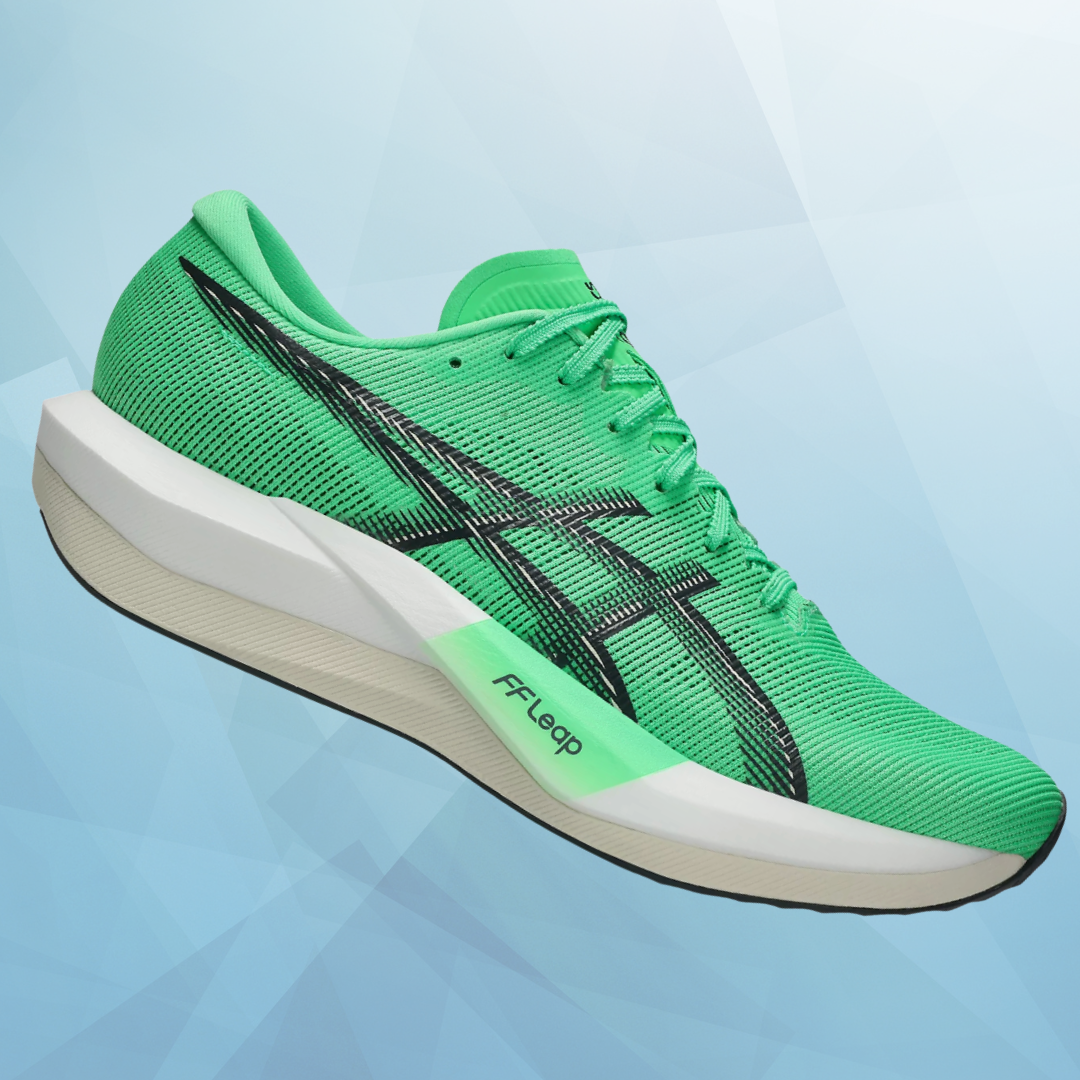
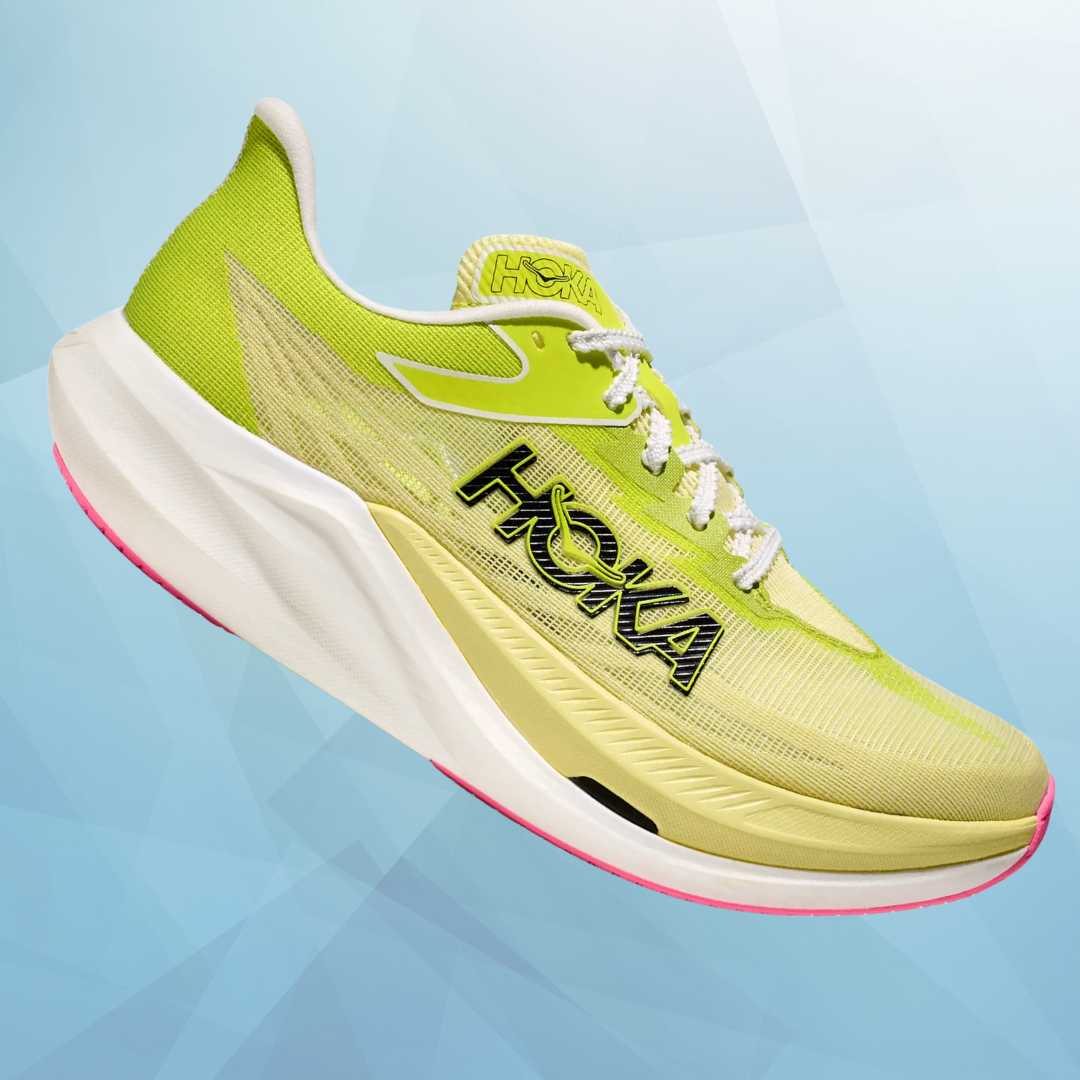
Our survey respondents agreed that the Nike Vaporfly, Hoka Rocket X, and Asics Magicspeed are the three that rise to the top of the pile. Although this is where toe-box preferences can vary on a more individual basis.
For more race-day options see our best marathon racing shoes.

A highly polished carbon-plated road racing shoe built for fast running from 10K up through marathon distances with a lightweight, responsive ZoomX foam platform and propulsive FlyPlate design. Ideal for runners chasing speed across distances.
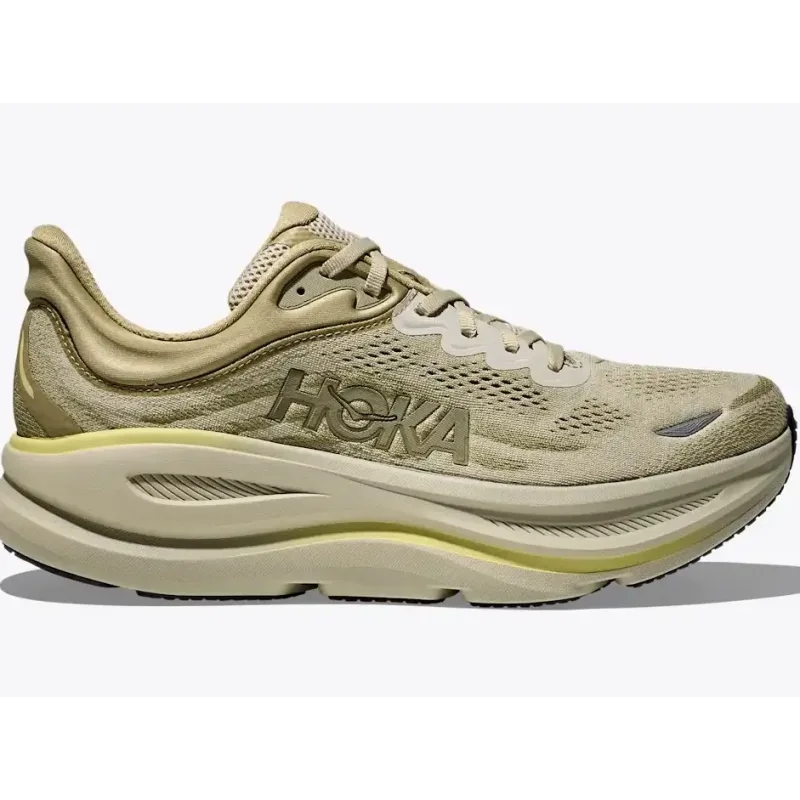
A plated performance trainer built for runners who want a responsive, energetic ride with more control than a traditional super shoe.
A race-focused carbon-plated super shoe with a responsive yet protective PEBA foam platform, sticky rubber outsole, and engineering tuned for confident propulsion and traction at pace.
Trail running introduces an entirely different set of fit demands for narrow feet. Off-camber terrain, descents, and technical surfaces expose heel and midfoot instability quickly. Interestingly, our surveyed runners didn’t just echo mainstream recommendations. They expanded the conversation.
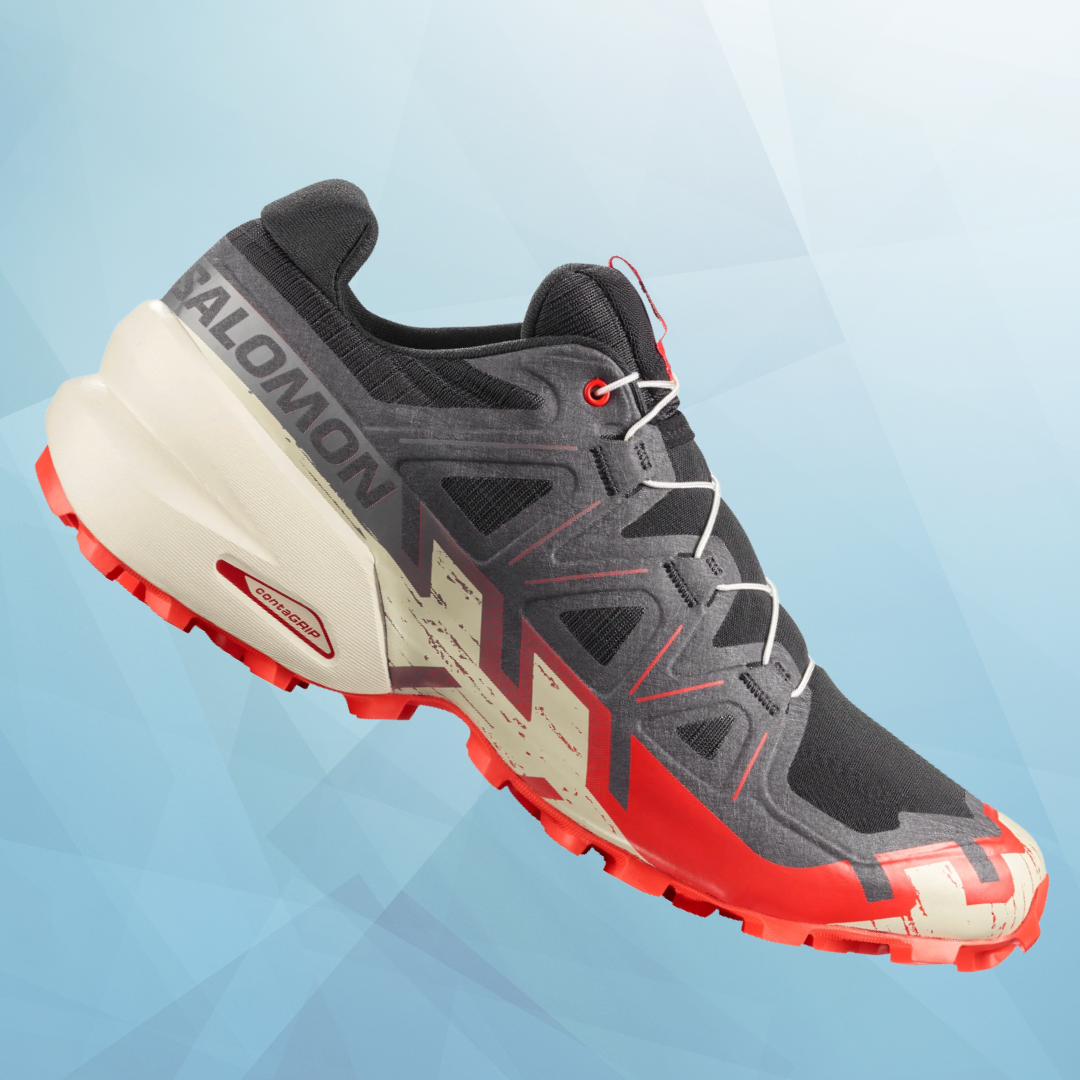
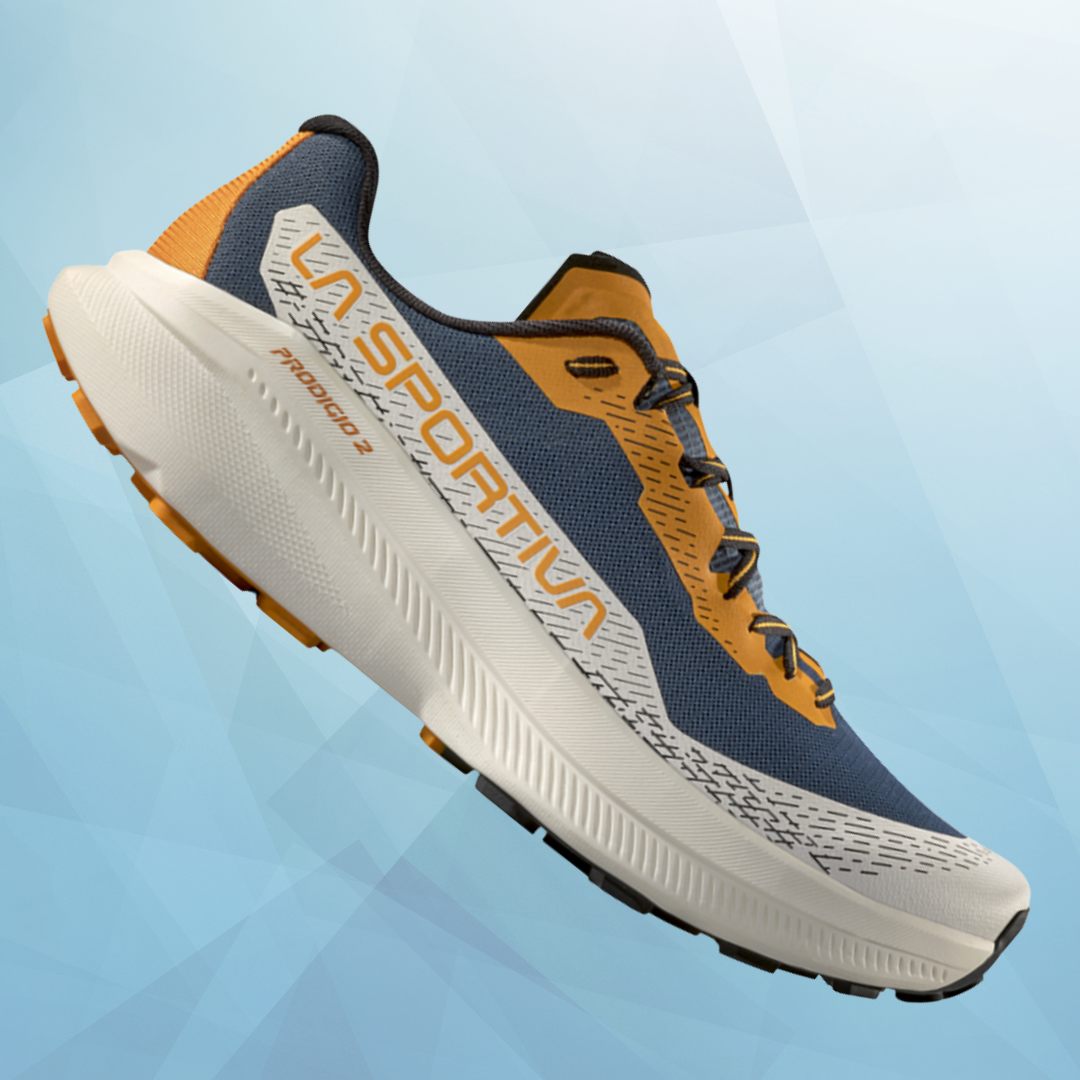
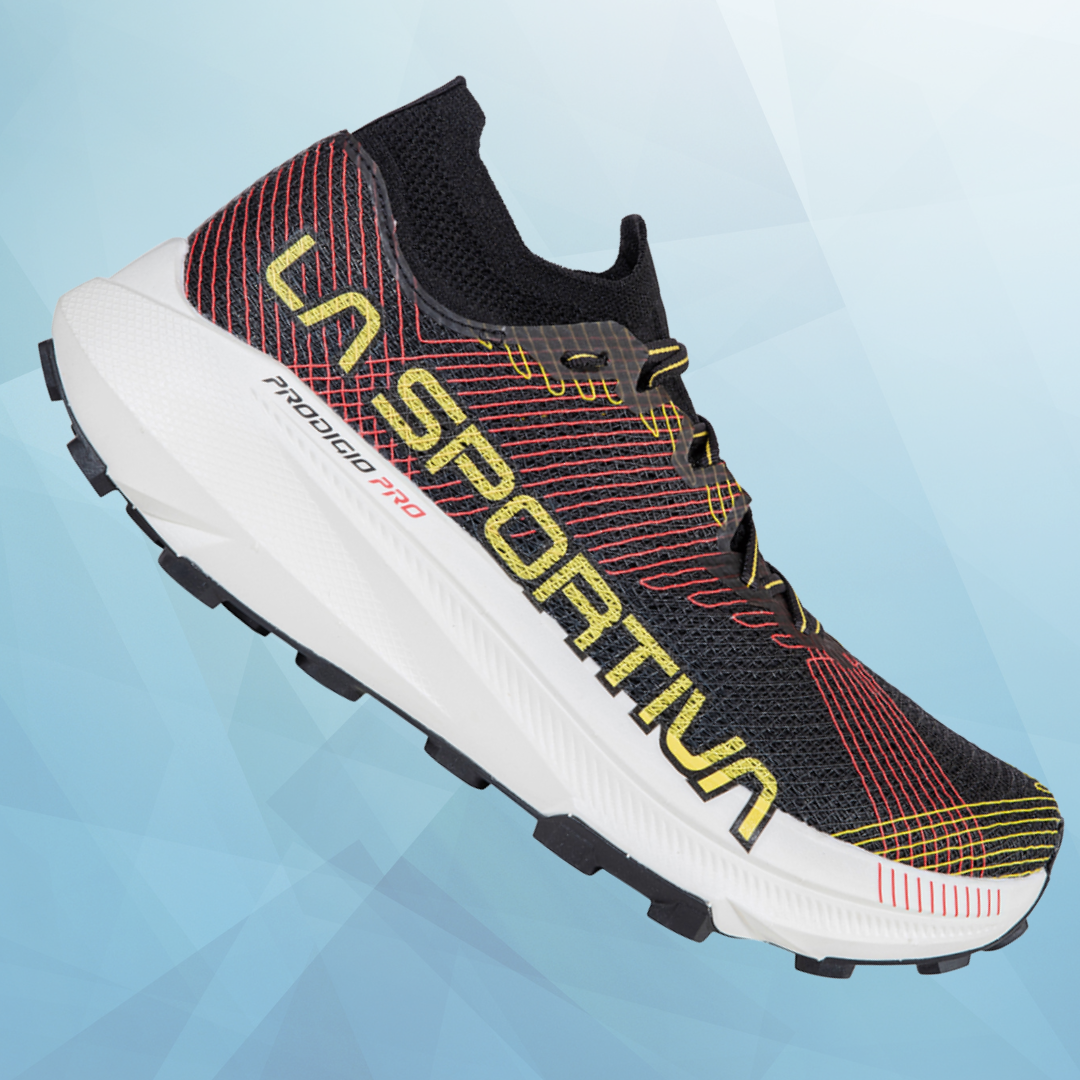
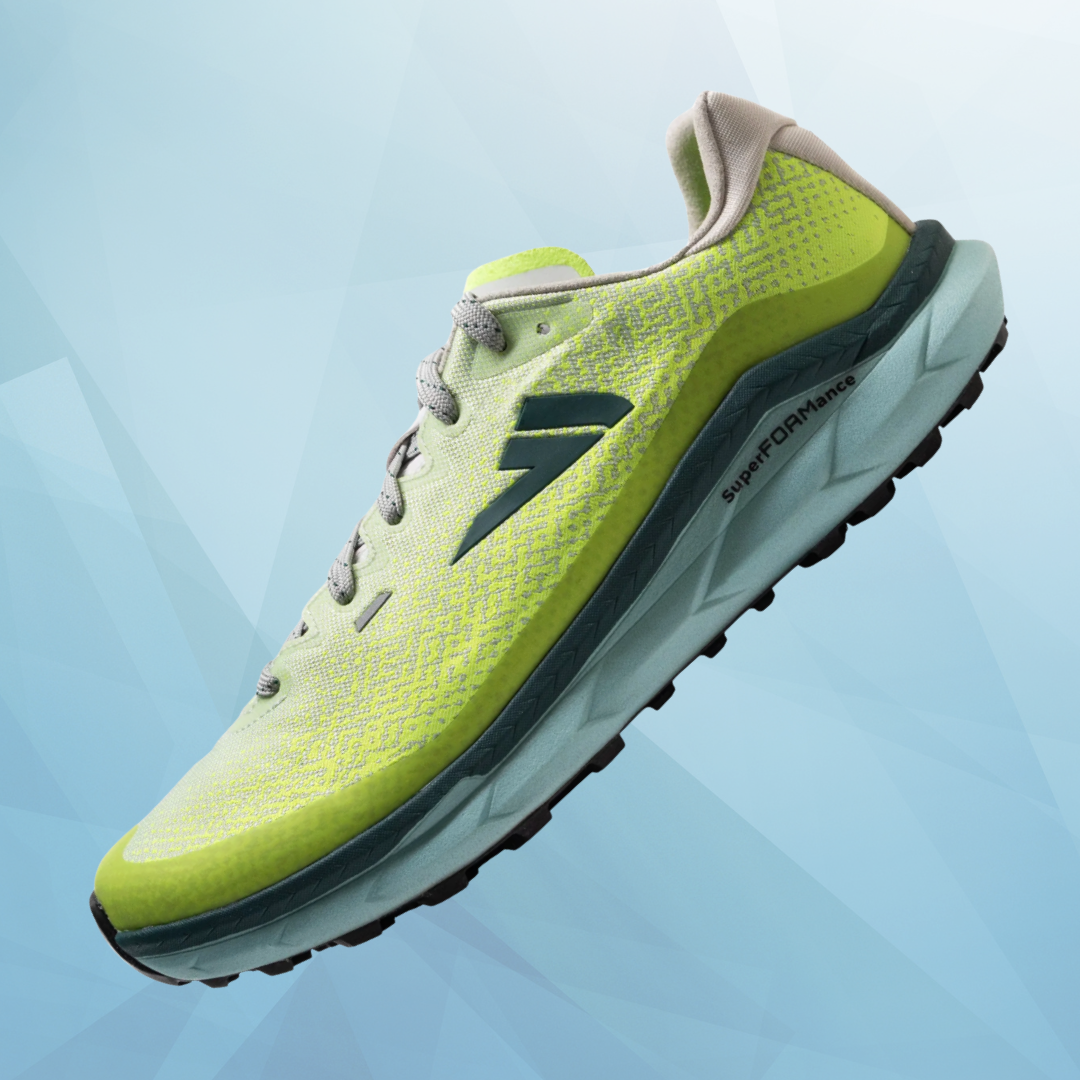
Yes, the Salomon Speedcross appeared, but our runners also brought up models from brands like La Sportiva, and VJ Shoes.
A precision-fit trail shoe built for soft and technical terrain, known for its aggressive grip and secure, performance-oriented upper.
A versatile trail trainer that blends cushioning and mountain-ready security, offering a balanced ride for long efforts.
A high-performance mountain race shoe designed with a precise, secure upper, no plate, and responsive foam for technical terrain.
A versatile, well-cushioned trail runner that blends modern foam technology with aggressive grip and a secure fit, making it well suited for technical terrain, long training runs, and fast trail outings.
Although we had a few standouts, the survey also pointed to models from Brooks, Asics, Mizuno, New Balance, and Nike as promising options for runners with narrow feet.

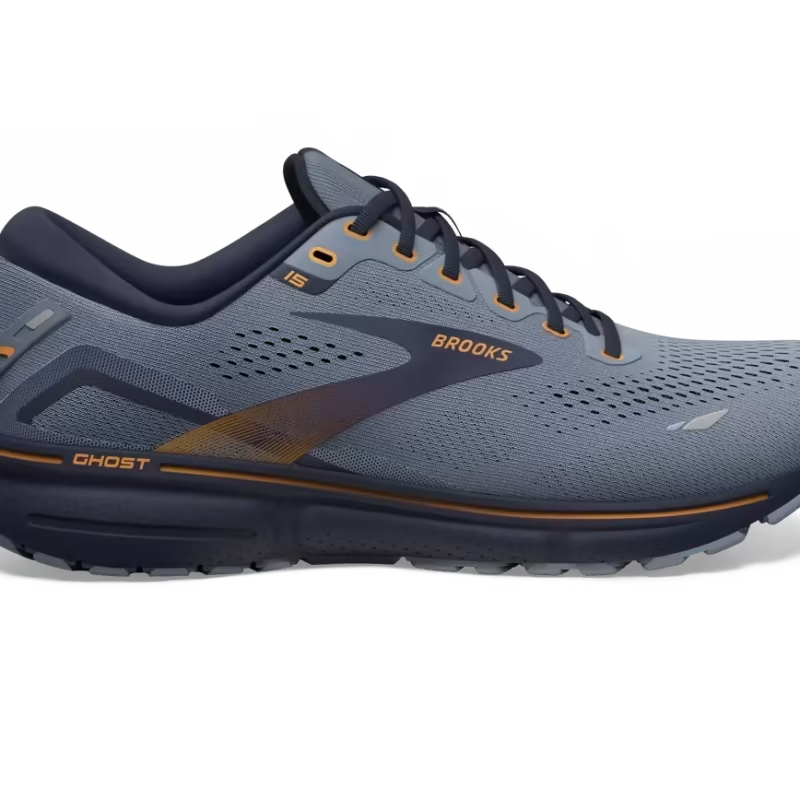
A reliable, moderately cushioned daily trainer known for its smooth ride and structured heel that often works well for runners who prefer a secure rearfoot feel.
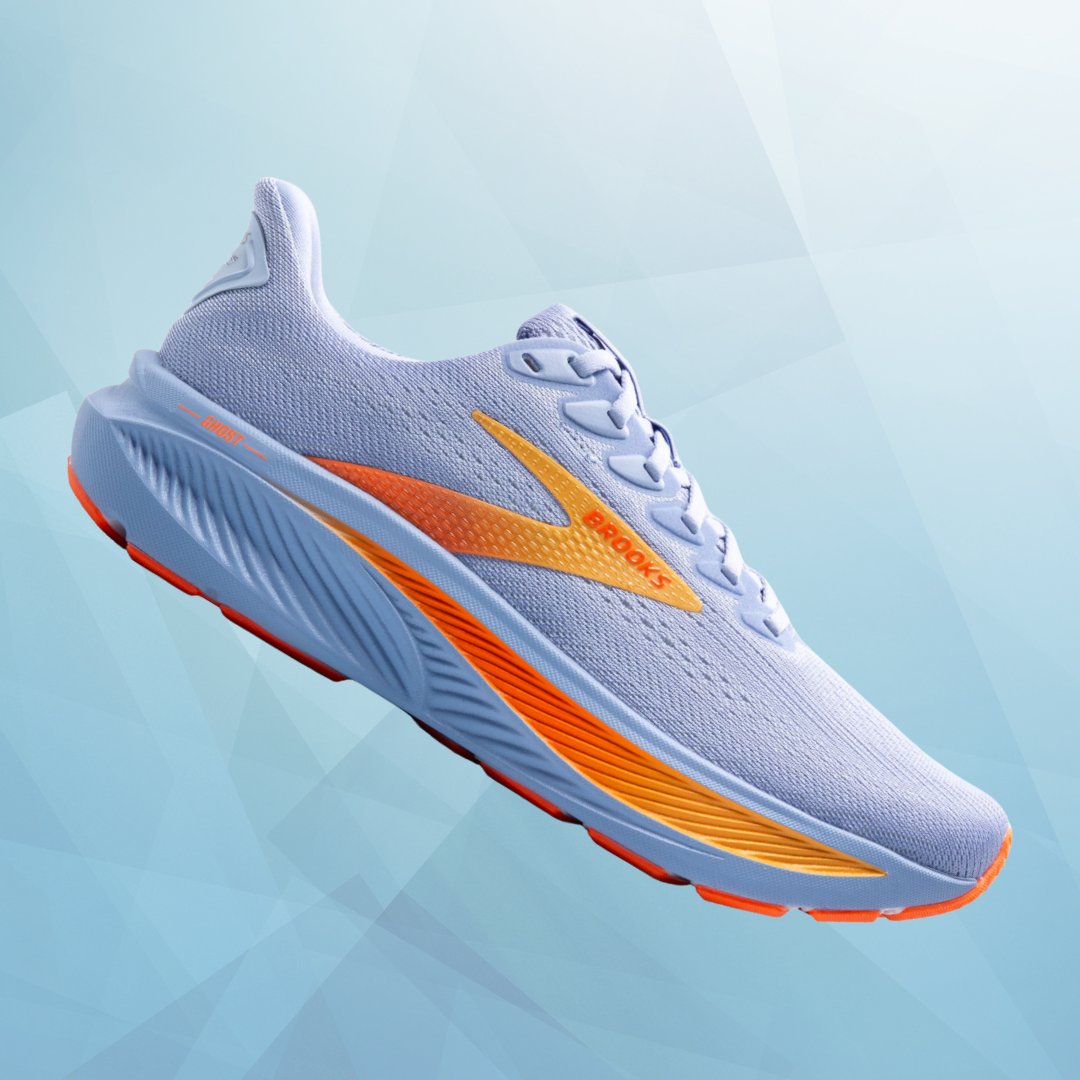
A stability-focused trainer with guided support and a secure heel counter, designed for runners who want structured midfoot containment over long miles.
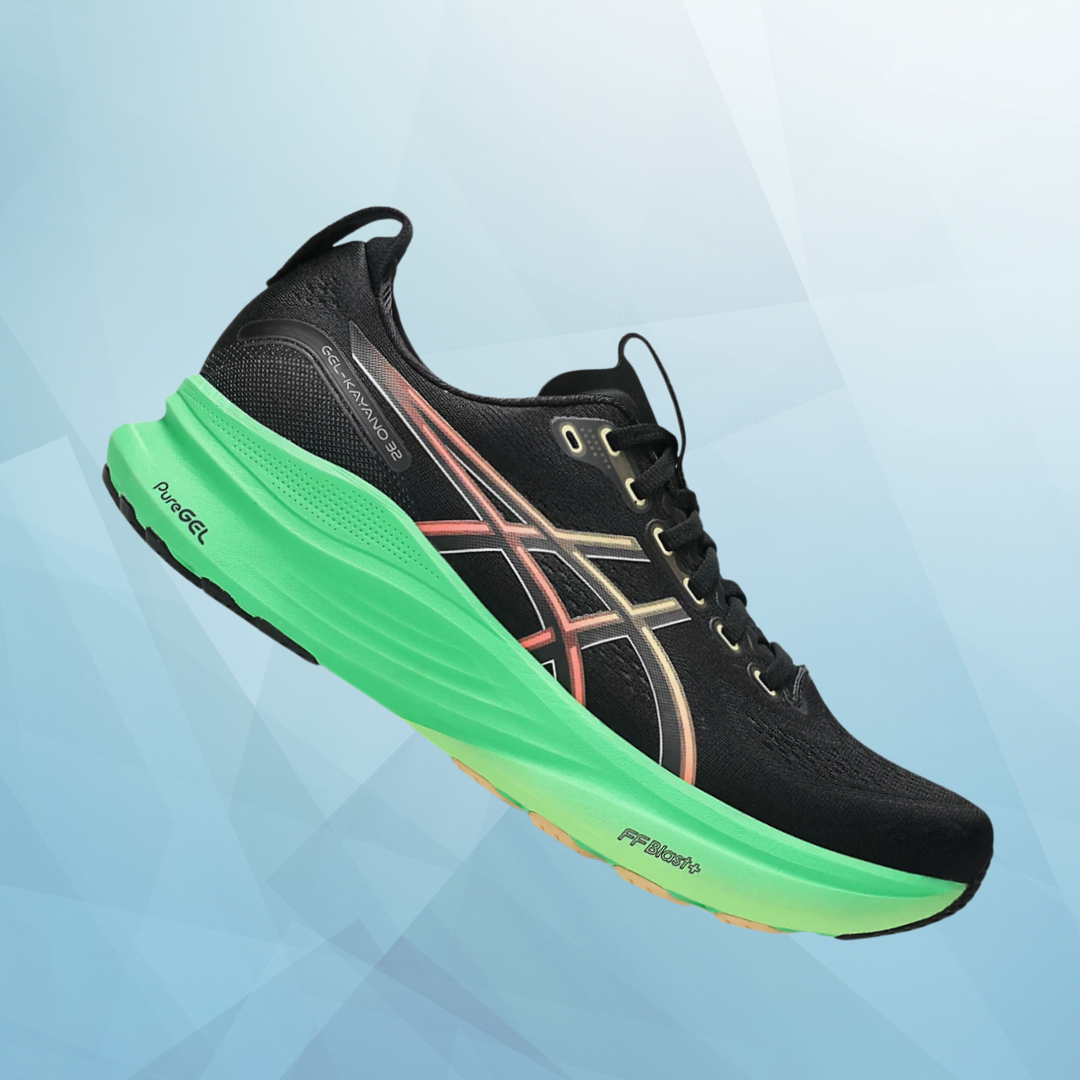
A high-stack, lightweight performance trainer that blends soft cushioning with surprising midfoot structure for runners who want both bounce and lockdown.
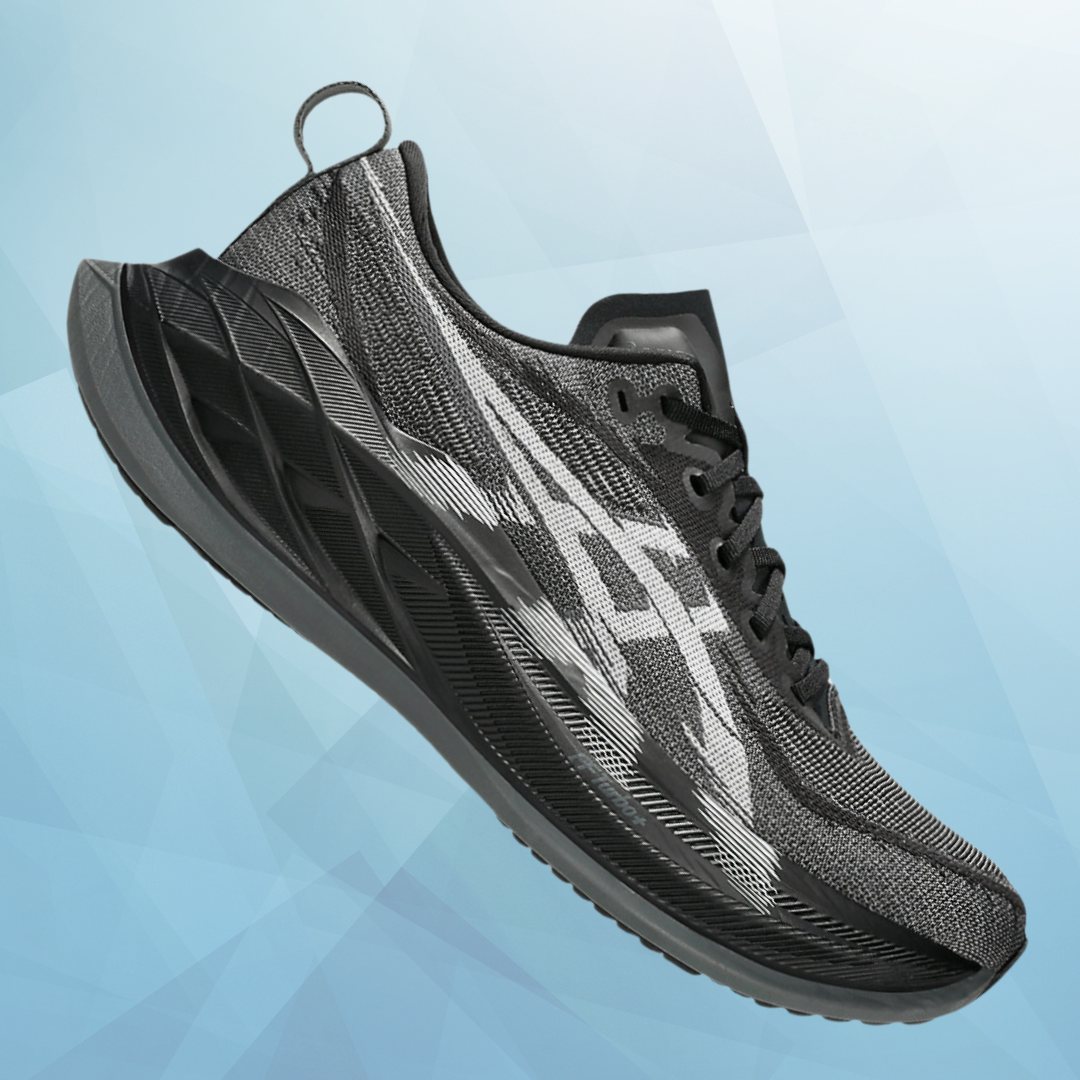
A firmer, responsive daily trainer with a snug midfoot wrap and traditional upper construction that tends to appeal to runners who like a more precise fit.
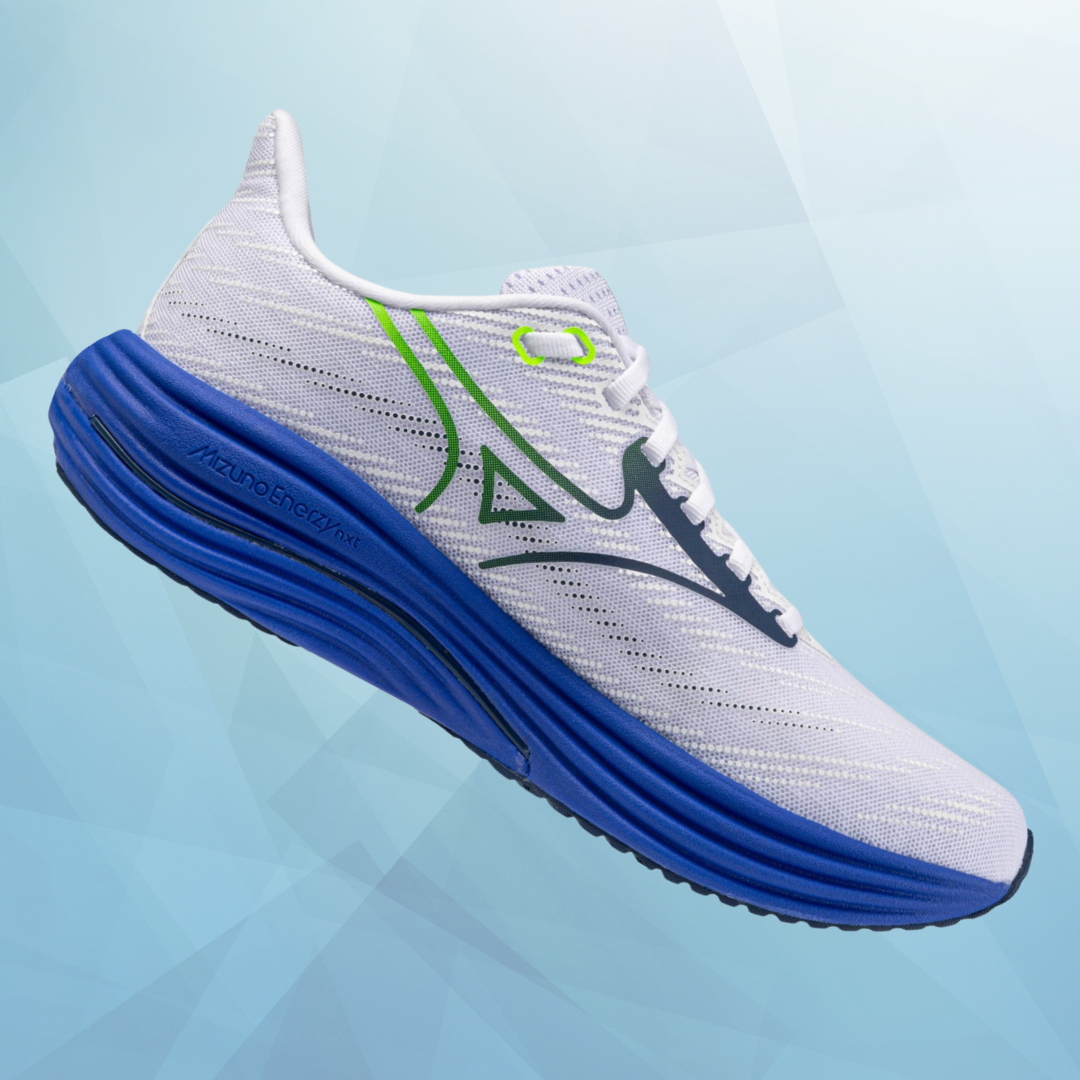
A soft, max-cushioned neutral trainer that offers a roomy forefoot and plush ride, best suited for runners who prioritize comfort over aggressive structure.
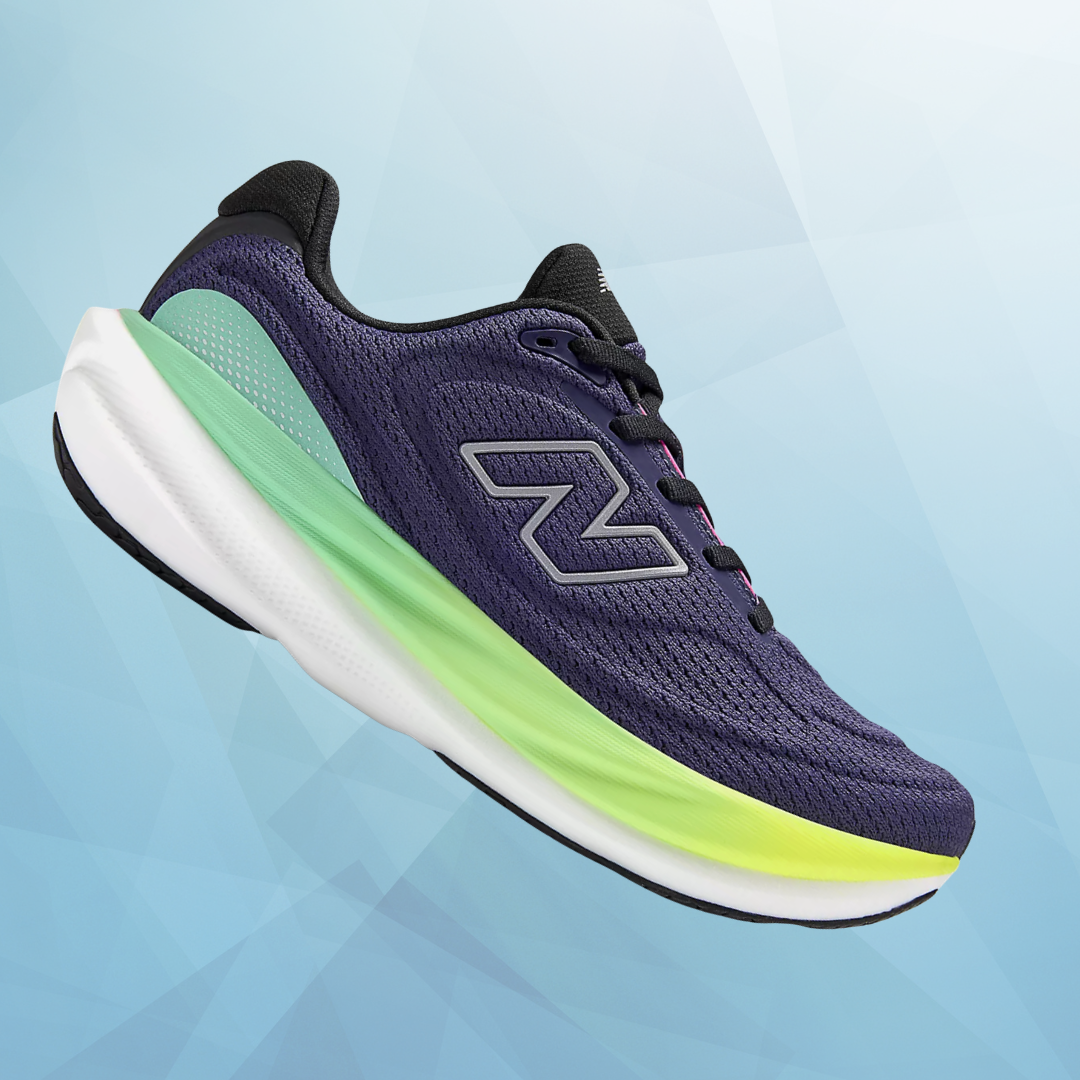
When runners were asked what shoes didn’t actually work for them, brand names consistently started showing up.
Multiple runners agreed that Altra shoes did not work for their narrow feet due to most models feeling far too roomy in the midfoot and heel.

Related Reading: Topo Vs. Altra Running Shoes
Surprisingly, we also heard from narrow-footed runners who felt that Nike shoes ran far too narrow–especially the Vaporfly.
So what does this all mean when it comes to making that next purchase?
If you take one thing away from this guide, let it be this: finding a good shoe for narrow feet is less about chasing labels and more about understanding how a shoe holds you once you’re moving, tired, and a few miles in.
Here’s how to shop smarter, waste fewer returns, and beat the blisters.
A shoe doesn’t need to be labeled “narrow” to work for narrow feet. In fact, many runners in our survey found success in standard-width shoes that simply offered better structure where it mattered most.
When trying on shoes (or reading reviews), pay close attention to:
If the heel feels sloppy or the midfoot collapses under light movement in the store, it’s unlikely to improve once fatigue sets in.
One of the most common frustrations we heard was shoes that felt great during a quick try-on, but broke down dynamically once running began.
If you can, test shoes with:
Narrow-footed runners are often able to mask poor structure by over-tightening laces. That can work temporarily, but it often leads to hotspots, numbness, or instability later in the run.
Certain brands do show up more often in narrow-foot-friendly conversations—but no brand is universally consistent across models.
Instead of asking, “Does this brand run narrow?” ask:
Two shoes from the same brand can feel completely different once you factor in upper materials, platform width, and midsole geometry.
Our survey made one thing clear: there is no single “correct” toe box for narrow feet.
Some runners preferred a slightly roomier toe box paired with strong midfoot lockdown. Others wanted a more tapered forefoot that mirrored the shape of their foot.
Rather than forcing yourself into a shape you think narrow feet should wear, focus on whether the shoe allows natural toe movement without sacrificing stability in the midfoot and heel.
Trail shoes amplify fit issues faster than road shoes. Off-camber terrain, steep climbs, and descents demand far more from heel and midfoot structure.
For narrow-footed trail runners:
A trail shoe that feels “a little loose” on flat ground can quickly become a liability once terrain gets technical.
One of the quiet takeaways from the survey was relief. Many runners realized they weren’t “bad at choosing shoes”. They were just being underserved by generic advice.
If a shoe consistently feels unstable, forces extreme lacing, or causes friction in predictable spots, it’s okay to move on. The right shoe should feel secure without needing constant adjustment or mental effort to manage fit.

No, you do not necessarily need to buy shoes that come in a narrow width (2A or B).
While narrow-width options can work well for some runners, our survey showed that most narrow-footed runners actually succeed in standard-width shoes that offer strong heel and midfoot structure.
Many standard-width models are built on slimmer lasts or use uppers that naturally accommodate narrow feet without requiring a designated narrow size. In contrast, some shoes offered in narrow widths still lack the structural elements needed to keep the foot secure during real runs.
Shoes that feel okay standing still or walking often lack the dynamic containment needed once pace, fatigue, or uneven terrain come into play. This is a common experience for runners with narrow feet.
As you run, your foot:
If a shoe relies on soft uppers or minimal structure, those movements can quickly translate into heel slip, instability, or hotspots—even if the initial fit felt promising.
For most narrow-footed runners, yes--even mild heel movement during a try-on can often turn into significant instability over longer runs.
While runner’s loops and lacing tweaks can help, our survey suggests that shoes requiring aggressive lacing just to feel usable rarely become favorites. A well-matched shoe should feel secure at the heel without excessive tightening or constant adjustment. Look for more structured heel counters if you struggle with heel slippage.
Not always. Foot width and foot volume are related but separate factors.
Some runners with narrow feet:
This is why two runners with similar measured widths can have very different shoe preferences, and why rigid “narrow feet = narrow shoes” advice often falls short.
Brand reputation doesn’t guarantee fit consistency. Even within the same brand, differences in:
can dramatically change how a shoe feels for narrow feet. Our survey found several brands appearing in both “worked well” and “didn’t work” responses, depending entirely on the model and the runner’s priorities.
Trail shoes amplify fit issues faster than road shoes. Off-camber terrain, steep climbs, and descents demand far more from heel and midfoot structure.
For narrow-footed trail runners:
A trail shoe that feels “a little loose” on flat ground can quickly become a liability once terrain gets technical.
Because “narrow-friendly” is often shorthand for measured width, not how a shoe behaves under load.
Shoes marketed toward narrow feet may still:
Fit success depends less on marketing language and more on how the shoe maintains structure throughout a run.
Trying to force a shoe to work through lacing alone.
Over-tightening can temporarily improve lockdown, but it often leads to discomfort, numbness, or uneven pressure later. If left unaddressed, overly tightened laces can create pain or injury. If a shoe requires extreme lacing strategies just to feel stable, it’s usually a sign that the underlying structure isn’t a good match.
The best running shoes for narrow feet aren’t necessarily the narrowest shoes on the shelf. They’re the ones that maintain heel security, midfoot containment, and structural integrity once fatigue sets in.
Unlike many “best narrow running shoes” lists that rely on spec sheets, this guide blends industry recommendations with lived experience from narrow-footed runners, but it's not finished! The more runners who share their experiences, the clearer the patterns become.
If you’ve found a shoe that works or one that absolutely didn’t, let us know in the comments or leave your own review!

Login to your account to leave a comment.



Review gear you already use. Earn Star Points. Qualify to test free running shoes and gear.