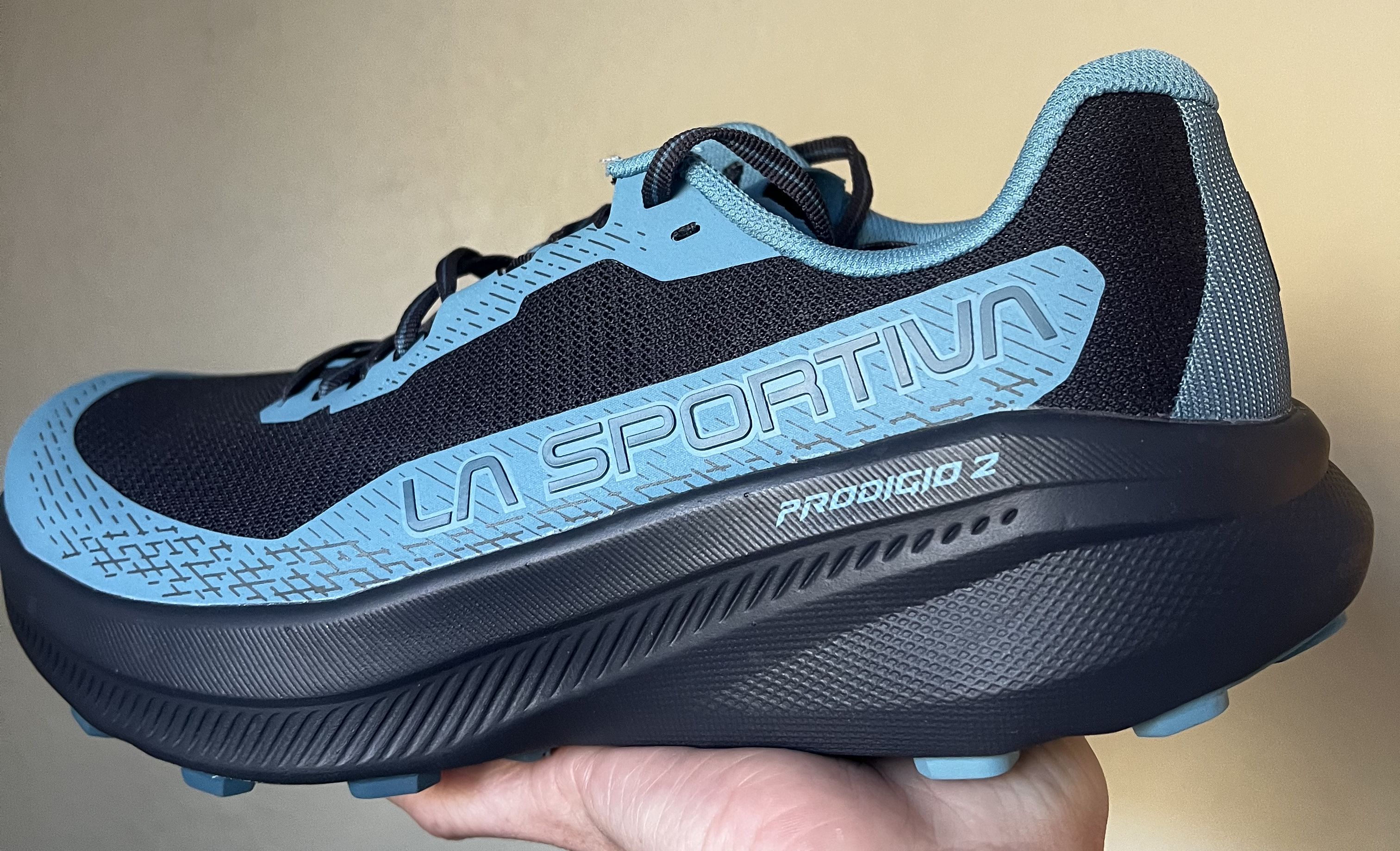
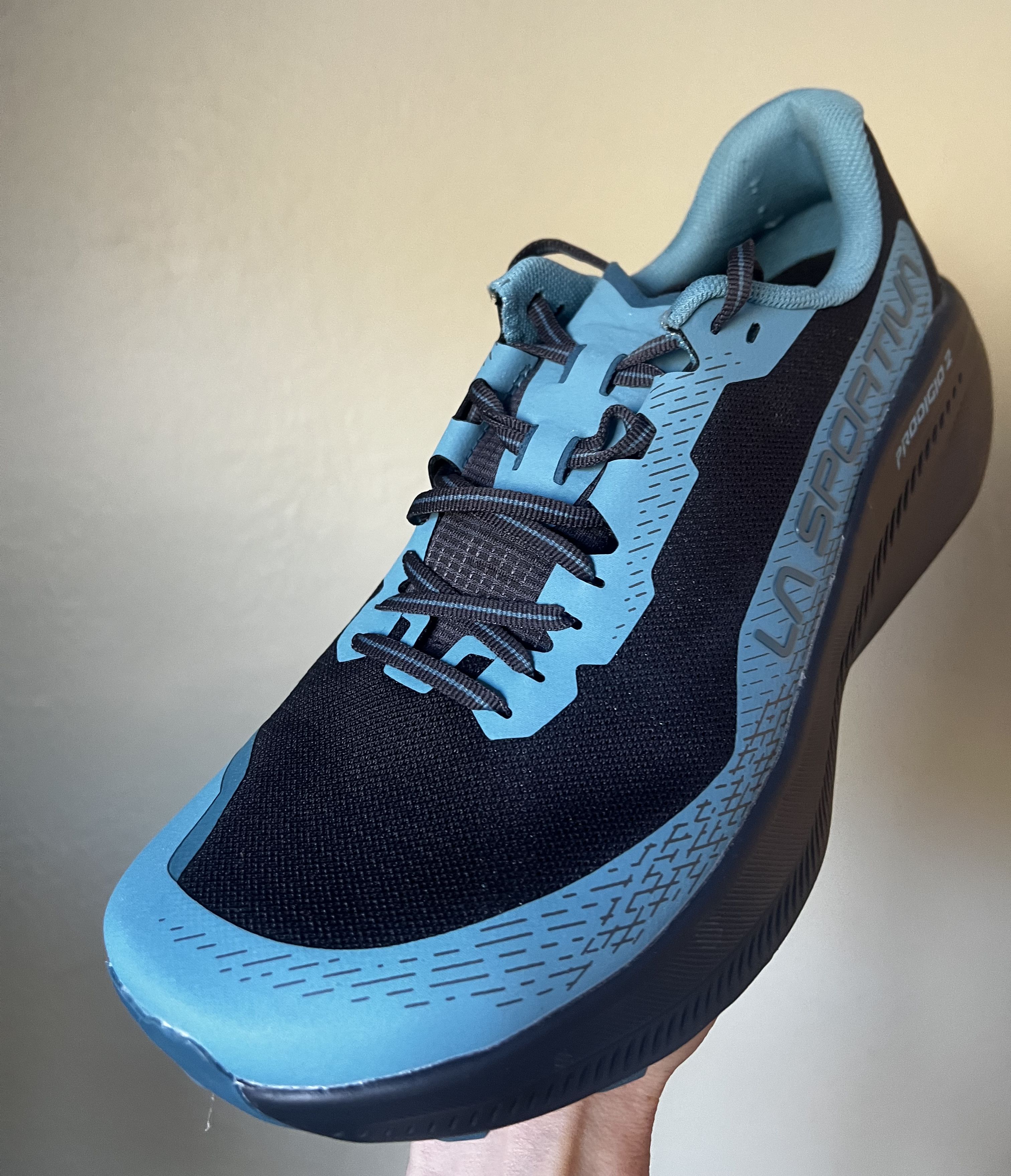
Firm, stable mountain trainer with excellent grip and a durable, comfortable upper. The updated midsole adds slight responsiveness but stays protective and grounded. Great for technical trails and long runs, but may not be the best racing option.
Total
Form
Performance
Value
As an Amazon Affiliate WeeViews earns from qualifying purchases.
Durable yet comfortable mesh upper with reinforced toecap and lacing eyelets
Secure lockdown
Durable outsole (minimal wear after ~60 miles)
Thoughtful 4mm lug pattern (aggressive but versatile)
Slightly wider last than older Sportiva models (but still narrow-foot friendly)
Cons
Still firm for true recovery runs
Energy return is modest for the weight
Price feels high for the category ($170)
La Sportiva Prodigio 2 Review: Firm, Durable Mountain Versatility
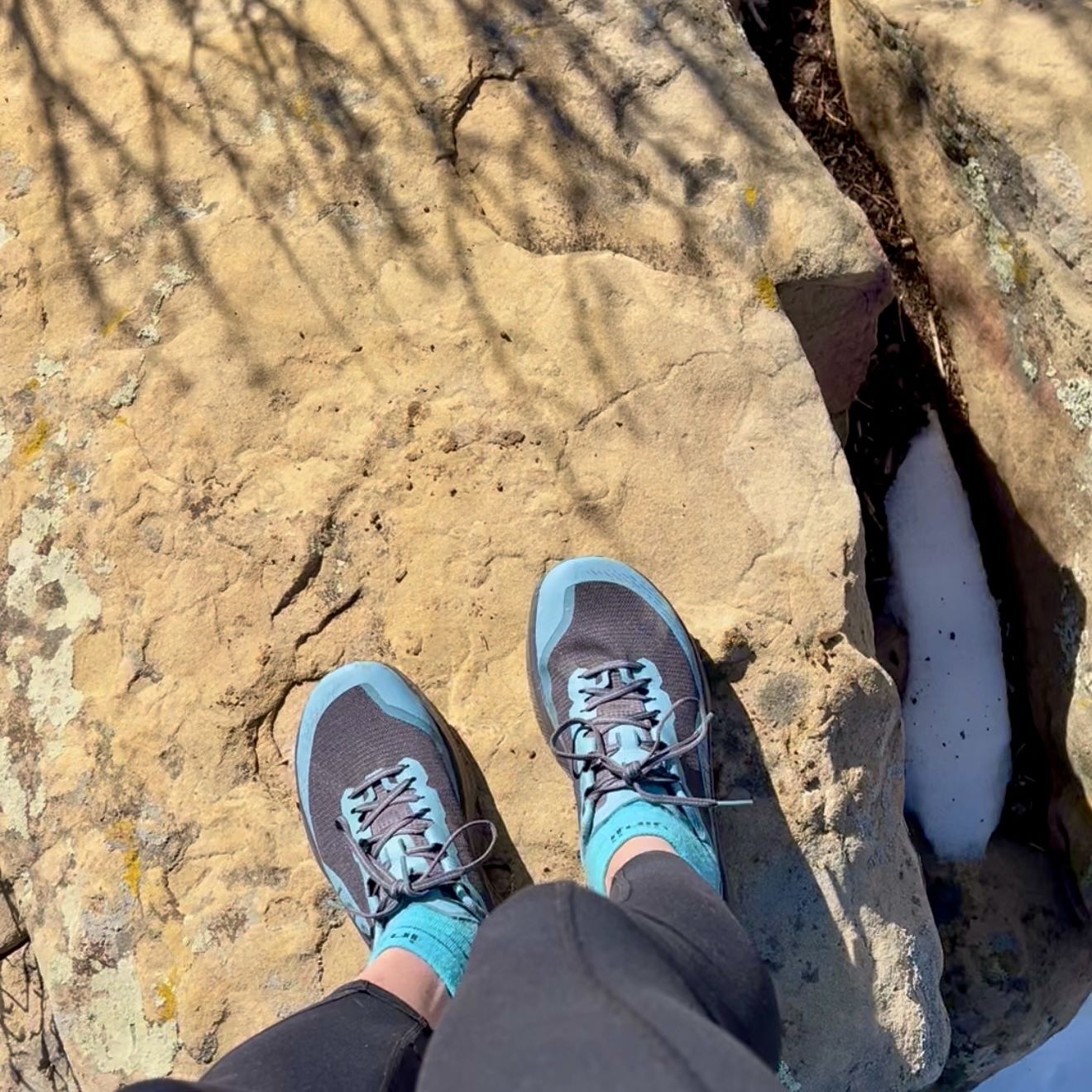
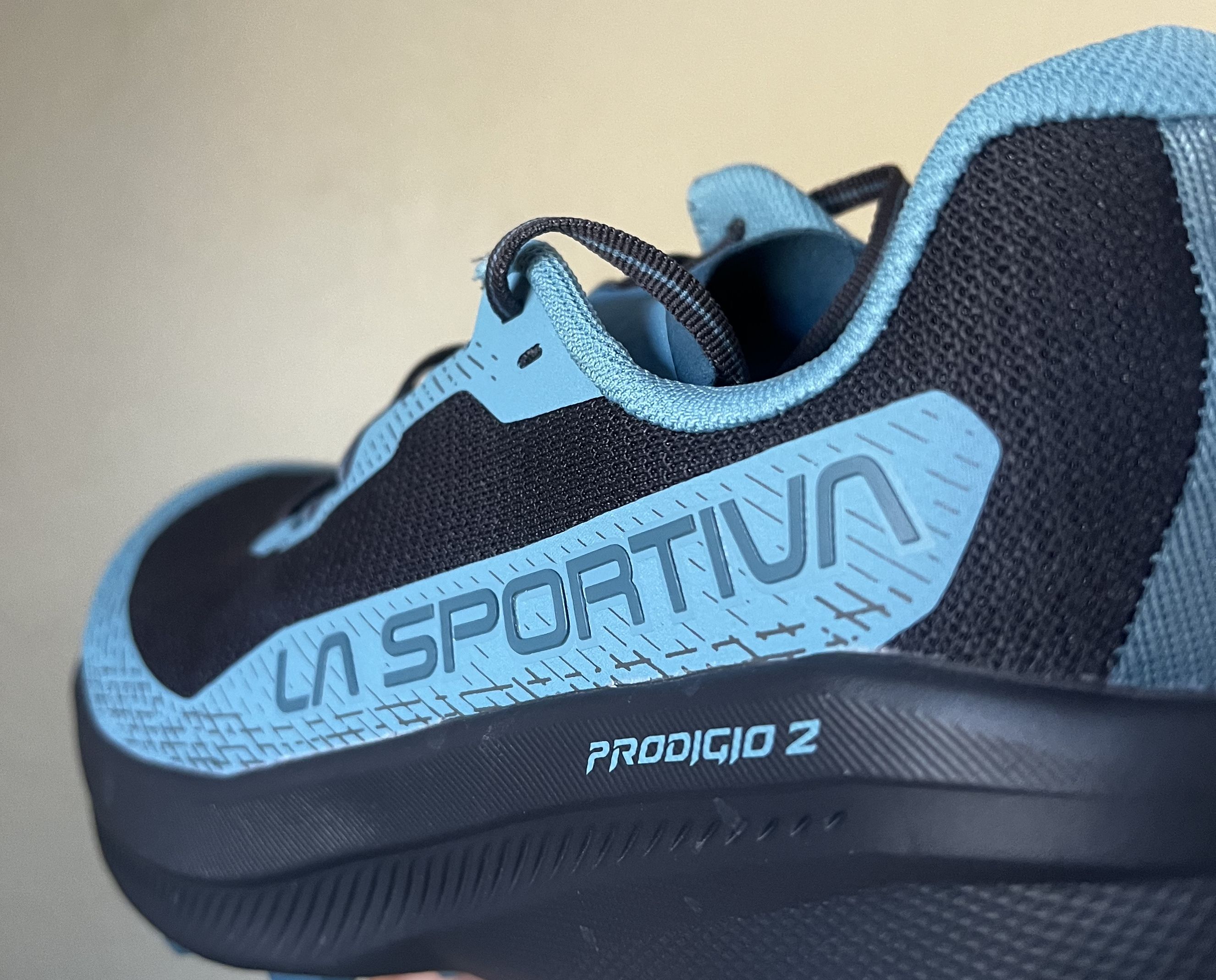
I first caught a glimpse of the La Sportiva Prodigio 2 at The Running Event in December 2025, and my initial thought was that it looked a lot like a Saucony Peregrine with a La Sportiva attitude. After putting about 60 miles on the shoe across technical trails, gravel, short road connectors, and muddy winter conditions, that comparison still mostly holds, but with a bit more structure, protection, and long-term durability.
The Prodigio 2 sits in the middle of La Sportiva’s trail lineup: less reactive than the Prodigio Pro, more cushioned and protective than the Levante or Akasha, and noticeably lower-profile than the Prodigio Max. It’s marketed as a versatile training and racing shoe for mountainous terrain, but in practice it shines most as a reliable, firm daily trainer for technical trails.
If you like a stable platform, good ground feel, and a shoe that feels ready for scrambling and long days in the mountains, the La Sportiva Prodigio 2 makes a strong case.
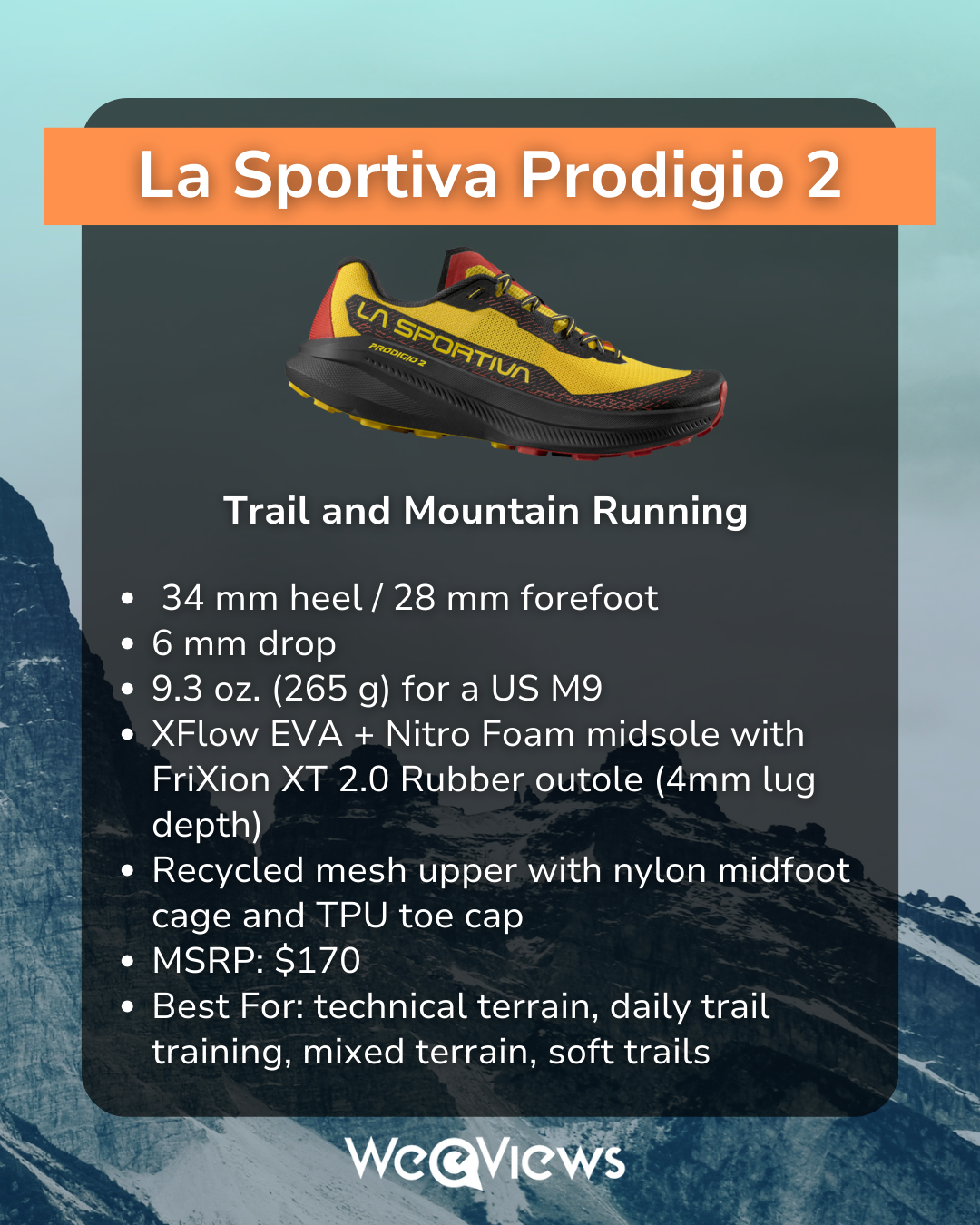
Prodigio 2: At A Glance
Stack: 34mm heel / 28mm forefoot
Drop: 6mm
Weight: 265g / 9.3 oz (M9), sample size was ~9 oz (W 8.5)
I’m typically a women’s 8.5 in trail shoes. La Sportiva uses EU sizing, and a 40 fit me perfectly here. No hot spots, no pressure points, and no break-in period.
I have a narrow foot, and the toe box still felt roomy, noticeably more forgiving than older Sportiva models while the midfoot and heel remained secure. Runners with truly wide feet may still find this too narrow, but for narrow-to-average feet, the shape feels well balanced.
Lockdown is excellent without needing to over-tighten, even on steep or technical terrain.
Upper: Comfort & Durability
I expected the upper to feel stiff and rugged to the point of being uncomfortable. Instead, it’s surprisingly friendly.
The mesh has enough structure to inspire confidence on rocky terrain, but enough softness that it disappears once you’re moving. The tongue is lightly padded and stays centered, the midfoot cage does most of the work for lockdown, and the reinforced eyelets feel well-built for the long run.
After 60 miles, including plenty of scuffing and mud, the collar and mesh still look nearly new, which says a lot given how hard I am on trail shoe uppers.
Yes, all of this adds weight. But for a mountain-leaning trainer, the durability tradeoff feels justified.
Ride & Cushioning
La Sportiva updated the midsole with nitrogen-infused EVA, and you can feel a small bump in responsiveness compared to earlier versions, but “responsive” is still relative here.
This is a firm shoe.
That firmness is the point. It provides:
excellent stability on uneven terrain
good ground feel
reliable protection in the forefoot and heel
But it doesn’t provide much pop. When I pushed the pace uphill or tried to open up on flatter trail, the shoe felt composed rather than energetic.
For runners who love soft, bouncy foam (think HOKA or modern race shoes), the Prodigio 2 will feel a bit dull. The ride is closer to the Saucony Peregrine: controlled, predictable, and protective.
I wouldn’t personally choose this as a race shoe unless stability mattered more than speed.
Outsole Traction
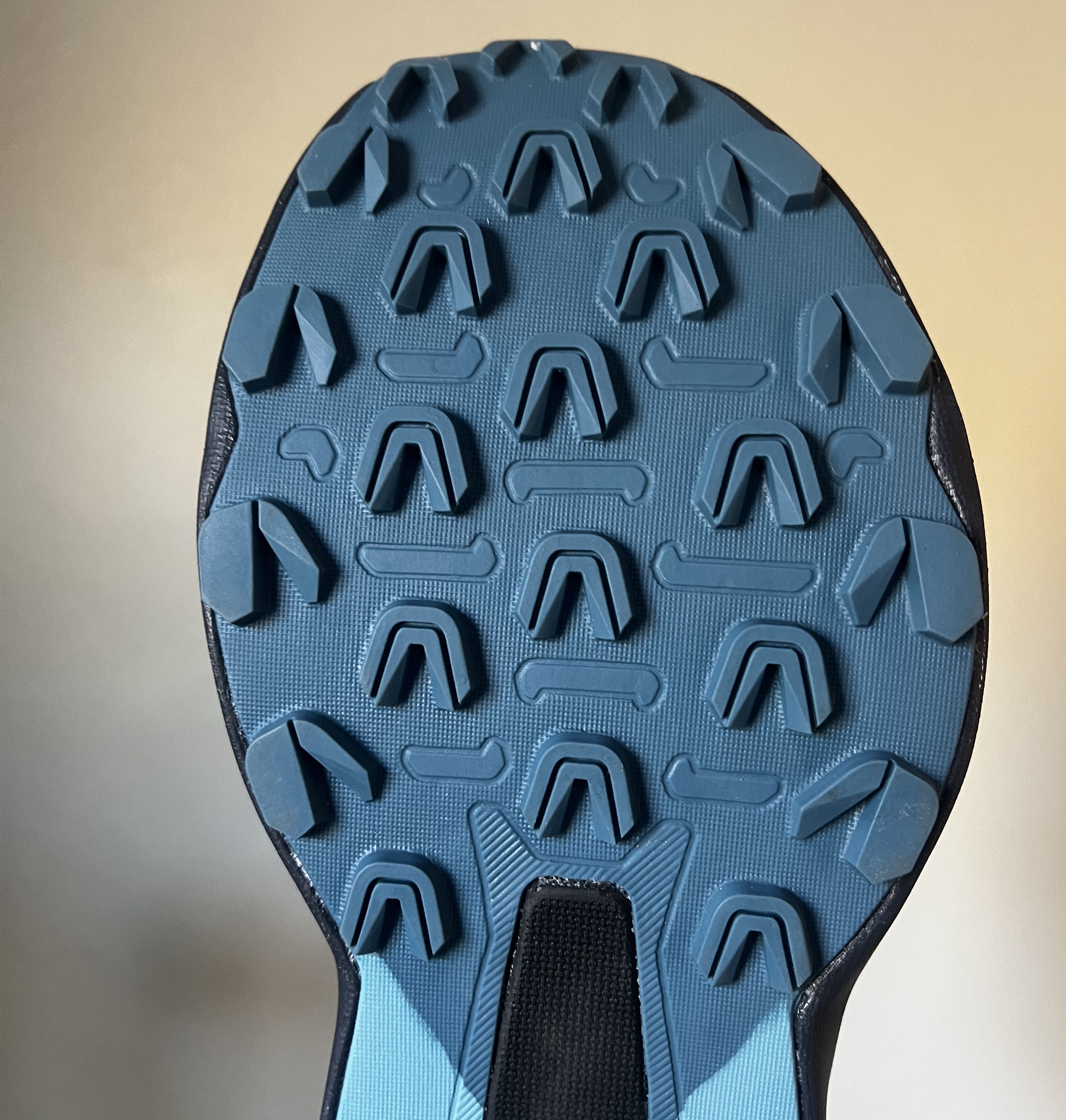
Forefoot lugs (0 miles)
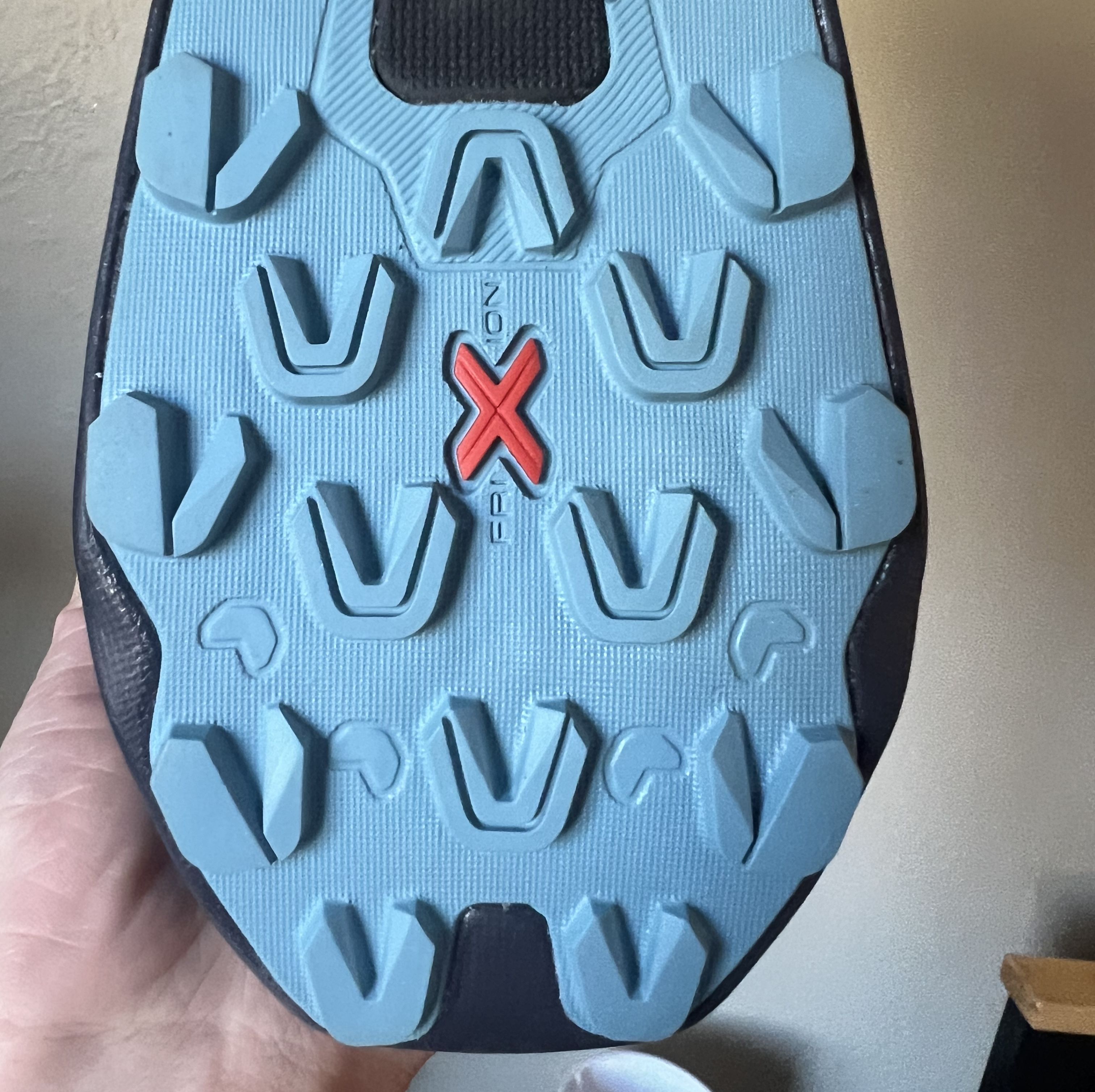
Heel lugs (0 miles)
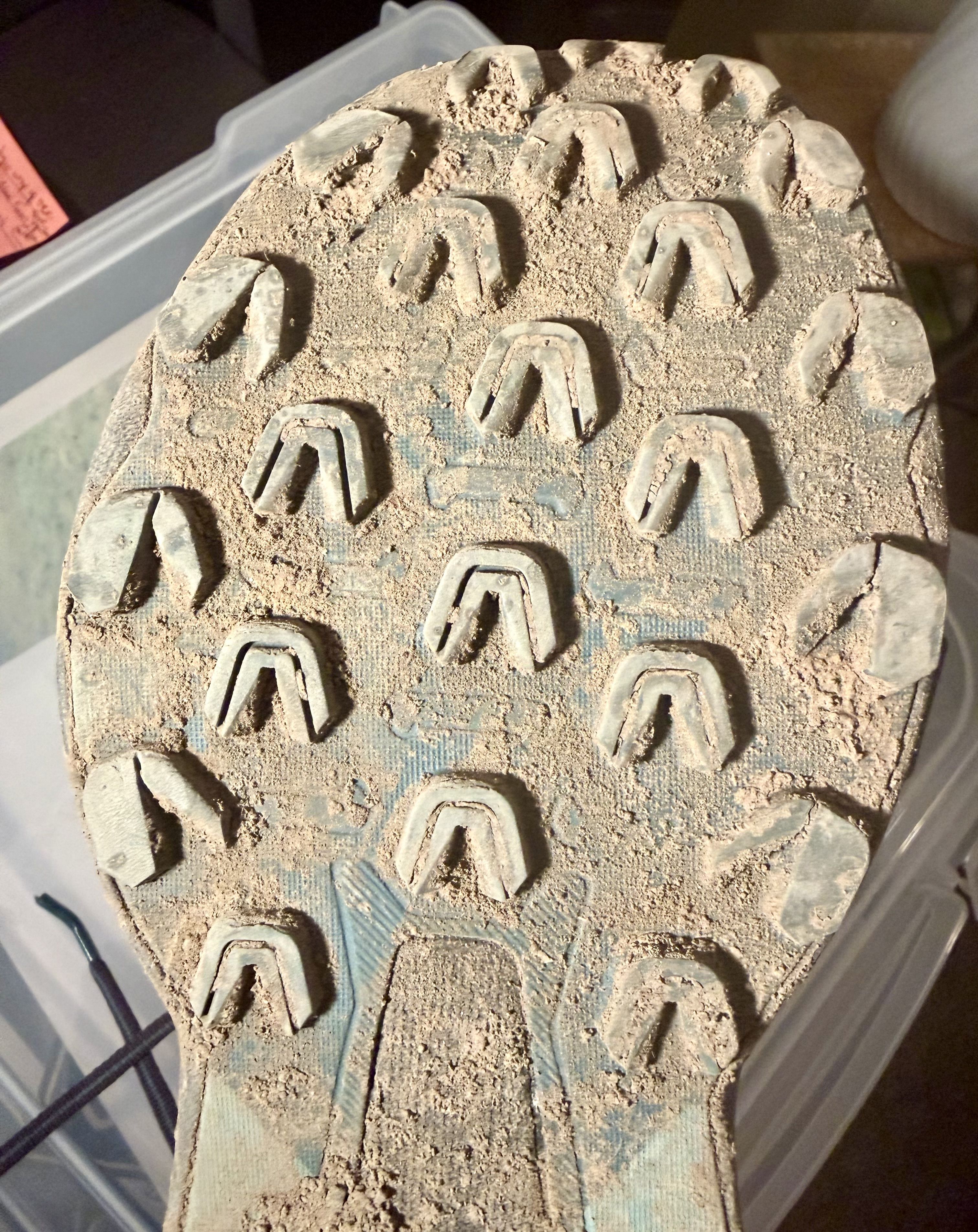
Forefoot lugs (60 miles)
This is where the Prodigio 2 really earns its keep.
The FriXion rubber grips wet rock impressively well, bites into mud, and still rolls smoothly on hard-packed trail and gravel. The dual-compound layout (stickier center, more durable edges) seems to be working. I usually chew through lateral forefoot rubber first, and even after 60 miles, there’s barely any wear.
The 4mm lugs strike a sweet spot: aggressive enough for mountain terrain, not so tall that they feel awkward or cleat-like on smoother trail.
Who Should Buy the Prodigio 2?
Buy this if you:
run mostly on technical or mountainous trails
value stability over bounce
want a durable daily trainer that can handle scrambling and long runs
prefer a firmer, more connected ground feel
have average or narrow feet
Skip this if you:
want a soft, energetic ride
want a shoe designed specifically for racing or speedwork (lightweight/snappy)
mostly run road-to-trail or smooth gravel
have wide feet
If you want max cushion with similar design DNA, the Prodigio Max makes more sense. If you want true race-day energy return, the Prodigio Pro is the better option. The Prodigio 2 lives comfortably in the middle: a dependable, firm, mountain-ready workhorse.
This is an incentivized review
The Prodigio 2 sample was provided to me at no cost for the purpose of reviewing.