Upload / Capture
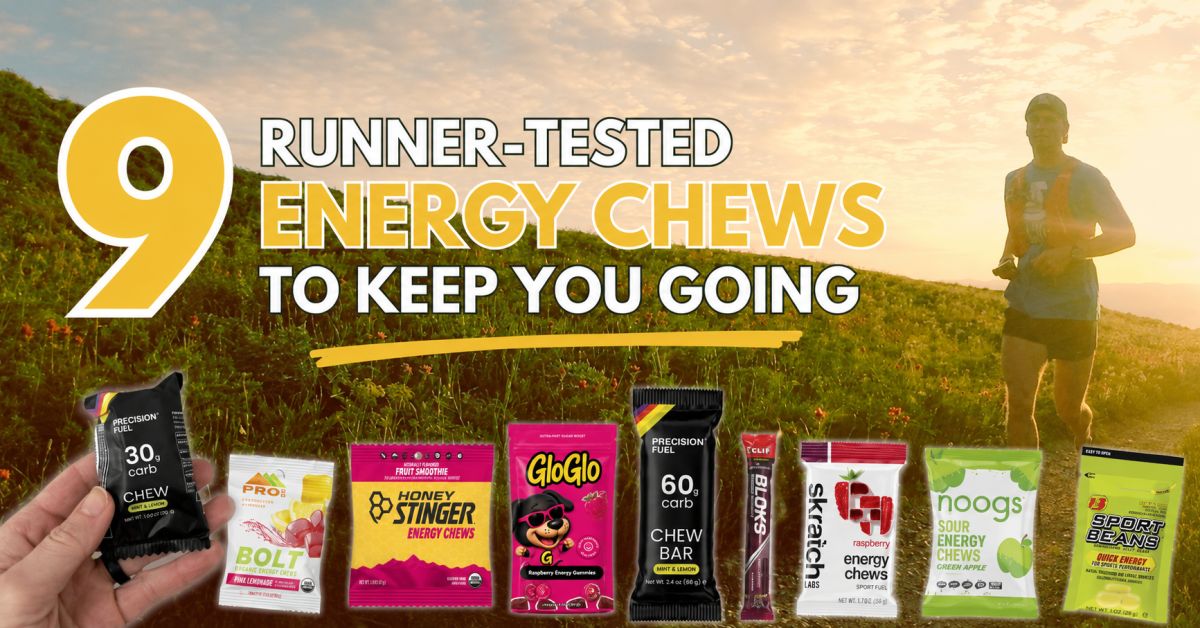
Editor’s note: Evan Jensen originally wrote this article. The WeeViews editorial team updated it in August 2026 with additional runner reviews, current product information and a refreshed lineup of nine energy chews.
If you’re looking for an easy way to fuel your runs, have you tried energy chews?
😋 Think of energy chews as the made-for-runners version of gummy bears, gummy worms, or Sour Patch Kids.
Some energy chews also contain caffeine or electrolytes, while others stand out for their soft texture, subtle flavor, or ability to pack a lot of carbohydrates into one small package.
There are plenty of options. You’re probably not a professional taste tester, and you’d probably rather go running than munch your way through every energy chew on the market. Right?
So, we asked the WeeViews community to help you out.
For this updated guide, WeeViews runners tested these energy chews during everyday training runs, long runs, marathons, triathlons, ultramarathons, and even 100-mile races. We considered flavor, texture, carbohydrate content, caffeine options, packaging, value, and—perhaps most importantly—how easy each chew was to eat while moving.
👇 Check out these nine runner-tested energy chews to find the right fuel for your next run.
The quick answer: Honey Stinger Organic Energy Chews are our best overall energy chews for running. Their soft, fruit-snack-like texture, variety of flavors, and caffeinated and caffeine-free options make them a versatile choice for everyday training and long races.
Runners with more specific priorities may prefer PROBAR BOLT for a budget-friendly source of carbohydrates, Skratch Labs for its real-fruit flavor, or GloGlo for a melty, non-sticky texture that may appeal to texture-sensitive runners. CLIF BLOKS offer several caffeinated choices, while the Precision Fuel PF 60 packs 60 grams of carbohydrate into one wrapper for long-course fueling.
Here are our nine runner-tested picks:
The best energy chew ultimately depends on how much carbohydrate you need, whether you want caffeine, and which flavors and textures still sound appealing several hours into a run. As always, test any new fuel during training before relying on it on race day!
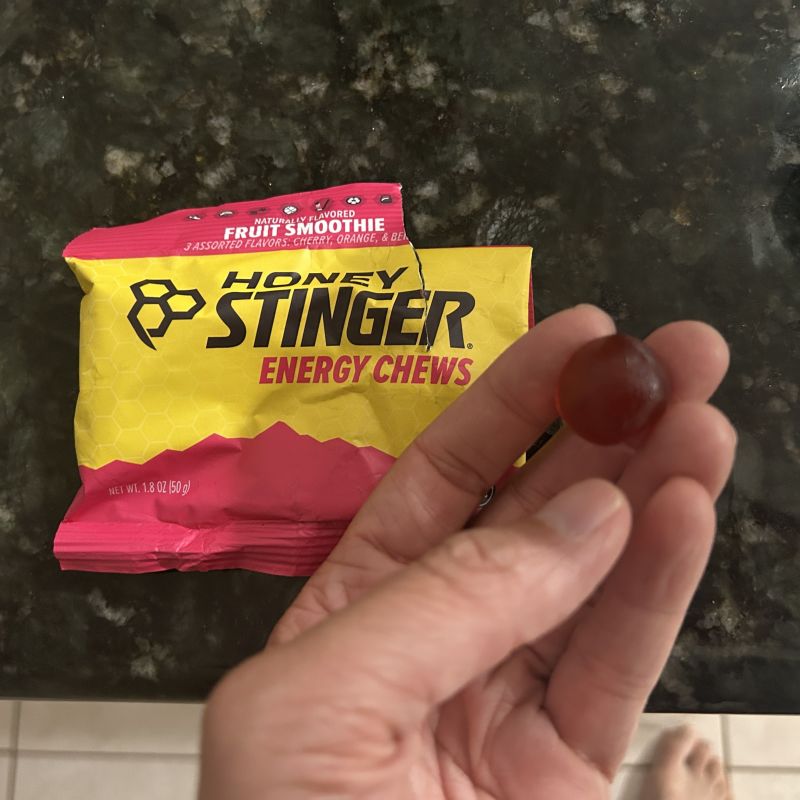
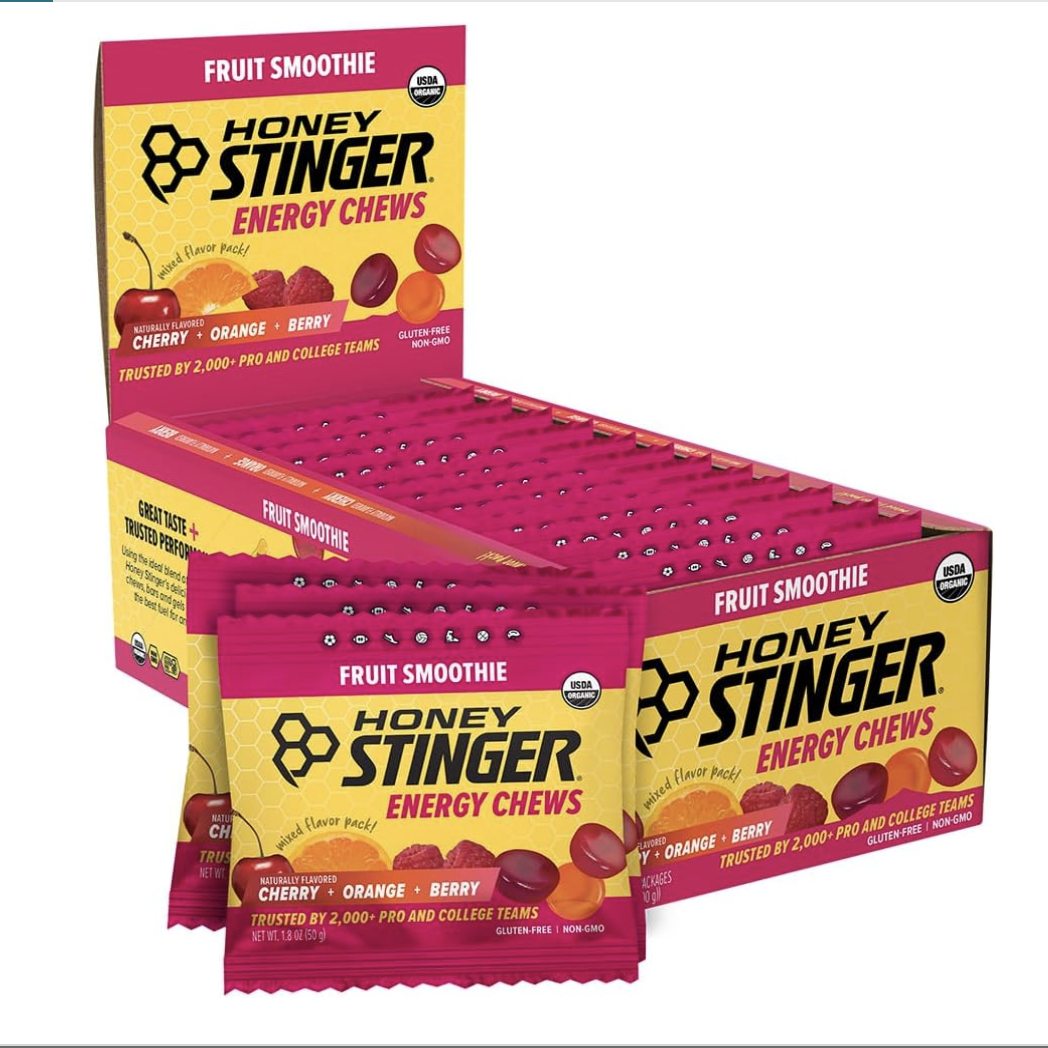
Soft, bite-sized chews sweetened with honey and tapioca syrup. Ten pieces make it easy to spread the packet across a run instead of taking all the carbohydrates at once.
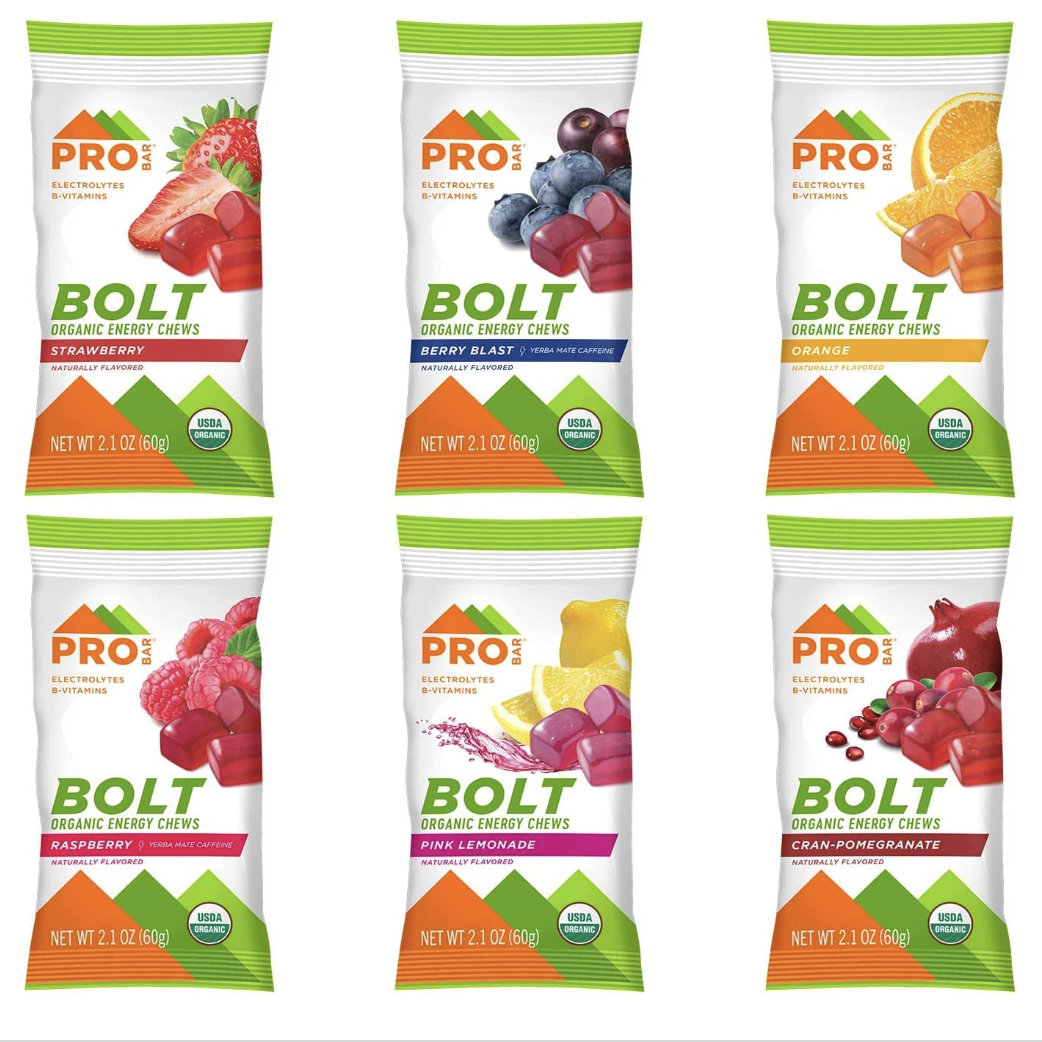
Soft, plant-based organic chews made with tapioca syrup and cane sugar. The full pouch provides two servings, B vitamins and more carbohydrates than its front-label serving suggests.
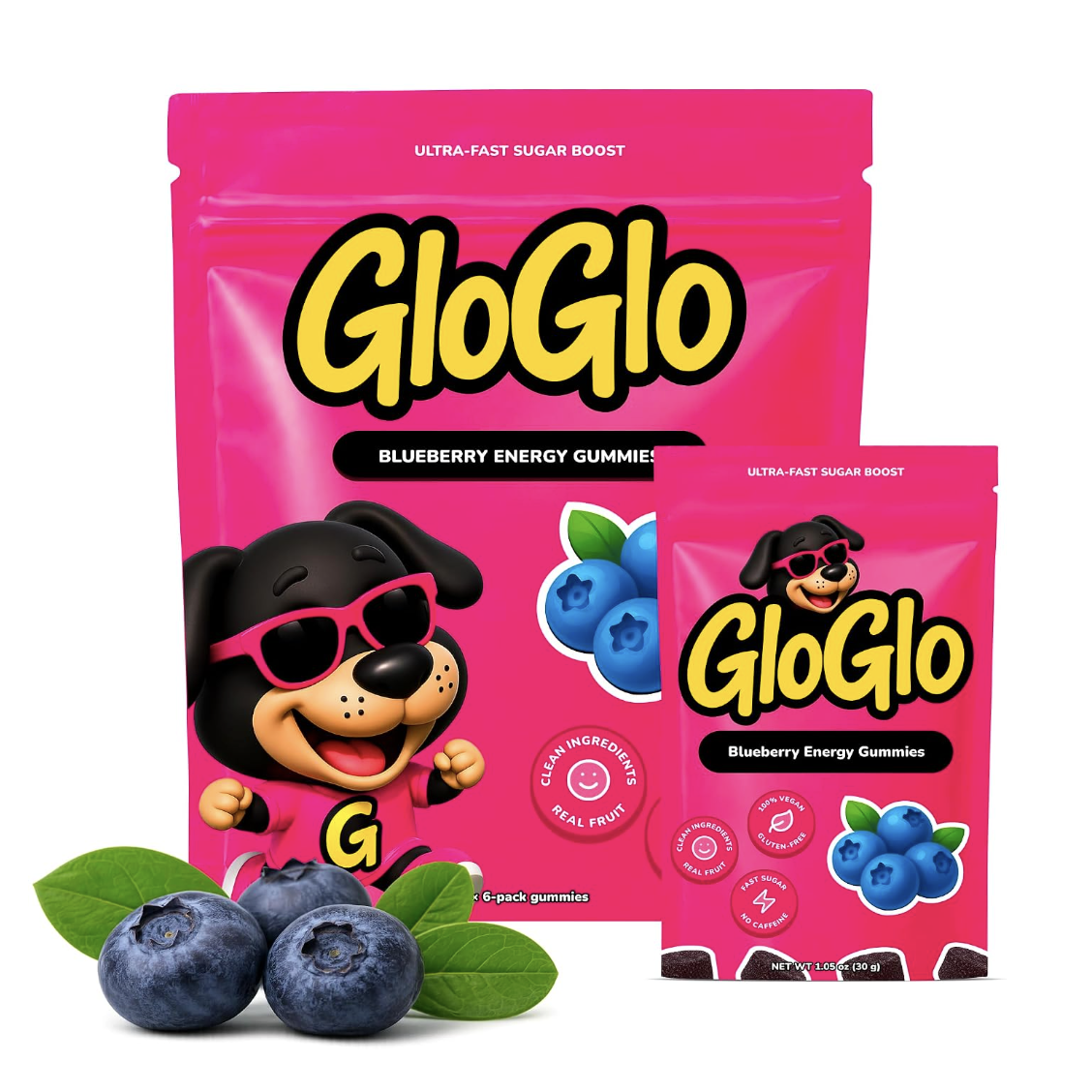
Six non-sticky gummies made with dextrose as the primary carbohydrate source. Their melty, pectin-based texture offers a less chewy alternative for runners who struggle with dense or sticky fuel.
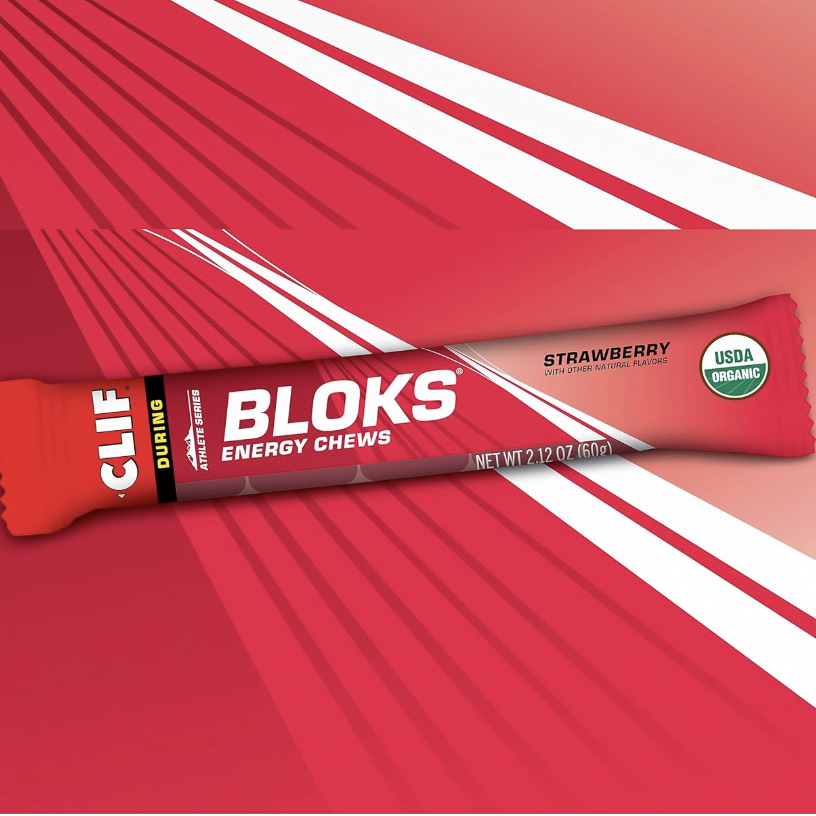
Six dense, individually portioned blocks that are easy to ration during a run. Flavor options include caffeine-free, caffeinated and higher-sodium formulas.
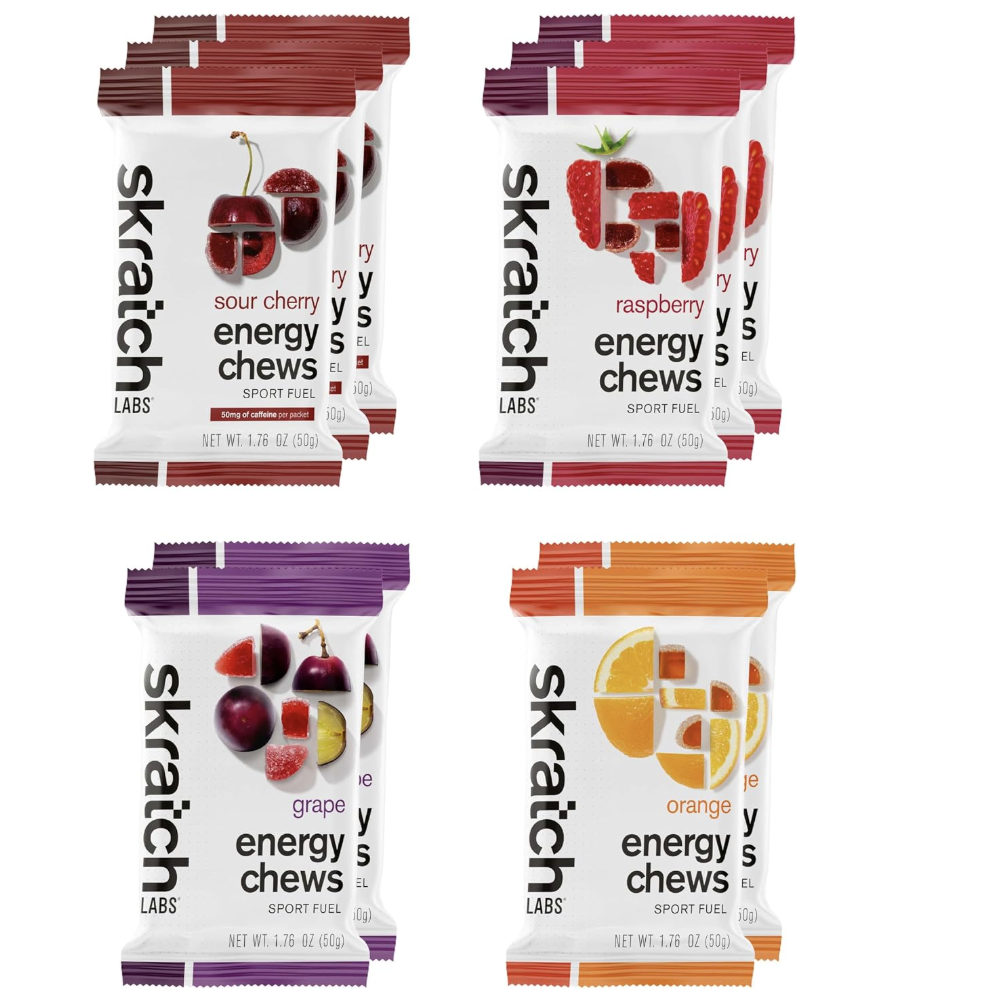
Soft, pectin-based chews flavored with real fruit and made without artificial flavors or colors. The Raspberry pouch contains ten chews divided into two servings.
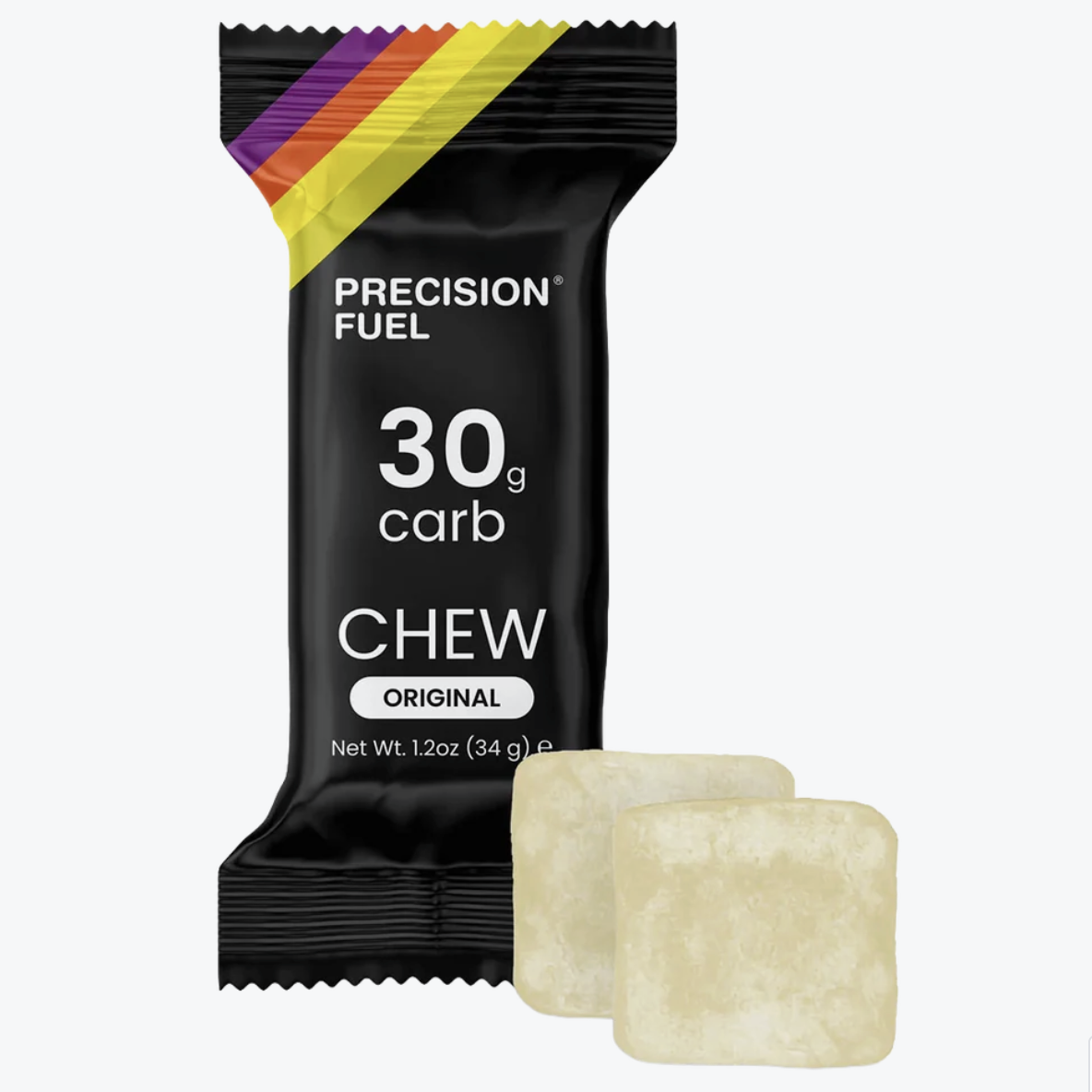
Two compact chews containing 15g of carbohydrates apiece. The simple two-piece format makes it easy to count carbohydrates without keeping track of a handful of smaller gummies.
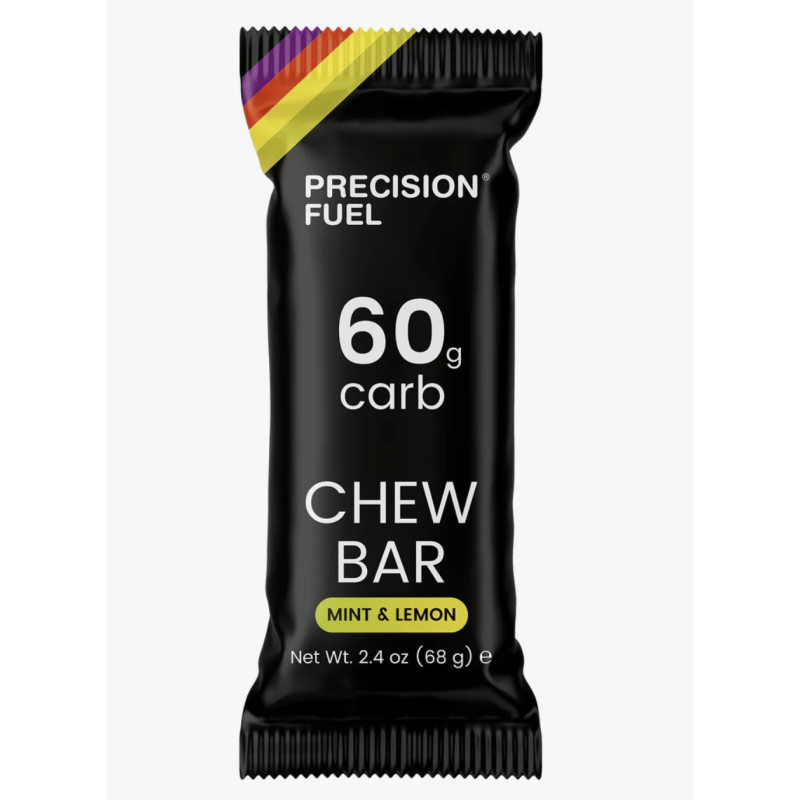
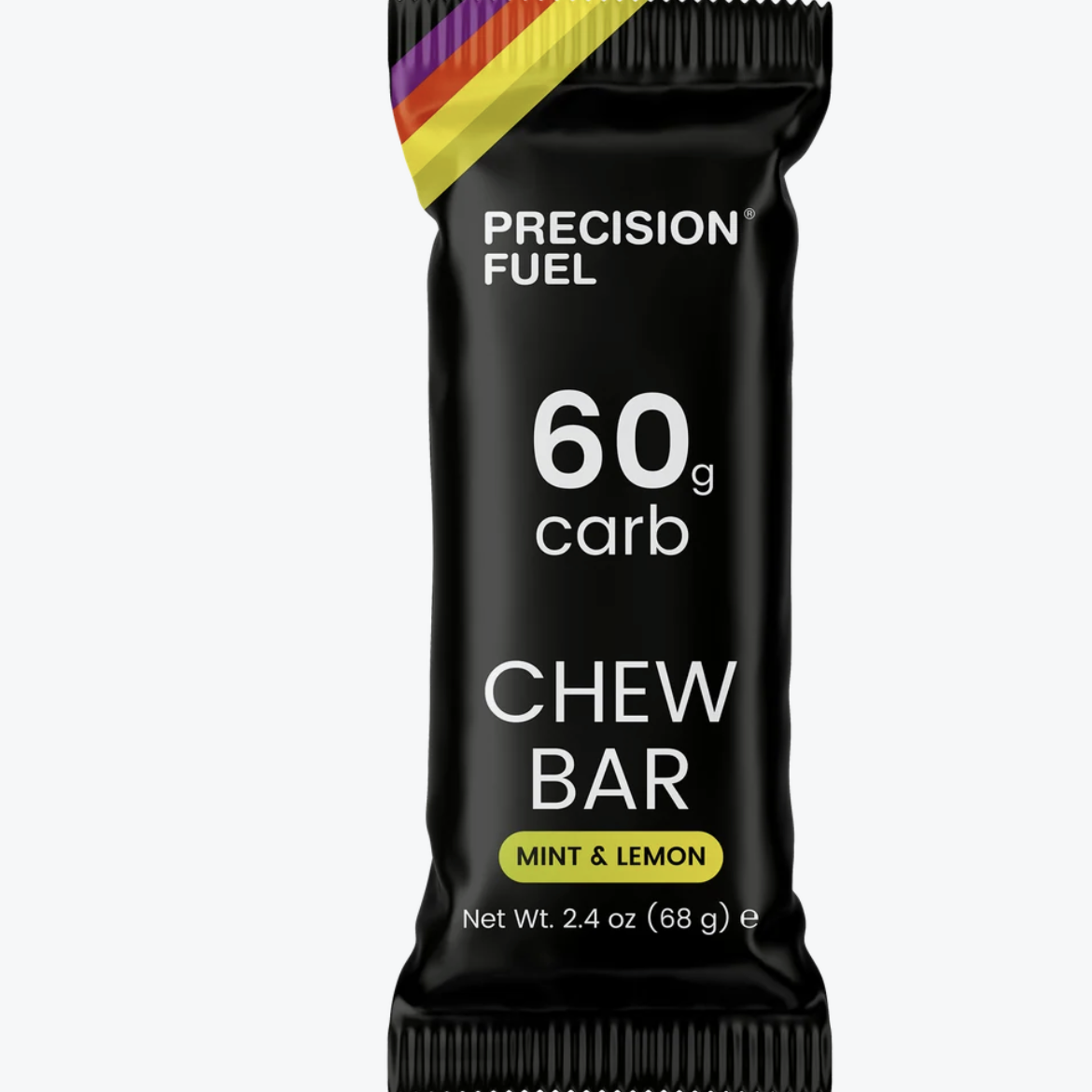
A soft, bar-style chew that packs 60g of carbohydrates into a 68g package. It provides the most carbohydrates in the lineup while reducing the number of wrappers needed for high-carb fueling.
Pectin-based sour gummies made with glucose and fructose, plus sodium and potassium. Each pouch contains two six-chew servings for runners who want carbohydrates with more built-in electrolytes.
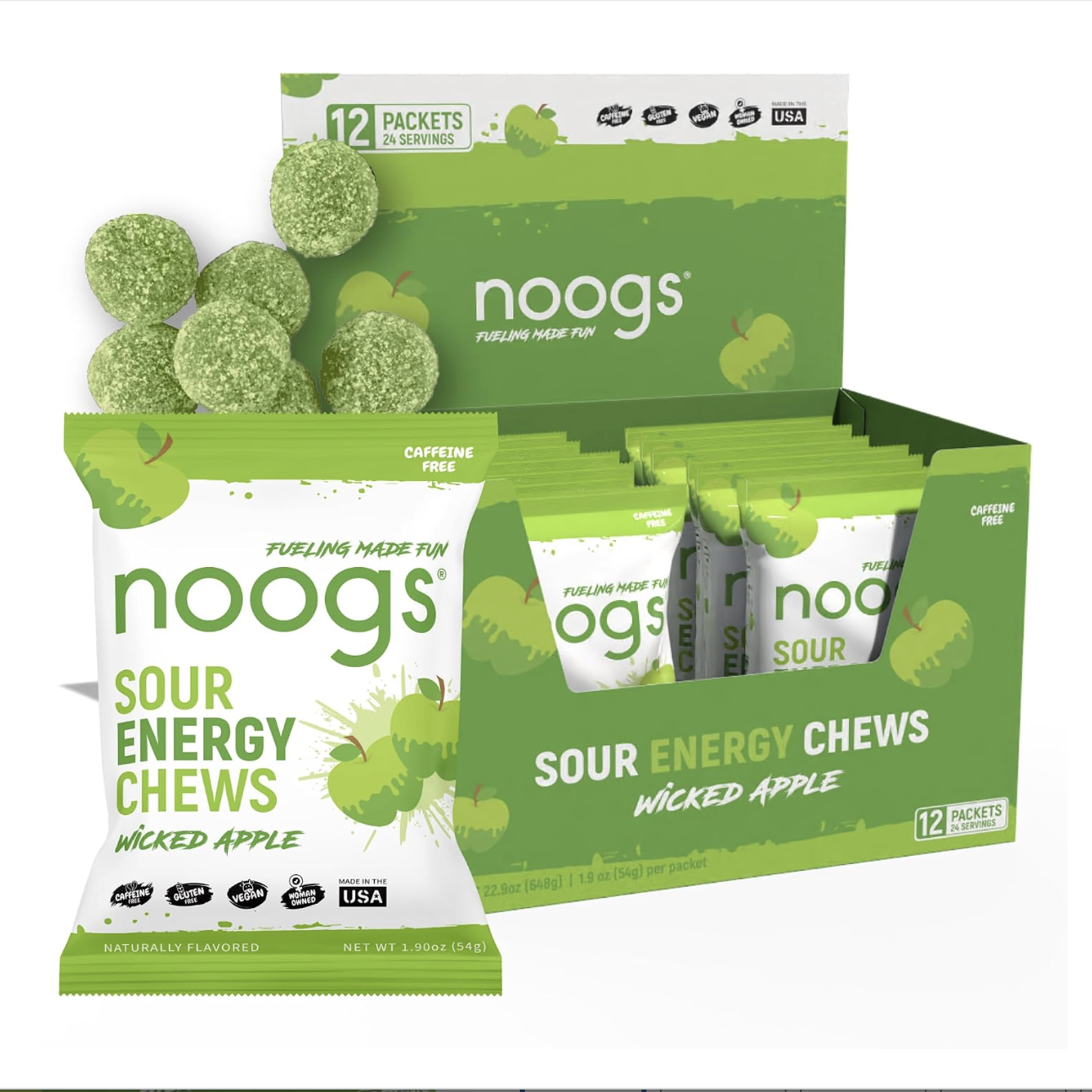
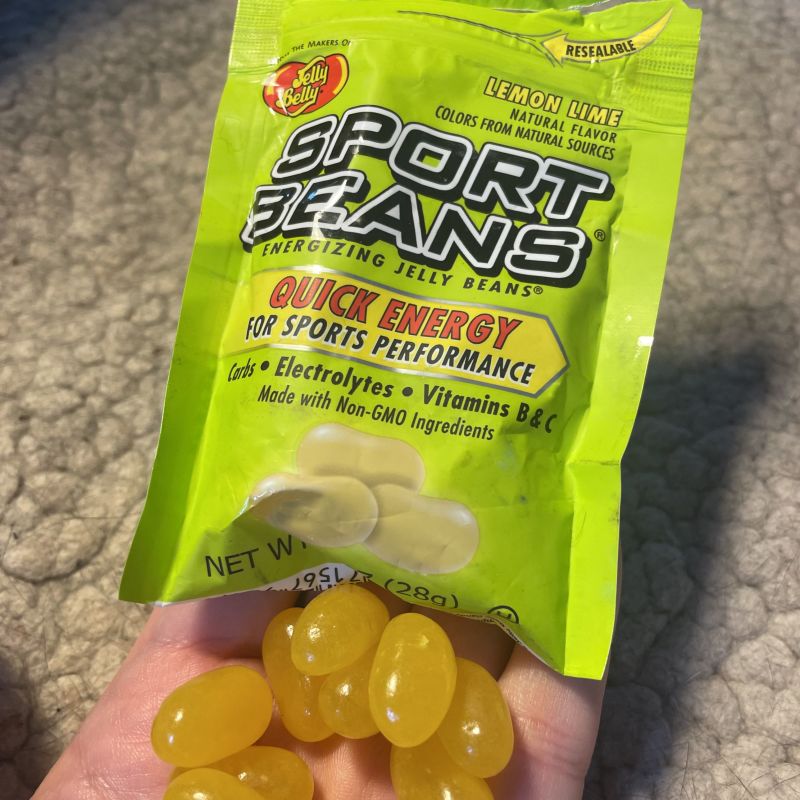
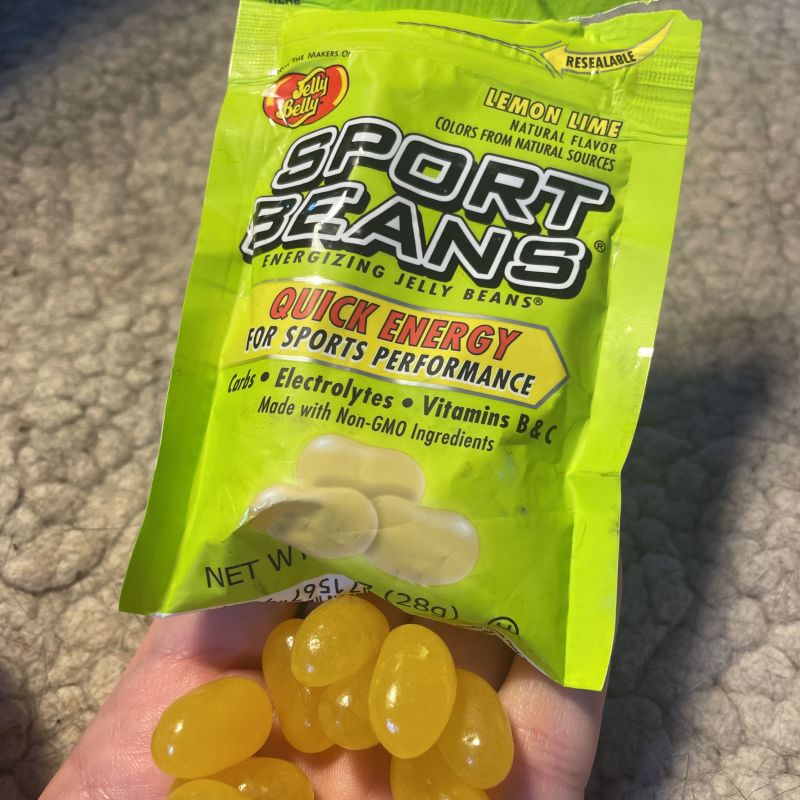
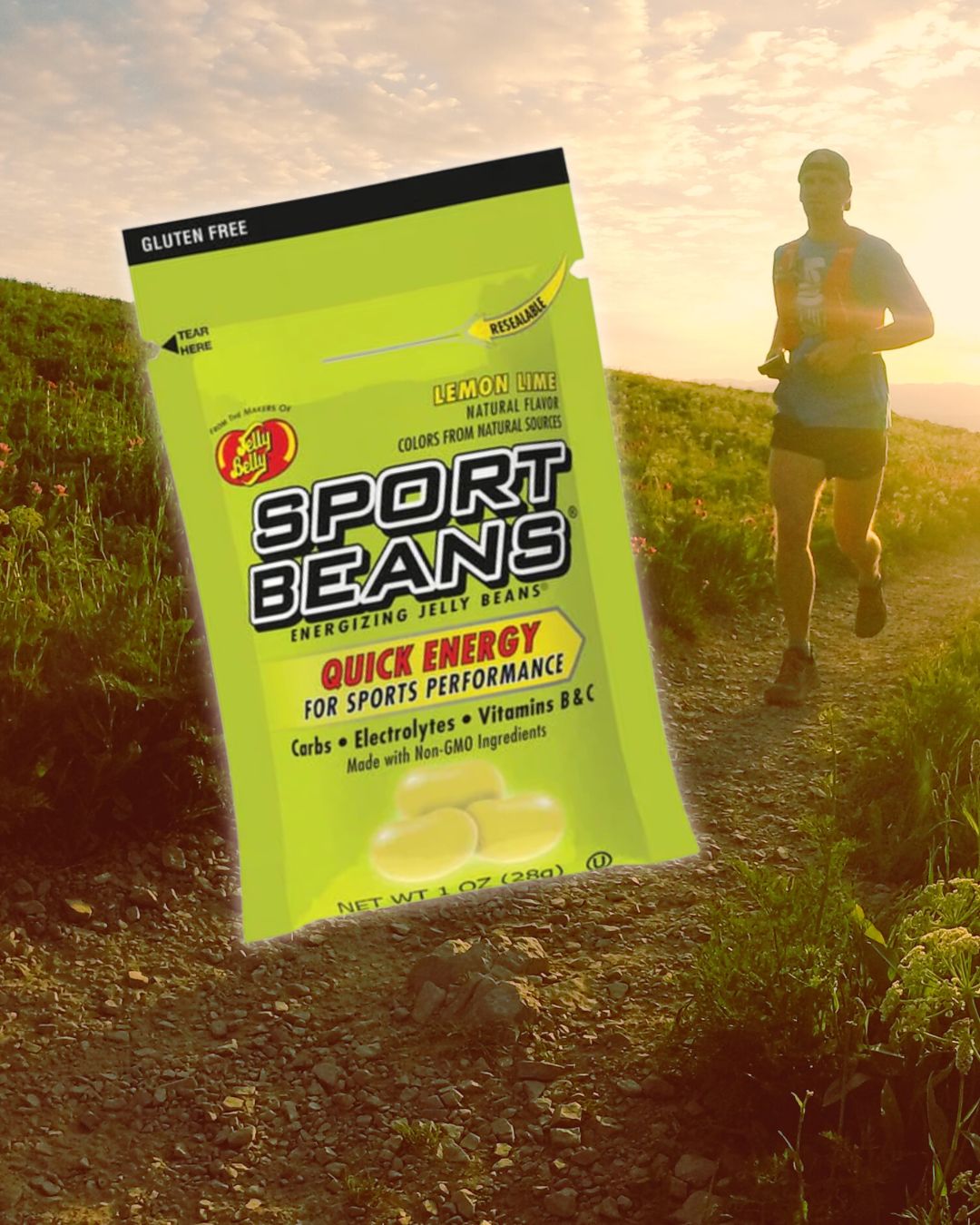
A resealable pouch of jelly bean-style fuel containing carbohydrates, electrolytes and vitamins B and C. They provide the most familiar candy-like eating experience in the lineup.
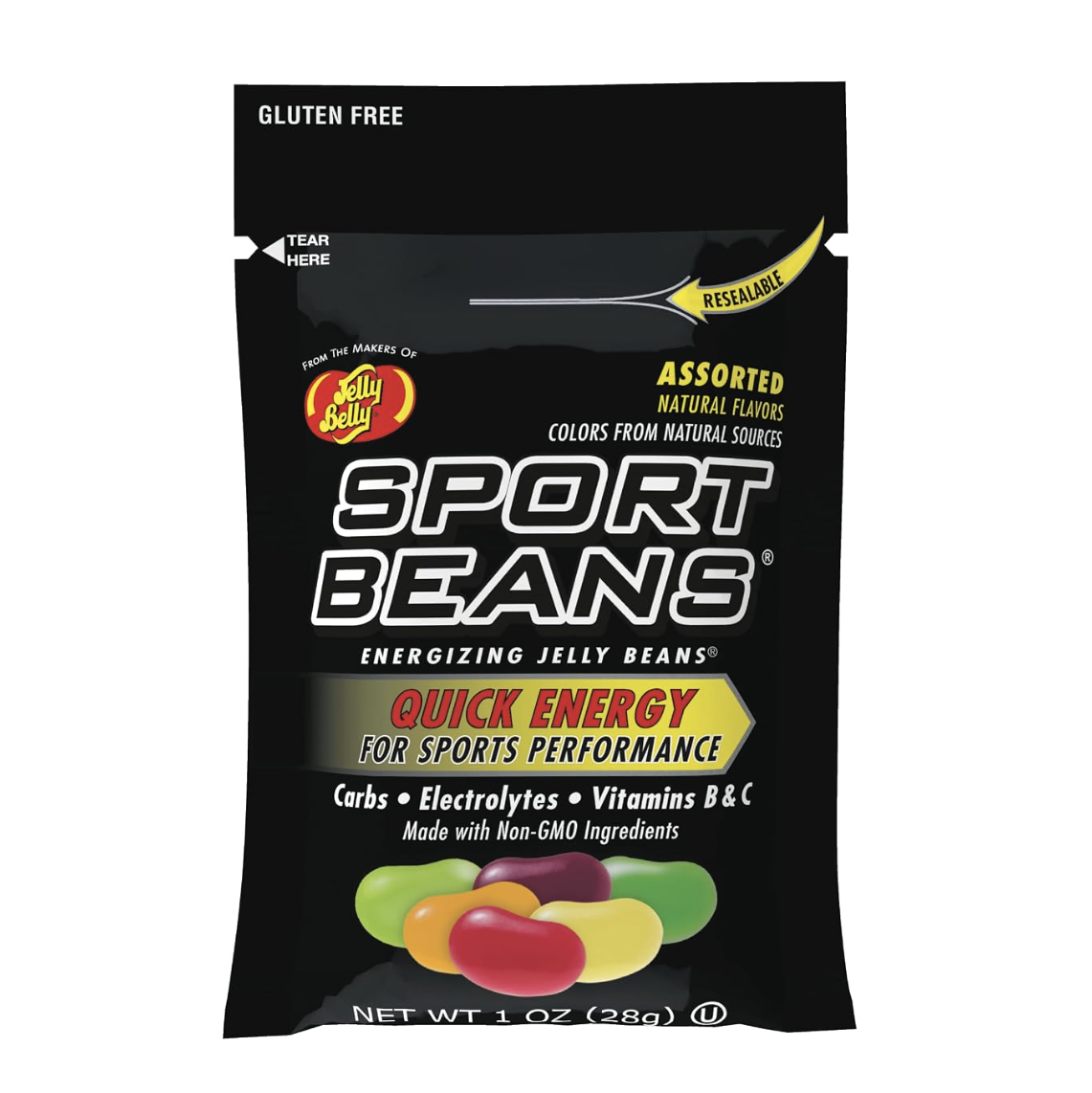
Honey Stinger Organic Energy Chews earned our best overall designation for their soft texture, broad flavor selection, and choice of caffeinated or caffeine-free varieties. They also have the deepest review pool in this guide, earning a 4.6/5 rating from nine WeeViews reviewers.

Each classic 10-chew packet provides 39 grams of carbohydrate, making it easy to spread a meaningful amount of fuel across a longer run—or eat the whole package when hunger and mileage conspire.
The basics:
Best for: Runners who want a soft, fruit-snack-like chew with plenty of flavor and caffeine options.
May not work for: Runners who dislike sticky chews or the honey undertone shared across flavors.
✅ Pros
❌ Cons
😋 The taste test: Rachel found the chews more palatable than other sports fuels she had tried. Their soft consistency required less chewing than a granola-style bar, and she didn’t feel as though she needed much water to wash them down.
For runners planning to use Honey Stinger regularly, Rachel recommends choosing a variety pack to prevent flavor burnout. Although every flavor carries a honey undertone, the individual fruit flavors provide enough variety to keep things interesting. The chews also hold up well if you save part of an open packet for another run.
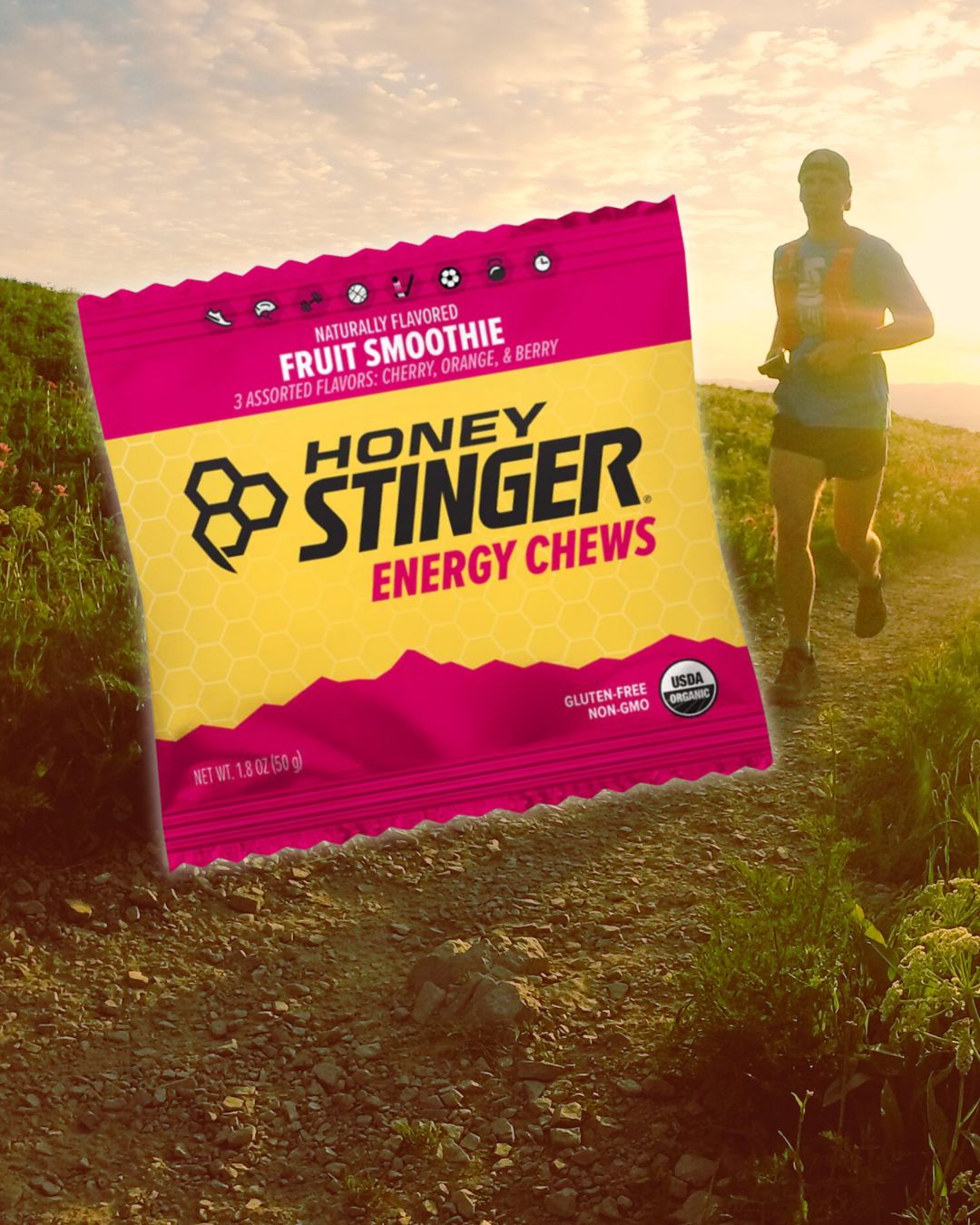
Sports nutrition has not exactly become famous for its affordability. Still, PROBAR BOLT Energy Chews provide one of the best values in this lineup: a 12-pack currently costs $29.99, or about $2.50 per pouch.
Each pouch contains two servings and provides approximately 46 grams of carbohydrate in total. That works out to roughly 5.4 cents per gram of carbohydrate—slightly less than the other chews we compared using standard box prices.

The basics:
Nutrition totals reflect the entire pouch, which contains two labeled servings. Exact values may vary slightly by flavor.
Best for: Budget-conscious runners who want plenty of carbohydrates in a soft, fruit-snack-like chew.
May not work for: Runners with sensitive stomachs who become overwhelmed by intensely sweet fuel.
✅ Pros
❌ Cons
😋 The taste test: Michigan marathoner and ultrarunner Rachel Wierenga has a sensitive stomach, so she is selective about which products earn a place in her long-run fueling plan. She found the BOLT chews flavorful, easy to chew and generally comfortable to eat while running. The sweetness occasionally became too much and contributed to an upset stomach, but she still considered them a dependable option compared with other energy chews.
And when Pink Lemonade hits correctly in the later miles? Apparently, it slaps.
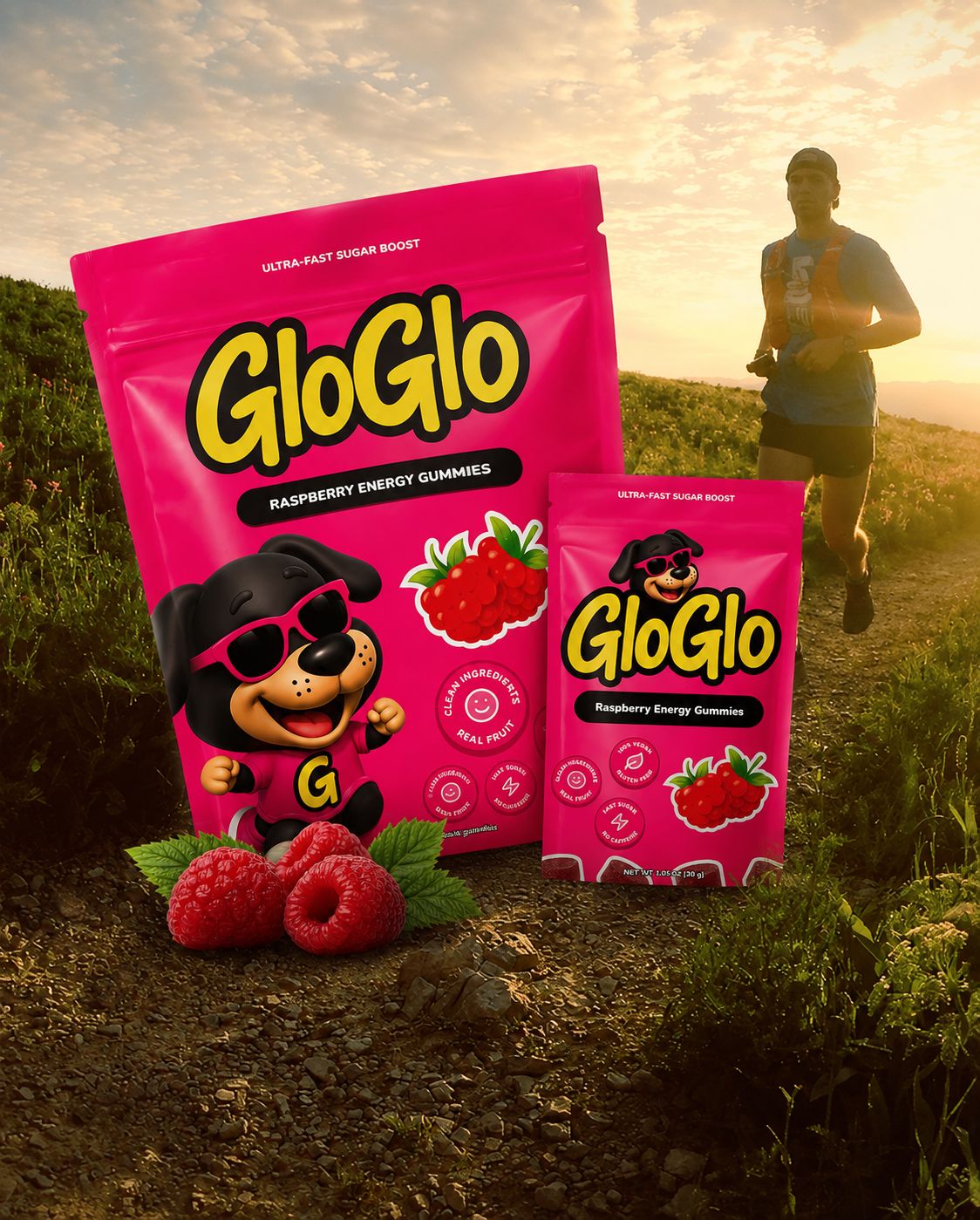
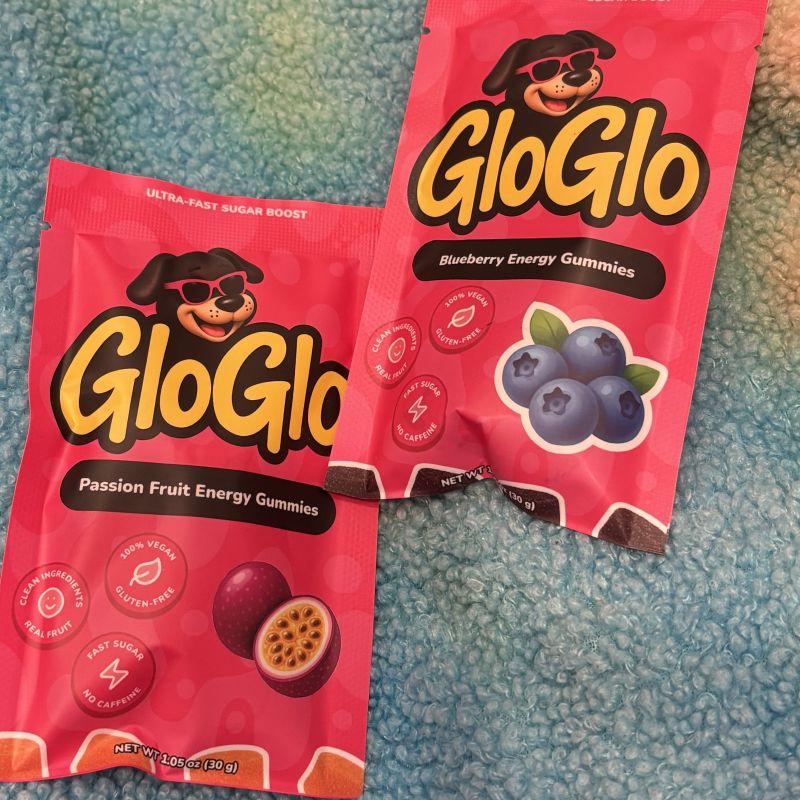
GloGlo Energy Gummies are a melty gummy designed to break down quickly without sticking to your teeth or coating your fingers in a layer of fruit-flavored goo.
WeeViews reviewer Jenna Busch-Henderson tested the Blueberry and Passion Fruit flavors during the Seaside Marathon. She received the gummies free for review and, despite the familiar advice against trying new fuel on race day, decided that 26.2 miles provided a perfectly thorough testing opportunity.

GloGlo uses dextrose as its primary carbohydrate source. Each serving contains six gummies and provides 24 grams of carbohydrate. The current formula is vegan, gluten-free, caffeine-free, and made without artificial flavors or colors.
The basics:
Best for: Runners with sensory or texture sensitivities who want a gummy that breaks down quickly without leaving sticky residue on their hands or teeth.
May not work for: Runners seeking caffeine or more than 24 grams of carbohydrate from one serving.
✅ Pros
❌ Cons
😋 The taste test: Jenna is particularly sensitive to sticky textures while running—enough to avoid orange slices at marathon aid stations. She found that the GloGlo gummies left no noticeable residue on her hands, teeth or shorts, making them easier to manage while moving.
She also enjoyed both the Blueberry and Passion Fruit flavors and reported no stomach trouble during the marathon. Her greatest concern had little to do with running performance: the gummies tasted good enough that reserving them exclusively for training and racing might require considerable restraint.
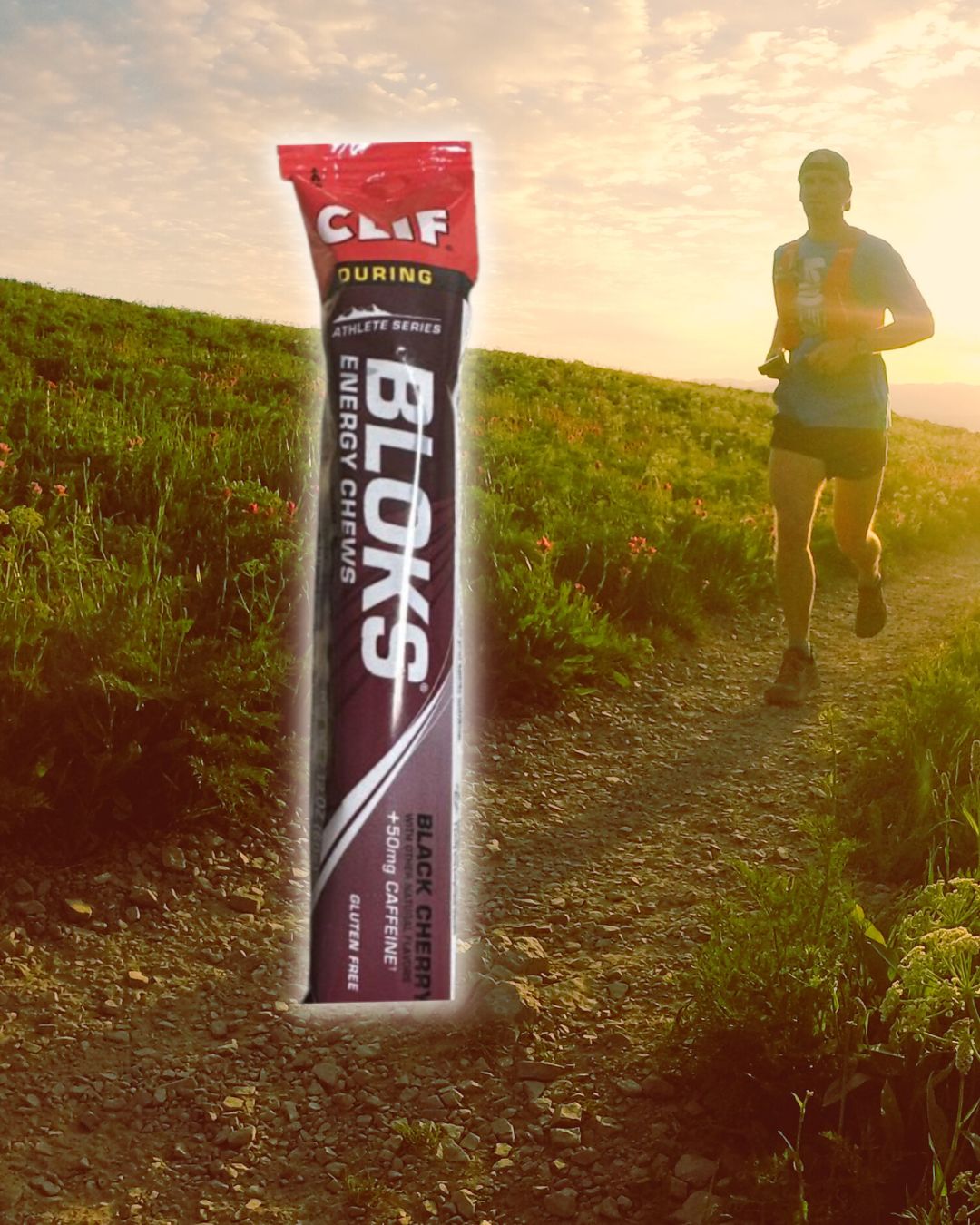
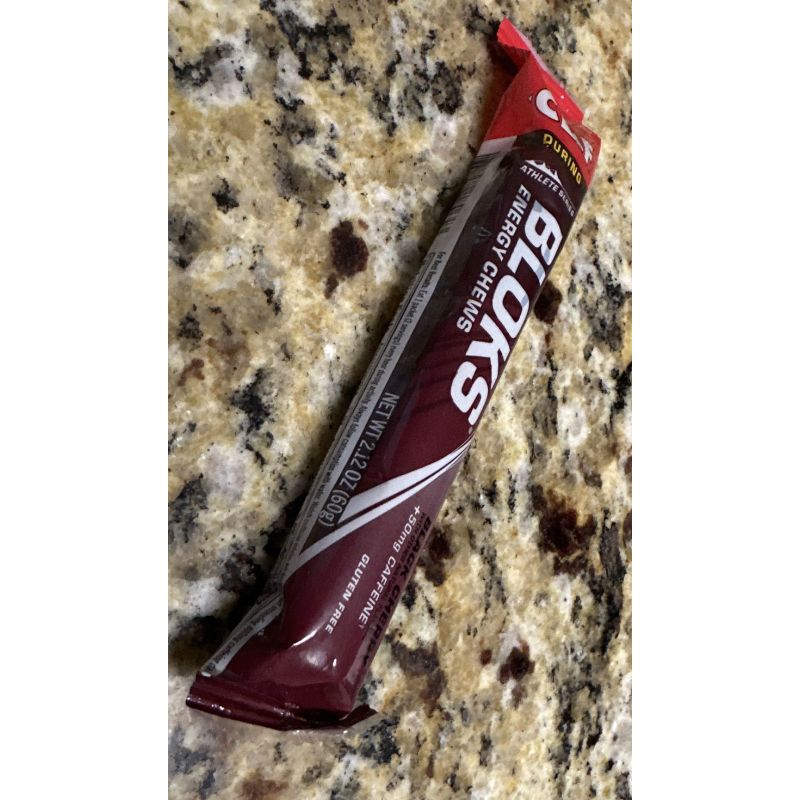
On a trip to the store looking for long-run fuel, Colorado runner Jeff Toda decided to give CLIF BLOKS a try. He wasn’t disappointed.
CLIF offers four caffeinated flavors—Black Cherry, Orange, Tropical Punch, and Sour Strawberry Lemonade—with either 25 or 50 milligrams of caffeine per three-BLOK serving. Since each packet contains six BLOKS, runners can consume half at a time or eat the full packet for 50–100 milligrams of caffeine.

The basics:
CLIF lists nutrition information per three-BLOK serving. A full packet contains two servings, so the total carbohydrate, sodium and caffeine amounts are double the values shown on the label.
Best for: Runners who want a caffeinated chew with several flavor and dosage options.
May not work for: Caffeine-sensitive runners or anyone who might mistake the half-packet serving information for the totals in the full package.
✅ Pros
❌ Cons
😋 The taste test: Jeff tested CLIF BLOKS during a seven-mile run and was surprised by how much he enjoyed the flavor by mile four. He also found them easy to break down with little chewing and appreciated that the package was manageable while running.
The caffeinated lineup gives runners more flexibility than most chews in this guide. Orange, Tropical Punch and Sour Strawberry Lemonade provide approximately 50 milligrams of caffeine per full packet, while Black Cherry doubles that to approximately 100 milligrams. That range is useful, but check the wrapper before assuming one flavor fuels exactly like another. Your taste buds may see a colorful row of gummy blocks. Your caffeine tolerance sees paperwork.
Related: Clif Bloks: Will This Ironman Triathlete's Fueling Strategy Work?
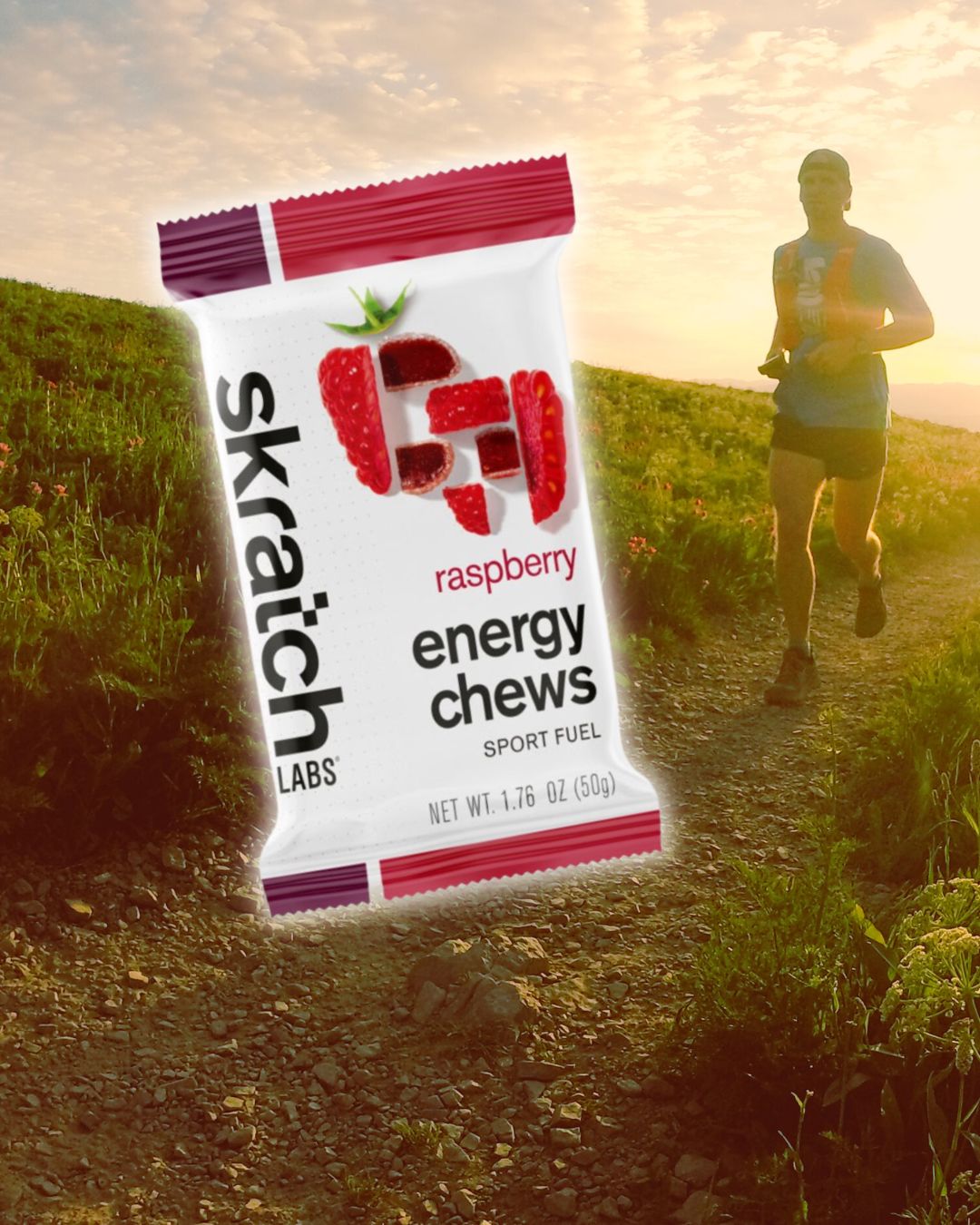
Skratch Labs uses flavor-specific fruit ingredients—including grape juice, organic raspberry juice, orange juice powder, apple powder and cherry powder—to give its Sport Energy Chews their flavor. The recipes are relatively short, with most varieties containing only seven or eight ingredients and no artificial flavors or colors.
But ingredient lists only tell us so much. WeeViews editor and ultrarunner Evan Jensen put the Raspberry chews through a slightly longer taste test: the Mountain Lakes 100.

Evan ate the chews regularly throughout the race and finished Mountain Lakes for the seventh time. The chews were only one part of his broader fueling plan, but their soft texture and mild fruit flavor gave him another carbohydrate option when gels and gooey foods had become less appealing.
The basics:
Nutrition varies slightly by flavor. Each pouch contains two labeled servings.
Best for: Runners who prefer mild, fruit-forward flavors and a short ingredient list without artificial flavors or colors.
May not work for: Runners trying to carry large quantities of carbohydrates with as few packages as possible.
✅ Pros
❌ Cons
😋 The taste test: Evan found the Raspberry flavor fruity without becoming overwhelmingly sweet. The chews softened and dissolved easily in his mouth, making them manageable when his mouth felt dry late in the 100-mile race. For shorter runs, carrying one or two pouches is simple enough. For a marathon or ultra, however, the packaging begins to multiply. Evan solved that problem by combining 30 chews in each snack-sized bag before Mountain Lakes. Was it the most elegant packaging system ever devised? Perhaps not. But it reduced the number of wrappers he needed to carry and helped keep a familiar source of carbohydrates within reach for 100 miles.
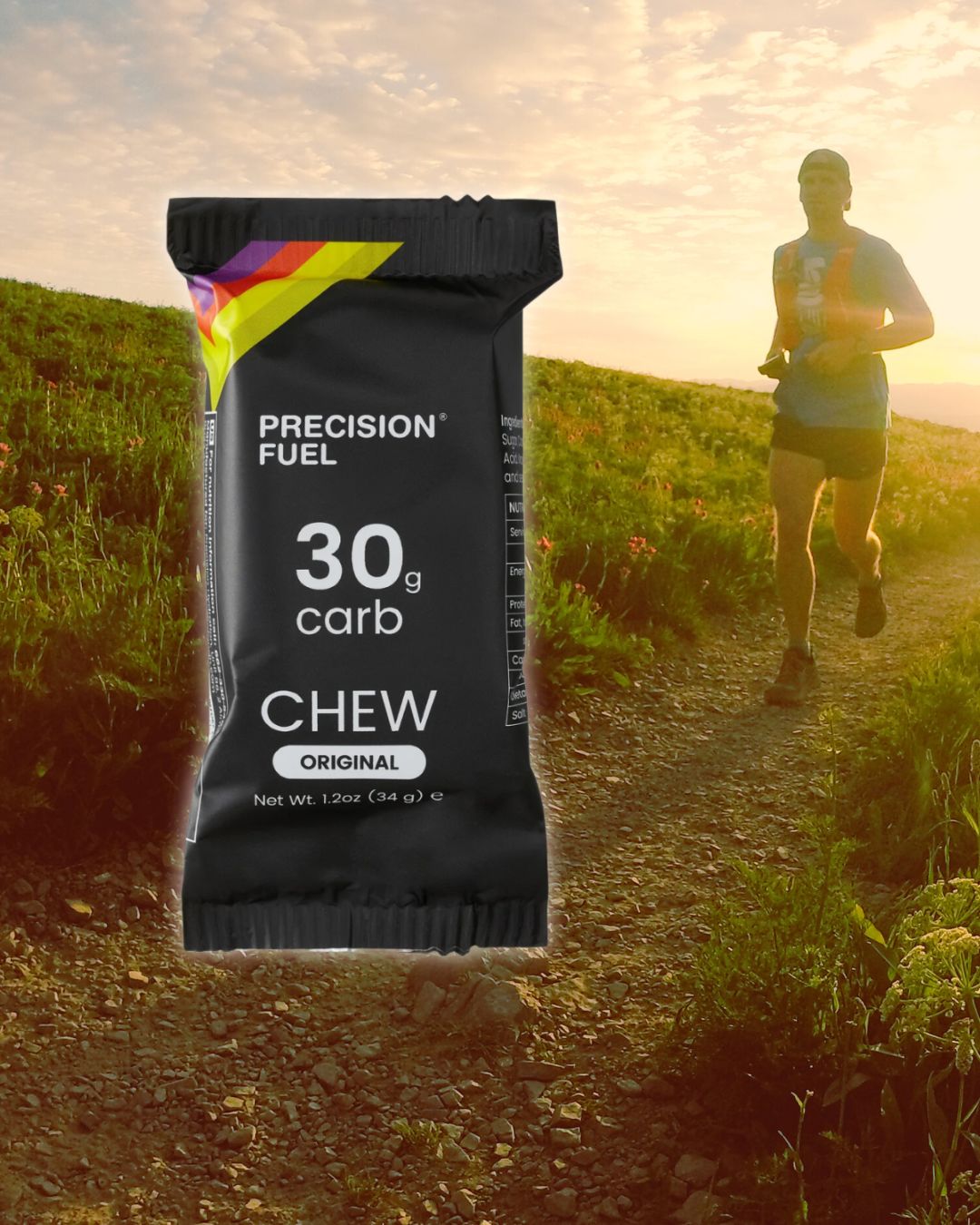
WeeViews writer, coach and trail runner Abby Lock discovered the PF 30 Chews by happenstance in Leadville, Colorado. She was helping source sports nutrition for DJ Fox while he pursued the west-to-east Collegiate East FKT on the Colorado Trail. DJ didn’t use the chews she picked up—so Abby did. Sometimes one runner’s leftover fuel is another runner’s future long-run favorite.
Each PF 30 packet contains two pieces with 15 grams of carbohydrate apiece. That simple math makes it easy to consume half a packet, eat all 30 grams at once, or combine the chews with gels and drink mix to reach a larger hourly target.

The basics:
Best for: Runners and cyclists who want mild flavor and precisely portioned 15-gram carbohydrate increments.
May not work for: Runners who prefer gels or drink-based carbohydrates when breathing hard.
✅ Pros
❌ Cons
😋 The taste test: Abby prefers chewable fuel during easy runs and indoor rides, while reserving gels for workouts and races. She found the PF 30 soft enough to manage at lower intensities and appreciated the lack of a loose sugar coating. The flavors also occupy a milder lane than many fruit-candy-style chews. Abby described the Original as light citrus and preferred the Mint & Lemon, which reminded her of lightly sweetened tea rather than an aggressively flavored sports product. That subtlety may not excite runners looking for something that tastes like candy. Several hours into a long effort, however, “not aggressively flavored” can become a rather compelling feature.
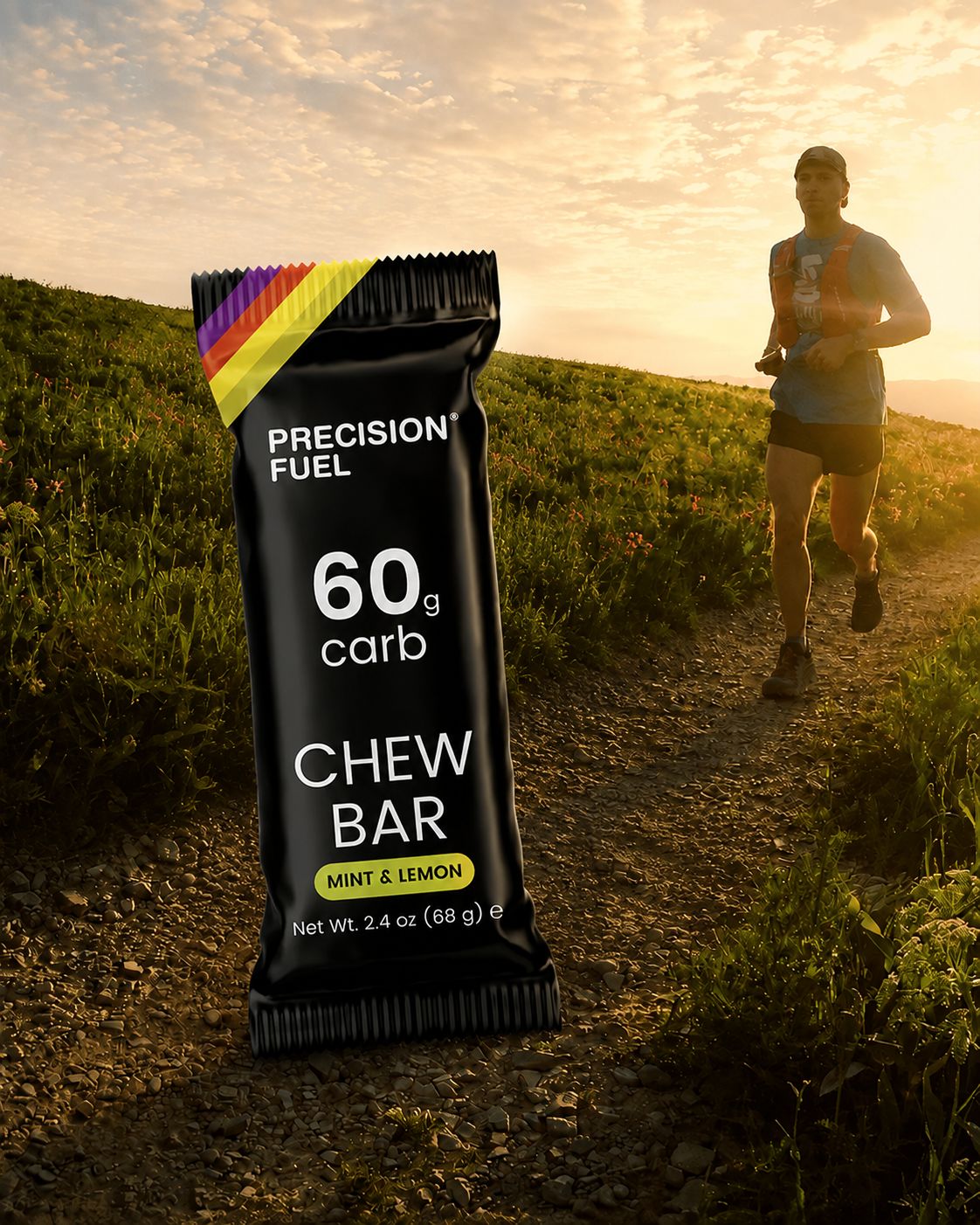
The PF 30 makes carbohydrate counting simple. The PF 60 takes that tidy math and doubles it, delivering 60 grams of carbohydrate in one compact bar. That makes the PF 60 the highest-carb option in this guide and a practical choice for long-course athletes who want to start an effort with fewer wrappers stuffed into their pockets or vest.
After enjoying the original flavor of the Precision 30g Chews, Abby decided to try out the Mint & Lemon 60g chew during easy runs and endurance rides.
The basics:
Best for: Easy long runs, steady ultramarathon efforts, endurance rides and athletes targeting higher carbohydrate intake with fewer packages.
May not work for: Hard running efforts, athletes who dislike extended chewing or runners looking for the lowest upfront price.
✅ Pros
❌ Cons
😋 The taste test: Mint and lemon could become an aggressive flavor combination in the wrong hands, but Abby found Precision’s version light, refreshing and relatively subtle. She preferred it to the Original flavor because it added more variety alongside the mild citrus profile of the Precision gels she already uses. The soft bar wasn’t excessively sticky or determined to cling to her teeth, but 60 grams of carbohydrate still requires a meaningful amount of chewing. Abby found the texture manageable during easy runs, steady ultra efforts and cycling. When intensity rises and breathing takes priority, she would choose a gel or drink-based carbohydrate source instead.
The PF 60 is also more expensive per item than most chews in this guide. Its value becomes easier to defend when viewed as two 30-gram servings housed in one wrapper, but Abby would still like to see a meaningful bulk discount. High-carb convenience is useful. High-carb convenience on sale would be even better.
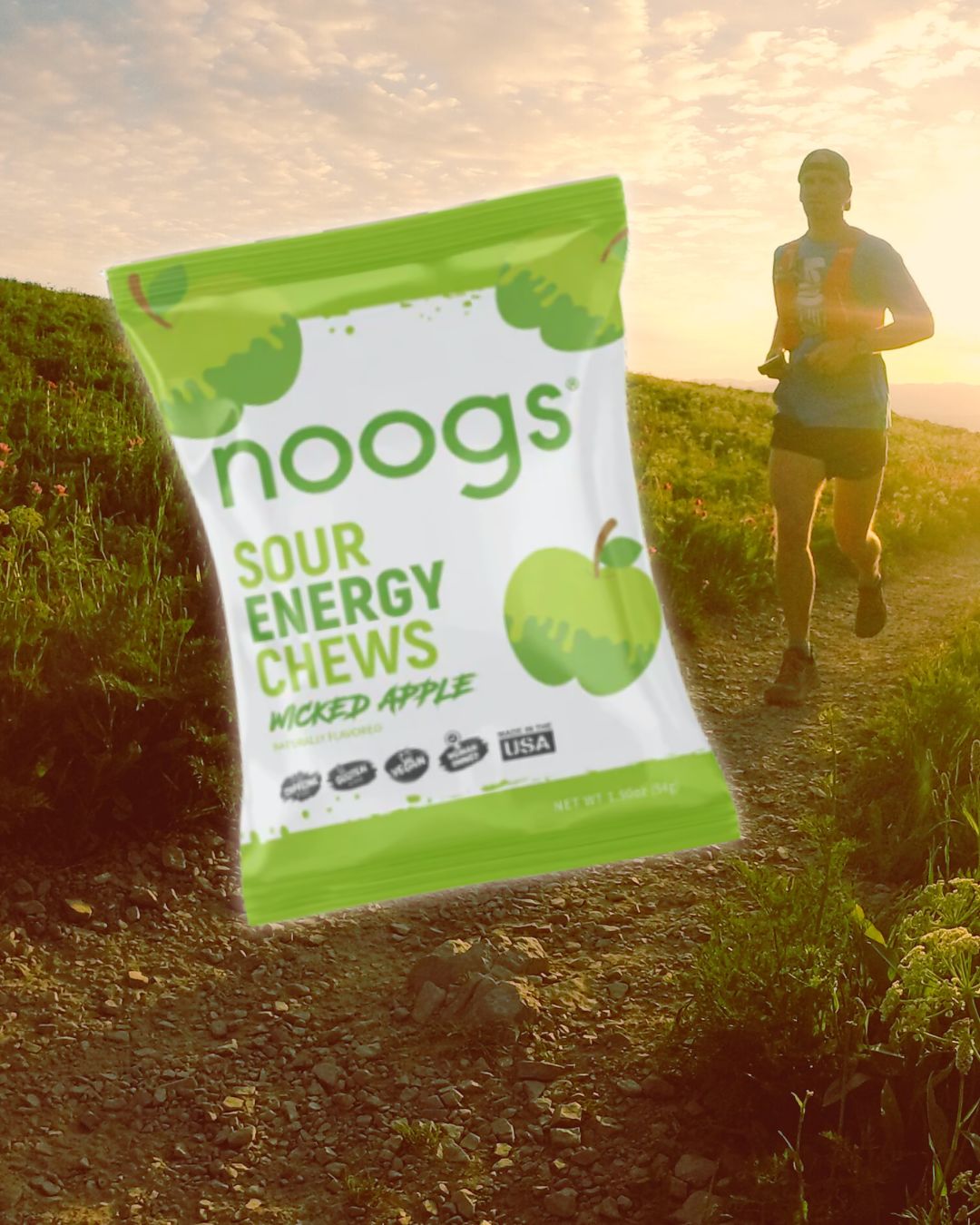
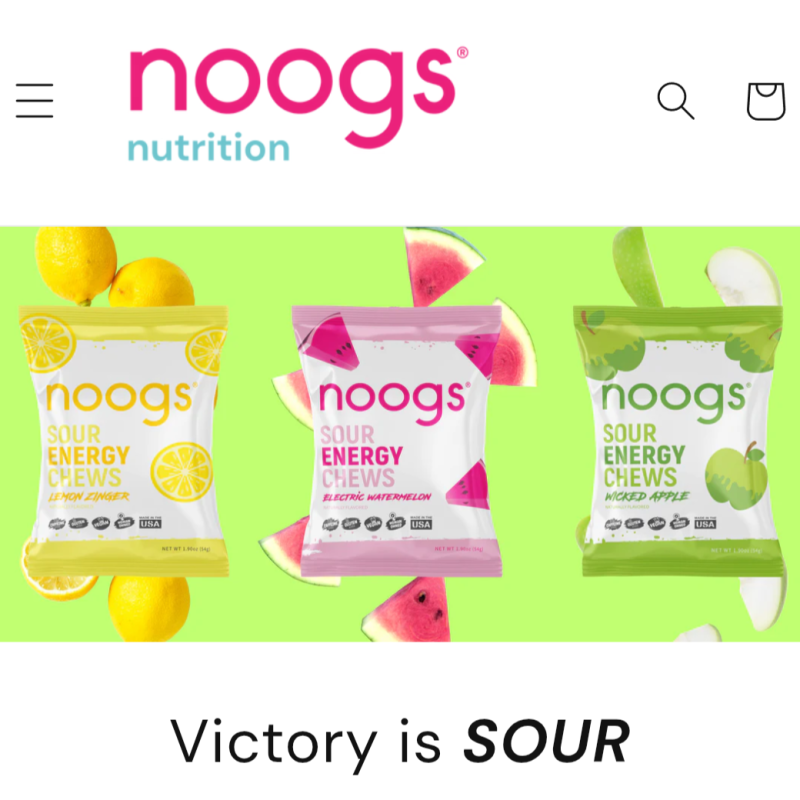
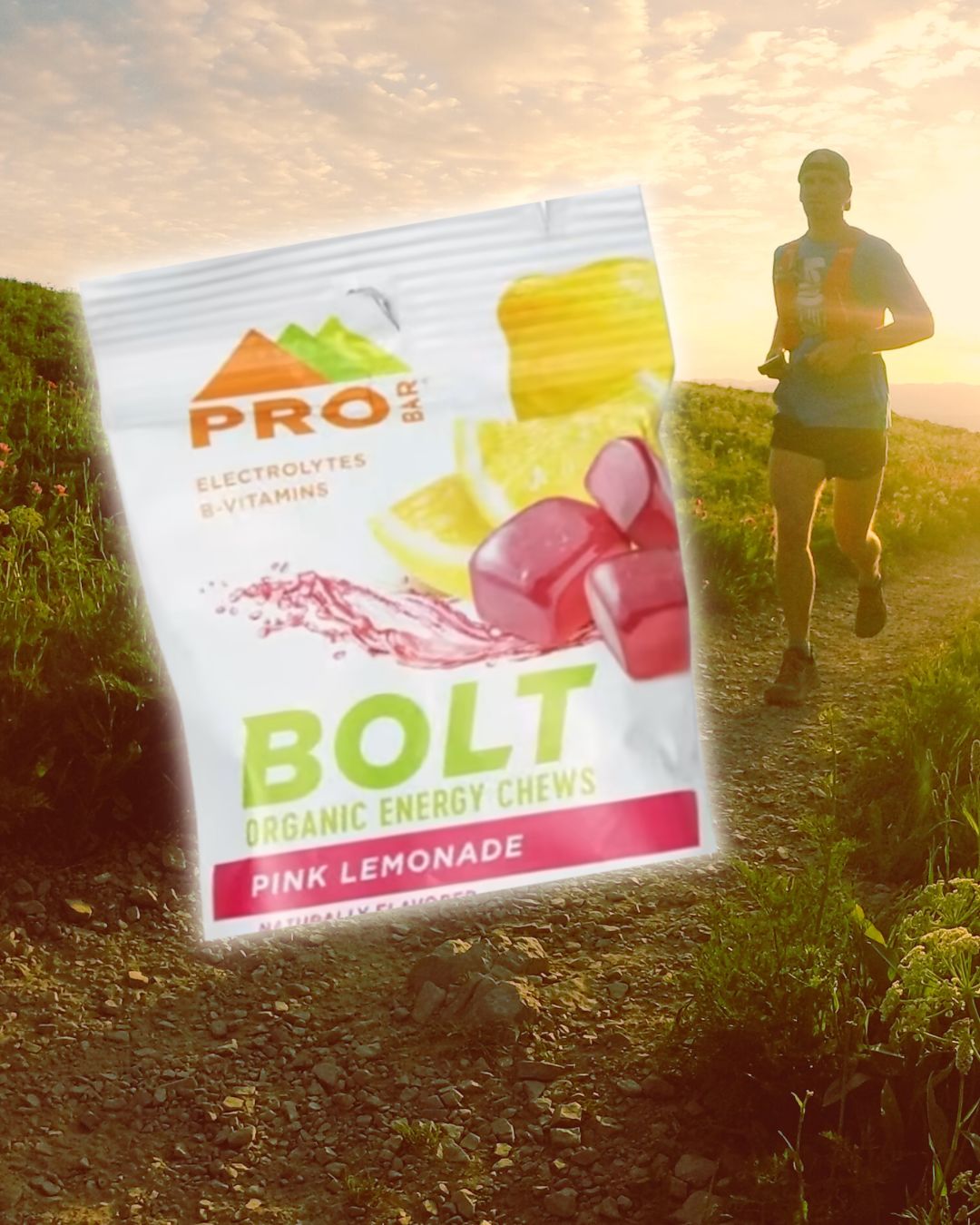
After several hours of sweet drinks, gels and chews, even a favorite flavor can start to feel like concentrated dessert. Noogs offers runners a palate-cleansing alternative with sour candy flavors and a meaningful dose of both carbohydrates and electrolytes.
Running coach Michael Vaughan and his wife started experimenting with sour candy when traditional chews became overwhelmingly sweet during longer efforts. Noogs gave them a sports-fuel-specific way to introduce that tart flavor.

The current Noogs formula is more substantial than the version reflected in Michael’s original review. Each packet now contains two servings and approximately 38 grams of carbohydrate, allowing runners to use Noogs as a primary carbohydrate source or mix them into a broader fueling plan.
The basics:
Nutrition totals reflect the entire packet, which contains two labeled servings. The caffeinated varieties provide 50mg of caffeine per serving, or 100mg per full packet.
Best for: Runners experiencing sweetness fatigue who want tart flavor, quick carbohydrates and more sodium than most energy chews provide.
May not work for: Runners who prefer mild flavors, need little supplemental sodium or don’t want to chew through a larger number of gummies.
✅ Pros
❌ Cons
😋 The taste test: Michael and his wife had previously mixed Sour Patch Kids into their fueling plans to counter the overly sweet feeling that can build during longer efforts. They found Noogs gentler on their stomachs and better suited to endurance fueling than ordinary candy.
At the time of Michael’s review, he viewed Noogs as more of a sour supplement than a replacement for higher-energy chews. The current formula changes that calculation. A full packet now provides approximately 38 grams of carbohydrate—enough to play a substantial role in an hourly fueling target—along with considerably more sodium than most chews in this guide. That combination makes Noogs useful for runners who want their fuel sour, salty and capable of interrupting the rolling buffet of relentless sweetness.
Los Angeles marathoner Jenna Busch-Henderson started searching for an alternative to gels after reading about an ultrarunner using leftover packets as pancake syrup at aid stations.
She wasn’t entirely sure why that mental image bothered her. Nevertheless, the gels lost their appeal—and the resulting search led her to Jelly Belly Sport Beans.
Sport Beans taste remarkably similar to ordinary Jelly Belly candy but add carbohydrates, sodium, potassium, and vitamins B and C. Each resealable one-ounce pouch provides 25 grams of carbohydrate, while Extreme Sport Beans add 50 milligrams of caffeine.
The basics:
Best for: Candy fans who dislike the consistency of gels and want familiar flavors in a resealable package.
May not work for: Runners who dislike chewing while moving or prefer to consume more than 25 grams of carbohydrate with fewer pieces.
✅ Pros
❌ Cons
😋 The taste test: Jenna ordered several flavors and tested them during a 16-mile run. Although she doesn’t generally enjoy chewing while running, the beans went down easily and didn’t cause the stomach discomfort she sometimes experiences with gels.
The familiar candy flavor is the primary attraction. Sport Beans don’t taste much different from ordinary jelly beans, although Jenna could detect a faint salty note in the Lemon Lime flavor. She considered that a feature rather than a flaw.
Jenna also appreciated the resealable pouch, which allowed her to eat a few beans at a time without releasing a pocketful of tiny, highly motivated carbohydrates into the wild. She generally ate them without water but found that the caffeinated varieties made her feel thirstier.
They may not offer the most efficient carbohydrate-to-chewing ratio in this guide. But for runners who would rather eat candy than squeeze another packet of gel into their mouths, Sport Beans deliver exactly what the name promises.
The best energy chew for running is one that meets your carbohydrate needs and remains easy to carry, chew and digest at your intended effort. Caffeine, flavor and texture also matter, especially when you’re several hours into a run and your fueling enthusiasm has started to fade.
Whichever chew you choose, test it during training before counting on it for race day. Pay attention to how easily you can open the package, how the texture changes in different temperatures and whether you can keep eating it as the miles add up.
Already have a go-to chew? Or one you would never pack again? Share your experience on WeeViews. Your review could help another runner find the fuel that keeps them moving.


Login to your account to leave a comment.


Review gear you already use. Earn Star Points. Qualify to test free running shoes and gear.