Stand+ AntiGrav1 Review

Stand+ AntiGrav1 Review

Abigail Lock

Posted Jun 11, 2026

The Stand+ AntiGrav1 delivers firm, supportive recovery comfort with a removable Ortholite insole, easy-clean design, and useful heat molding. It shines on hard floors and errands, but runs warm, isn’t hands-free, and costs $120.

Total
Form
Performance
Value

As an Amazon Affiliate WeeViews earns from qualifying purchases.

Shop Now
Stand+ AntiGrav1
4.3/5
(1)
Pros
  • Excellent support with removable Ortholite insole
  • Firm, but comfortable cushioning
  • Easy to clean
  • Outsole traction grips well
  • Close-toed recovery option
  • Unique, compliment-worthy style
  • Multiple colorways available
  • HSA/FSA Eligible
  • Custom moldable forefoot
  • Lightweight
Cons
  • Premium pricetag ($120)
  • Toe box could be roomier
  • Not a true hands-free slip-in
  • Minor heel slippage
  • Can run warm on hot days
  • Some interior scuffing

Stand+ AntiGrav1 Review

Recovery shoes can be tricky to review because “comfortable” means different things to different runners. Some people want maximum squish (that's not me). Some want something they can wear to the grocery store after a long run. Some need a shoe that can handle hours on hospital floors, kitchen floors, or concrete after training. The Stand+ AntiGrav1 falls into that last camp. It is a closed-toe recovery shoe built for support, cushioning, and long periods of standing or walking on hard surfaces, but it has a very different feel than the ultra-soft recovery slides many runners already own.

For fit context, I tested the Stand+ AntiGrav1 in a women’s 8.5, which is my typical running shoe size. I also have narrow feet, so I was initially skeptical of a shoe designed with a roomier, recovery-friendly fit. Surprisingly, the AntiGrav1 worked better for my foot shape than expected, especially with socks. The length felt true to size, though the top of the toe box was restrictive out of the box and needed heat molding (a cool feature we'll get into later) before it felt comfortable with the included insoles.

I should also note that I do not have a job that requires me to be on my feet for hours after a run or ride. I work from a computer, not a hospital floor or restaurant kitchen. And honestly, that matters for the value conversation. At $120, the AntiGrav1 is not a casual impulse-buy house shoe. But for runners who finish a long run, lift, or bike ride and then have to spend hours standing, walking errands, commuting, working on hard floors, or generally continuing to be a functional adult, this is where the shoe starts to make a lot more sense.

Fit, Cushioning & Support

Stand+ AntiGrav1 Review
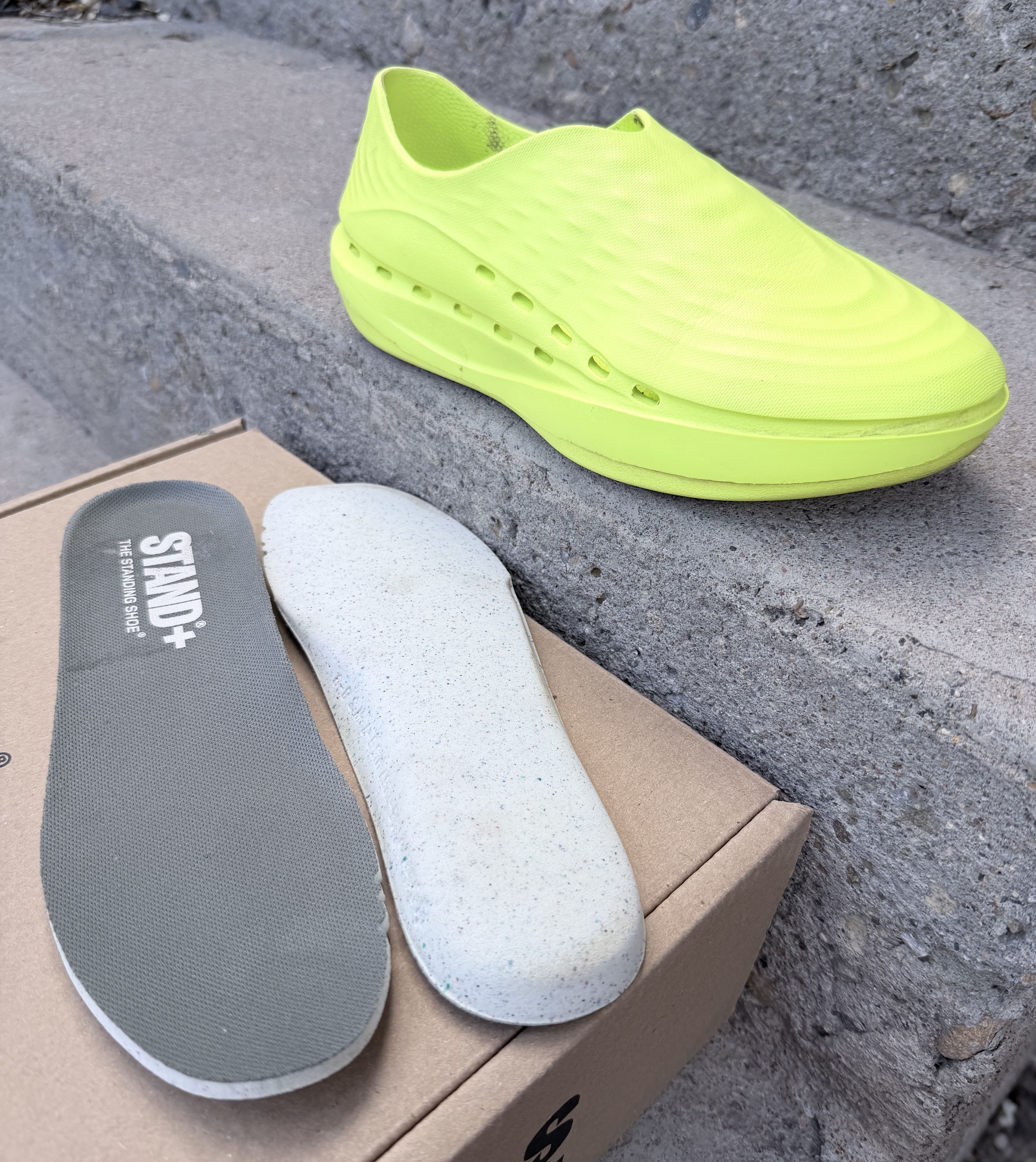
The Ortholite insole can be removed for easier cleaning.

The Stand+ AntiGrav1 immediately feels more structured than a typical recovery slide or foam clog. The material of the shoe itself is fairly firm, but the Ortholite insole adds a substantial layer of cushioning underfoot. That combination ended up being one of my favorite parts of the shoe. It does not have the ultra-soft, sinky feel of something like OOFOS, but for my feet, that was a good thing. The AntiGrav1 feels supportive and stable without being harsh.

I struggle with plantar fasciitis if I spend too much time walking barefoot on hard surfaces, so this quickly became the shoe I reached for when I did not want to put on a “real” shoe but knew I needed more support than a slide. Compared to Crocs, the AntiGrav1 feels much firmer and more foot-cradling. The included insole helps hold the foot in place, which I especially appreciated as someone with narrow feet.

I tested the AntiGrav1 in a women’s 8.5, which is my typical running shoe size. The length felt true to size, but the top of the toe box was restrictive out of the box. My toenails scraped the upper when I tried wearing them without socks (yuck!). Apparently, this fit issue is pretty common, but Stand+ has a solution. Stand+ gives customers a step-by-step guide to heat molding the shoes to create a better fit in the forefoot of the shoe: "Use a hair dryer on high heat for 15-30 seconds, insert your foot with a sock on (being careful not to burn yourself) and your new shoes will instantly form to your specific foot shape!" For me, the fit improved after heat molding, but I still wish the toe box allowed a little more natural toe splay, especially after a long ride or strength session when my feet want to spread out and relax.

For a shoe that is marketed toward normal-to-wide feet, I was pleasantly surprised by how well the AntiGrav1 fits my midfoot. There is some minor heel slippage, but not enough to interfere with standing, chores, errands, or light walking. I would not choose this over a true sneaker for longer walks, but for hard floors, standing desk sessions, post-lift comfort, and quick errands, the fit feels secure enough for the job.

Breathability, Traction, Durability & Cleaning

For a closed-toe recovery shoe made from a firm foam/rubber-style material, the AntiGrav1 is more breathable than I expected. The side ventilation helps enough that I have been able to wear these during summer, especially indoors, without feeling like my feet are completely trapped. That said, they are still a closed-toe shoe. On hot days in the high 80s and above, the ventilation starts to feel limited, and I notice my feet getting warm. I do not see this as a major flaw because the AntiGrav1 seems designed more for indoor hard floors than long stretches outside in the heat, but runners looking for a breezy post-run lounging shoe may prefer a slide.

I also prefer wearing the AntiGrav1 with socks. After heat molding, sockless wear became more tolerable, but socks still make the fit feel better overall. The one sock-related issue I noticed is that these do not pair well with no-show socks. The heel of the shoe tends to pull the sock down, which gets annoying fast. Quarter socks or crew socks are the better choice.

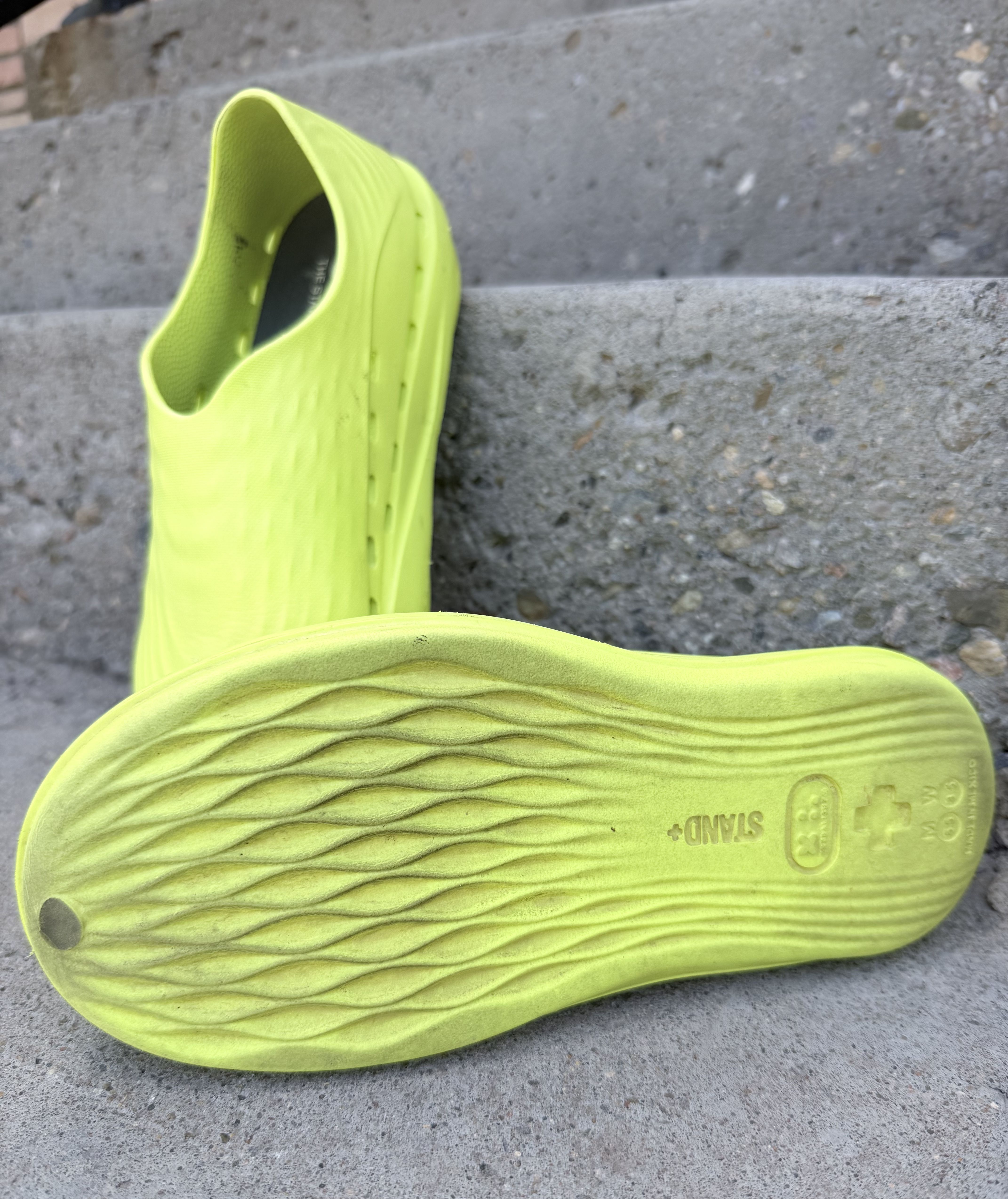
Traction has been solid so far. I have not tested the AntiGrav1 on anything especially slick or sketchy, but on wet concrete and damp hard floors, the grip has felt secure. For normal errands, household chores, standing desk use, and post-gym walking, I have had no concerns. I would still choose a true sneaker for longer walks, uneven surfaces, or anything more active, but for the shoe’s intended use, the traction feels dependable.

Cleaning is one of the AntiGrav1’s biggest practical wins. I have wiped these down with Clorox wipes, paper towels, water, and soap, and the exterior cleans up easily each time. The bright Citron colorway is not exactly subtle, but dirt has not been a dealbreaker. I have noticed some scuffing on the inside of the shoe around the collar that has not cleaned up quite as well, but those marks are not visible when I am wearing them. Overall, the shoe feels low-maintenance, which makes sense for a recovery shoe that is likely to see gym floors, grocery stores, garages, kitchens, and post-run chaos.
Style & Value

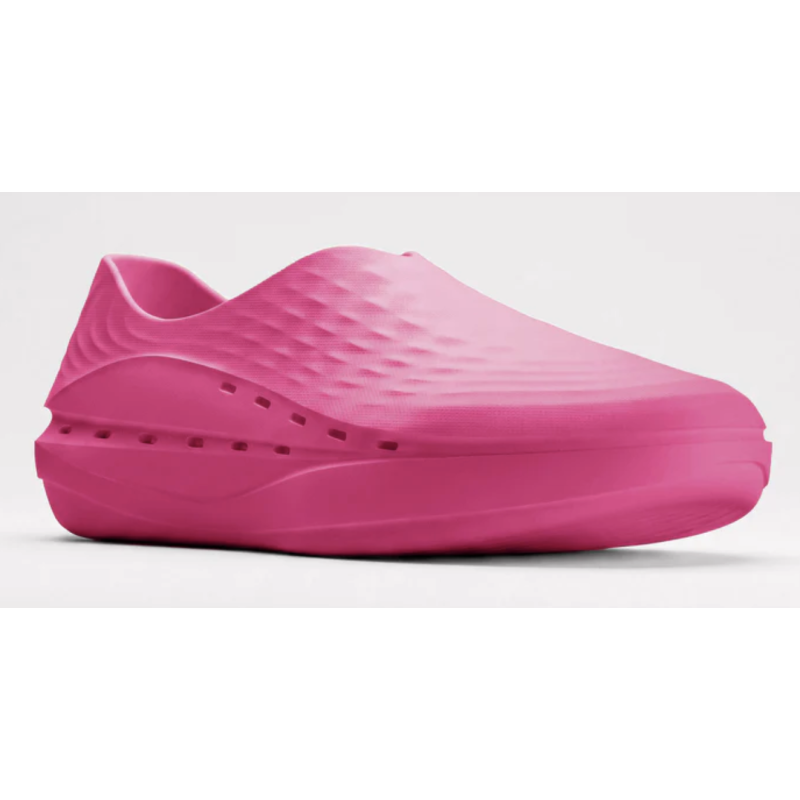
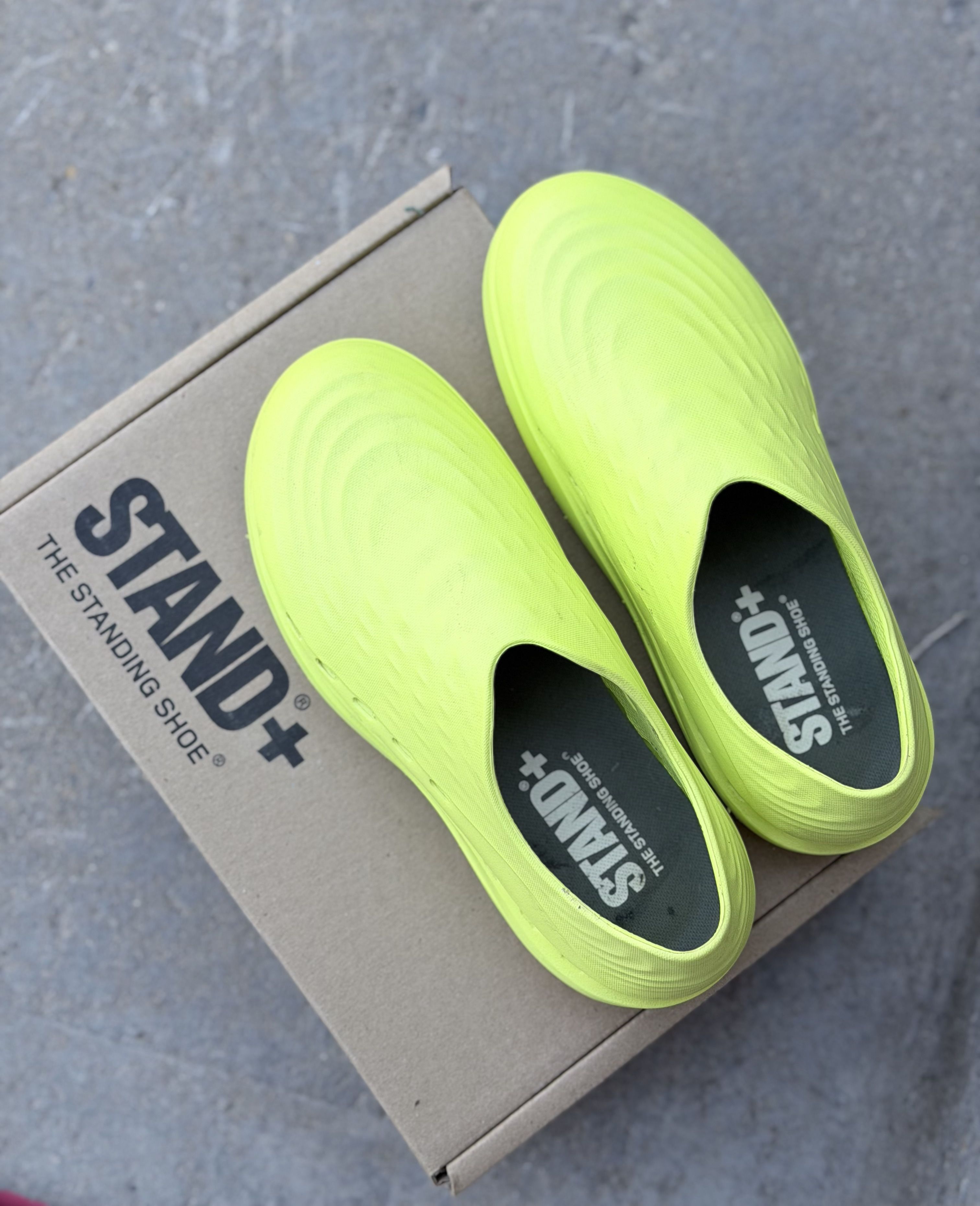
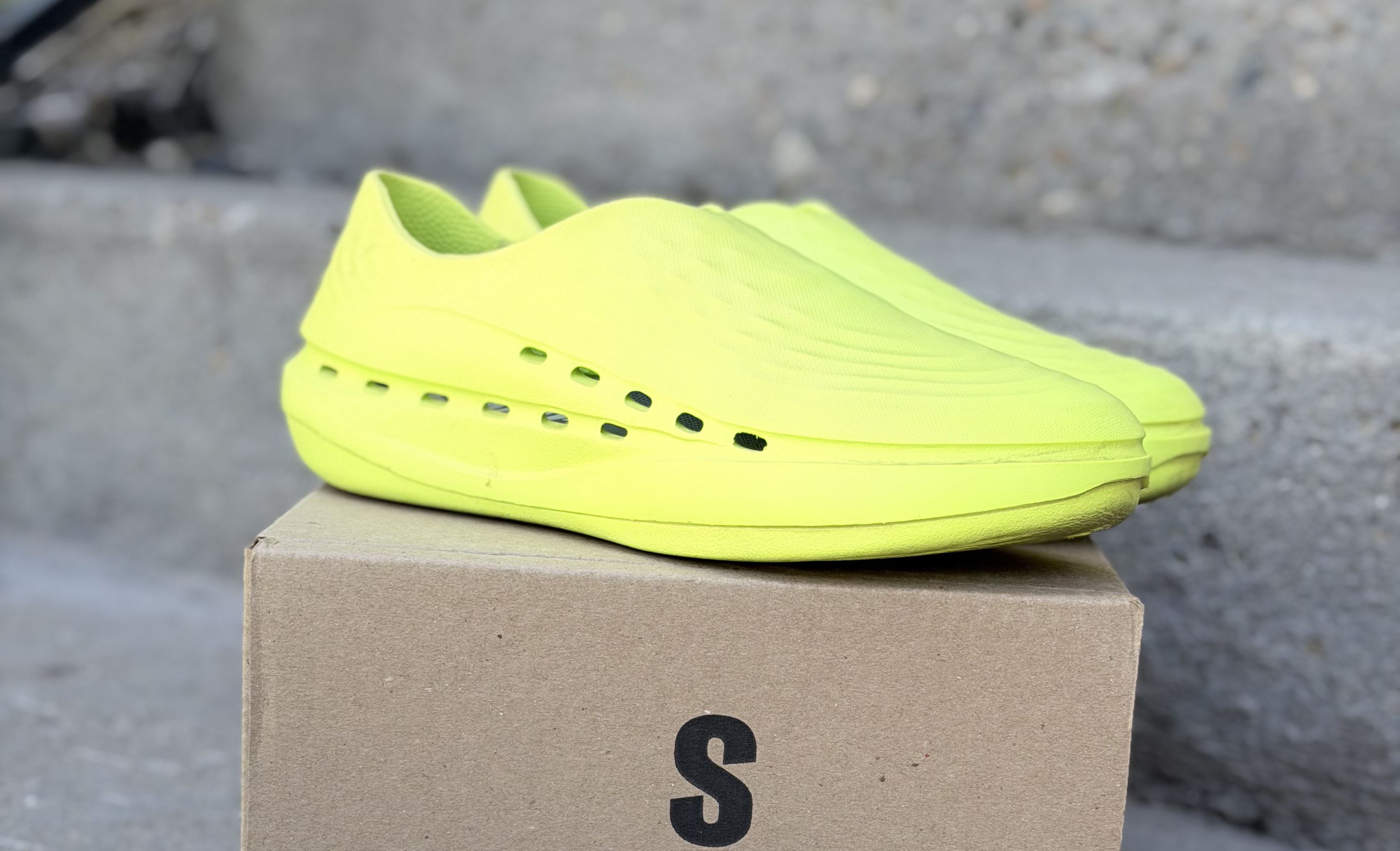
The AntiGrav1 has a distinct look. There is no getting around it. I tested the Citron colorway, which is bright, futuristic, and loud enough that someone asked me if they glow in the dark. Honestly, fair question. I have also gotten several compliments on them, so the Yeezy-reminiscent style clearly connects with some people. If highlighter-bright recovery clogs are not your thing, Stand+ does offer more neutral color options that would make more sense for work, healthcare, hospitality, or general daily wear.

Functionally, I like the closed-toe design more than I expected. I feel more comfortable driving in the AntiGrav1 than I do in a slide, and they feel more appropriate for errands, grocery trips, the gym, or walking around on hard floors. Around the house after a run, I usually find myself reaching for the Stand+ AG3 slide instead. But if I need to leave the house, stand at my desk, do chores, or walk around after a ride or lift, the AntiGrav1 makes more sense.

At $120, the value depends heavily on how you plan to use it. Since I do not have a job that requires me to stand for hours after a run or ride, the price feels a little steep. But I can also see exactly where this shoe would shine. If you are a runner who works on hard floors, spends long shifts standing, deals with foot sensitivity, or wants a supportive closed-toe recovery shoe that can handle more than couch-to-kitchen mileage, the AntiGrav1 becomes easier to justify.

This is not the cheapest way to get post-run comfort, and it is not the most relaxed recovery option in the Stand+ lineup. But it fills a useful gap between a soft slide, a Croc-style clog, and an actual sneaker. For the right person, especially someone who needs support and cushioning after training but still has to be on their feet, the AntiGrav1 has a clear purpose.

This is an incentivized review

Stand+ provided me with a pair of AntiGrav1 recovery shoes in exchange for my honest review.

Comments

Login to your account to leave a comment.

Subscribe

and never miss our new running content!
(you also score chances to win gear)
1.3k
Abigail Lock
Ambassador
Durango, CO
32 Followers
29 Following

Writer, coach, and trail runner. NASM Certified Sports Nutrition Coach, UESCA Running Coach, and owner of Hills for Thrills C...

More WeeViews

Image of Other North Face Altamesa 300
Full Review
Image of HOKA Hoka Cielo X1 3.0
Full Review
Image of HOKA Clifton 9
Full Review
Image of Brooks Hyperion Max
Full Review
Image of Other AllSwifit Active 5K
Full Review

Recent Rundown

Search

Want to Earn Free Running Gear?

We Want to Give it to You!

Earn Free Gear by Sharing Reviews