Upload / Capture
All amateur runners have their own little dreams. Some dream of running UTMB, others of tackling the TOR, or any other crazy challenge that crosses their minds.
Thanks to social media, we constantly see giveaways and competitions that we eagerly enter, always hoping that somehow we might be the lucky ones.
This story begins with one of those contests and takes us on a journey we could never have imagined.
A few months ago, we came across an ASICS competition called Fujitrail Adventure, a contest in which one fortunate runner would be selected to live out their ultimate trail running adventure.
As they say, dreams sometimes come true. Even today, I still wonder how and why, but after sharing my story with ASICS, I was chosen to enjoy this incredible opportunity.
From the very beginning, ASICS treated us amazingly. I say "us" because I would be accompanied on this journey by my mountain alter ego, Abelardo. After all, he is an inseparable part of my story in the world of mountain running.
We decided that our adventure would take place at an ASICS-sponsored race, hoping to give back at least a small part of everything they had given us. It turned out to be a fantastic decision, as spending time with the ASICS team and the athletes from the ASICS FrontRunner community added an extra dimension to an already unforgettable experience.
The moment I visited the PIUT (Paznaun Ischgl Ultra Trail) website and saw the images, I knew instantly: we were heading to the Austrian Alps.
Months passed, and before we knew it, on July 10th, we were flying to Austria with another important part of the team, Álvaro and Víctor, who would be filming us throughout the adventure. Little did they know that they would become our guardian angels along the way.
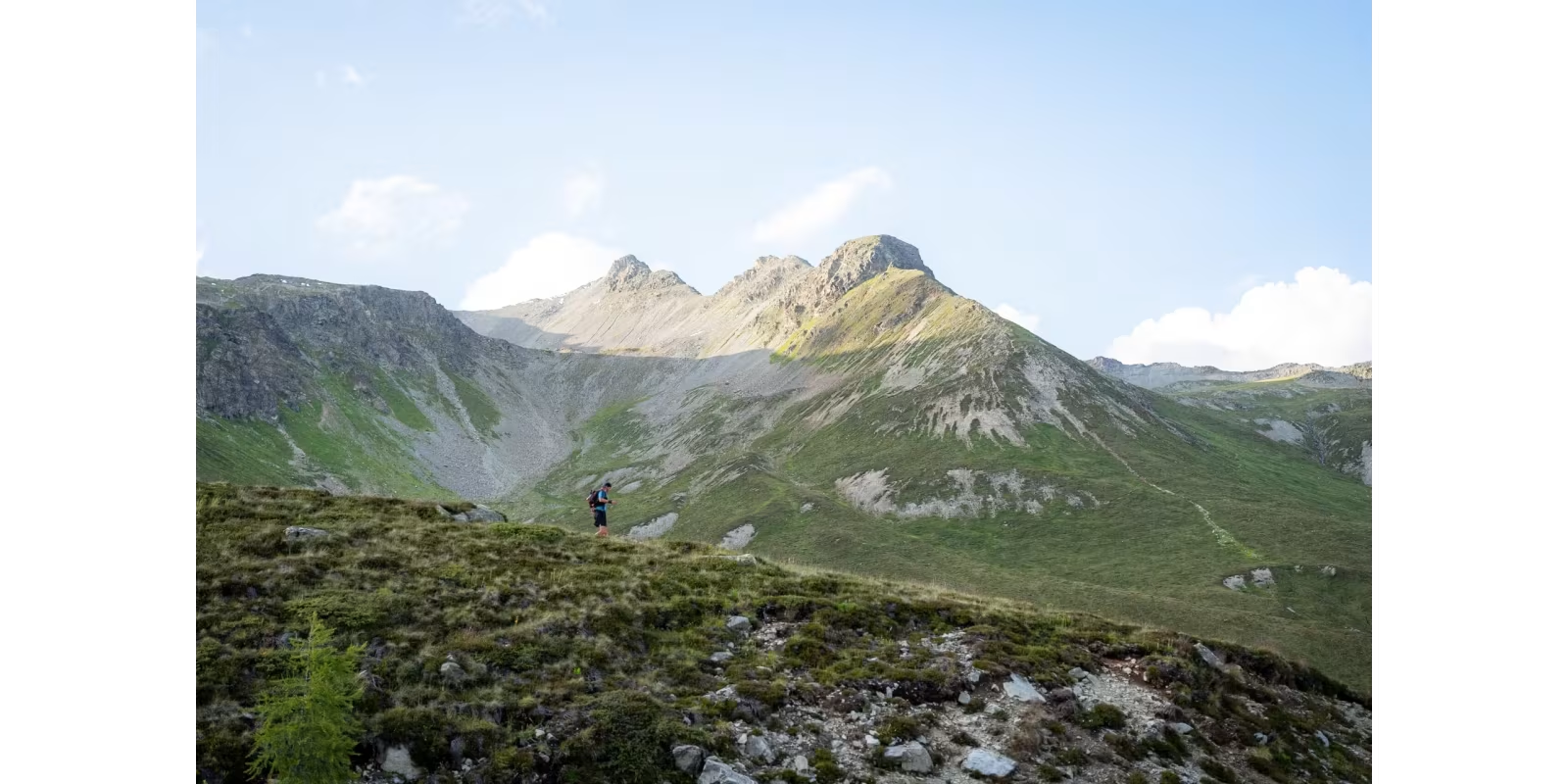
The Paznaun Valley is breathtakingly beautiful, undoubtedly home to some of the most stunning mountains I have ever seen.
In the hours leading up to the race, we attended an ASICS breakfast presentation in an idyllic setting and later enjoyed dinner with the rest of the ASICS FrontRunner team.
On Friday at 11:00 p.m., we stood on the starting line. The plan was simple: complete 100 km with 6,500 meters of elevation gain within the 23-hour time limit.
The course is not a loop. It traverses the entire valley, passing through its main villages. In simple terms, you climb a mountain, descend into a village, climb another mountain, descend into the next village, and repeat until reaching the finish line.
Our journey began just outside the town of See, beside a beautiful lake. Although a bit chilly, the night was pleasant. For the first time ever, we were standing on the front row of a starting line, a necessity for Álvaro and Víctor to capture footage. They would meet us at several points along the course that we had planned together during dinner.
That faster-than-usual start took its toll on Abelardo. He struggled physically until nearly sunrise. Combined with the strict cut-off times, it ultimately prevented him from making it past the 50 km checkpoint, despite later feeling much stronger.
After completing a lap around the lake, we began the first climb. A few kilometers in, Abelardo told me to continue at my own pace, as we often do. We agreed to meet again at the summit.
The first aid station was Ascher Hut, at 2,259 meters. The night had turned cold and rainy, making it impossible to wait comfortably at the exposed checkpoint. I stayed for a few minutes but eventually decided to continue slowly. I tried my best to explain to the friendly volunteers that if the next Spanish runner came through, they should tell him I would be descending at an easy pace. After all, we were the only Spaniards in the race.
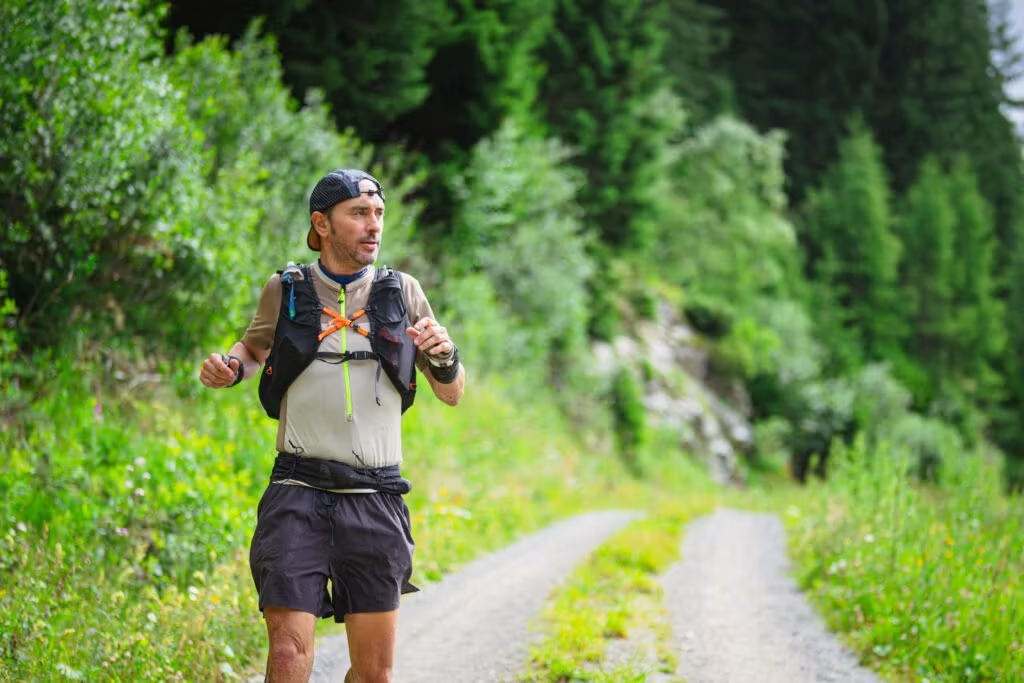
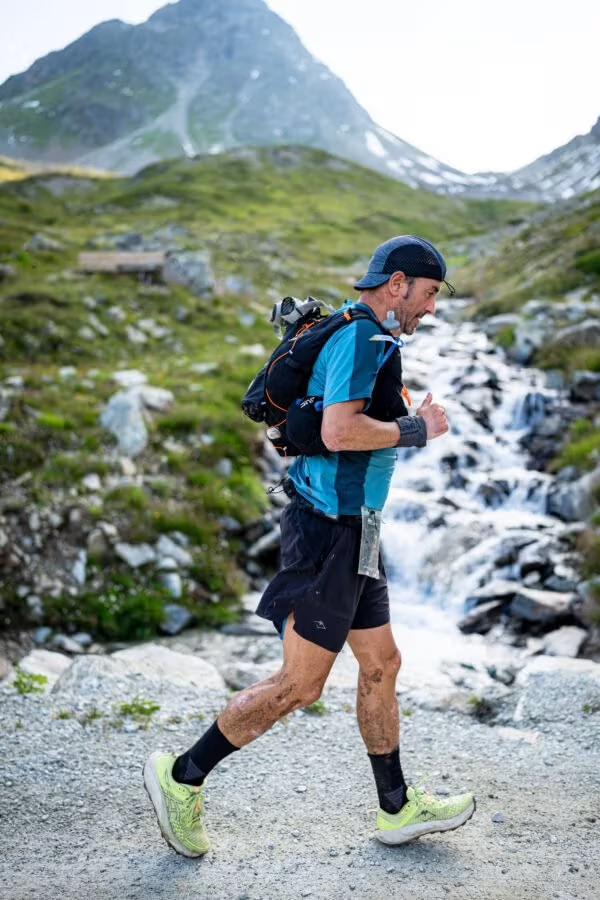
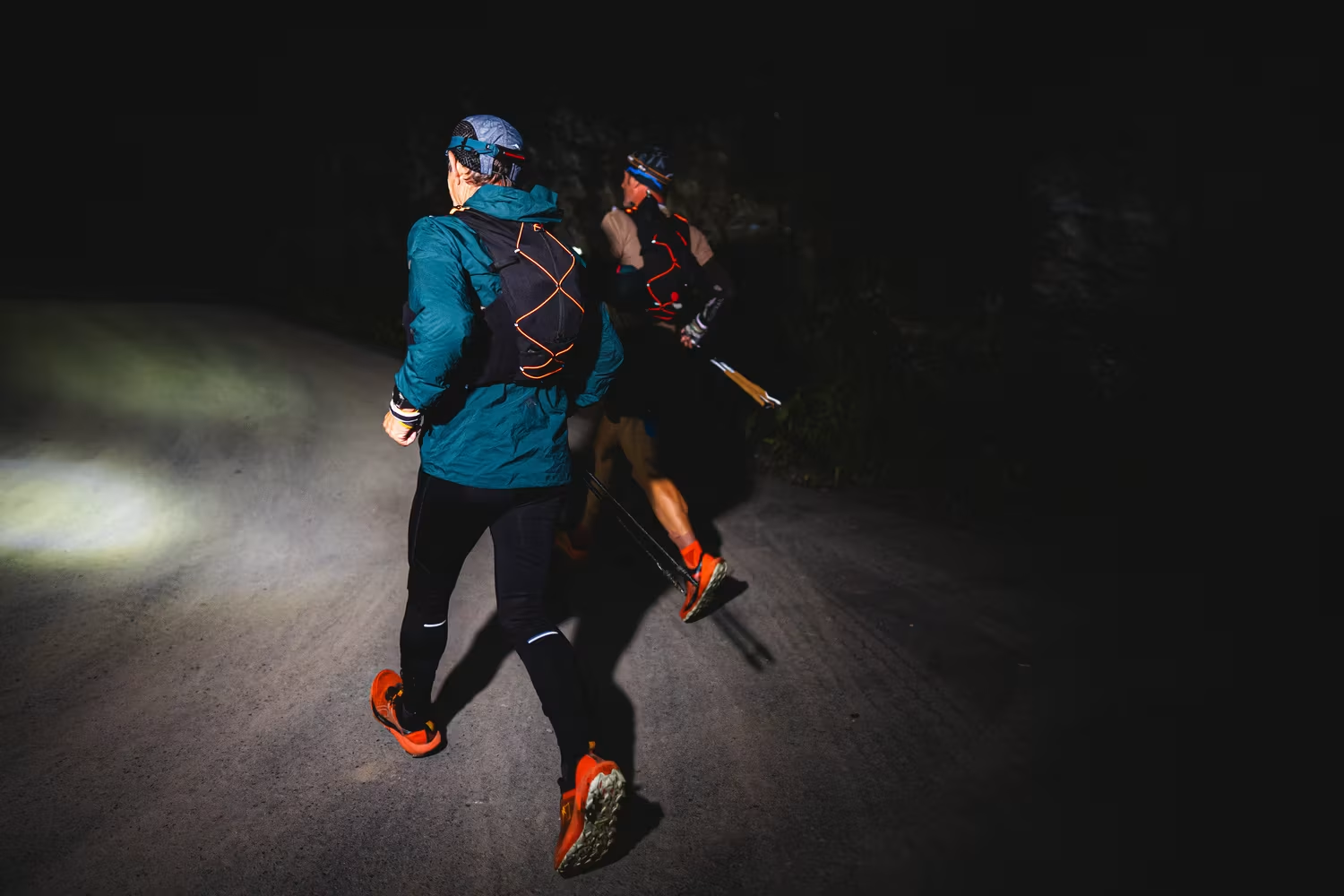
The course continued through climbs and descents, crossing small streams and spectacular alpine landscapes that the darkness concealed from us. Yet that same darkness allowed us to experience one of my favorite aspects of ultra running: moving through the mountains at night.
There is something magical about the solitude and peace of the mountains after dark. It remains one of my favorite moments in any ultra.
Dawn greeted us as we reached the second aid station, Alpe Gamperthun, located at 2,050 meters. There, I spent some time chatting with two Dutch runners competing in the 85 km race.
Then came bad news from Spain. A friend following the race online messaged me to say that Abelardo was much farther behind than I had expected. I managed to contact him, and we agreed that we would have to continue separately. The cut-off times were simply too tight for us to wait for each other as we had done in previous adventures. We decided to reassess the situation after the first checkpoint.
A long descent followed, accompanied by a river and magnificent views of the valley, until we reached Kappl, the first village and first major checkpoint. There, Álvaro and Víctor were waiting to film and encourage us.
Abelardo arrived outside the official cut-off time but was still allowed to continue. At kilometer 36, we started one of the race's most spectacular sections: an 11 km climb with 1,200 meters of ascent, taking us through the beautiful Diasalpe area, with its alpine lakes and breathtaking mountain scenery.
The climb continued until reaching Niederelbehütte, at 2,300 meters. The sound of a drone overhead immediately brought a smile to my face. It meant Álvaro and Víctor were nearby. Their encouragement gave me a much-needed boost at a moment when my energy was beginning to fade.
From there, a steep and at times tricky descent awaited us, made even more challenging by muddy terrain and slippery grass. Eventually, we reached the first life-bag station in Ischgl.
Along the way, Abelardo messaged me to say that he had been stopped at the refuge and was on his way down to Ischgl.
We arrived in town after dealing with a brutal climb of nearly 600 vertical meters in just one kilometer. It was one of those soul-crushing sections where you can already see the village below and start thinking about changing clothes and resting, only for the course to turn sharply upward again.
Eventually, we reached Ischgl, where Abelardo was waiting.
He was disappointed, and understandably so. Yet sometimes we fail to appreciate the significance of what we accomplish. He had just completed 50 kilometers, and both of us knew how much he had suffered and fought over the previous months to get there.
Had the time limits been only slightly more forgiving, he would have made it.
This story would not end the way we had imagined. Yet his presence there, healthy and encouraging me, completely recharged my batteries. It gave me a new purpose: to reach the finish line for both of us.
Ironically, we passed through the finish area while leaving town, and volunteers even tried to hand us our medals. Not yet, though. We still had 40 kilometers to go.
Leaving Ischgl behind, we began another long climb through beautiful alpine terrain filled with lakes, picnic spots, and families enjoying the outdoors. Meanwhile, my tireless filmmakers joined me once again.
This ascent would eventually take us to the race's highest point, Greitspitze, at 2,483 meters. A large summit cross marked the top, offering breathtaking 360-degree views of endless mountain ranges stretching in every direction.
It was one of those images that stay with you forever and remind you why we pursue these crazy adventures.
As a funny side note, we had actually been looking at that distant summit cross during breakfast earlier that day, joking about having to climb all the way up there.
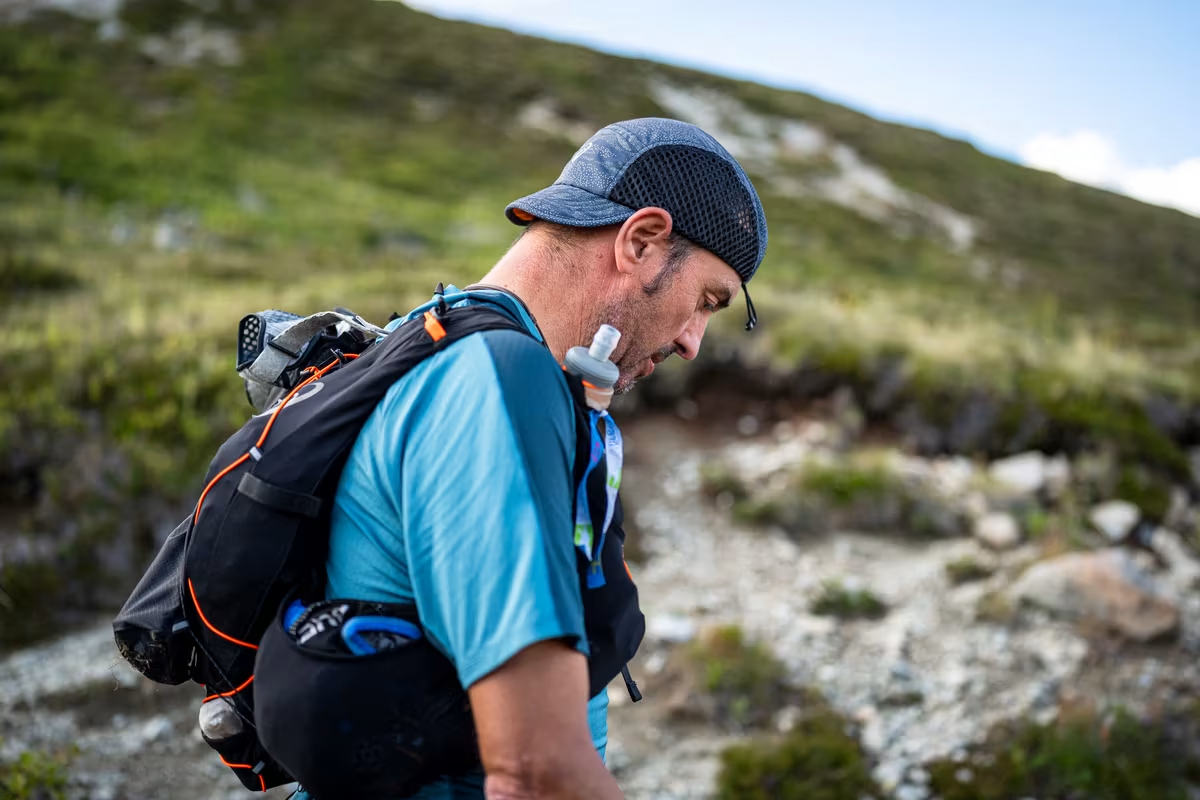
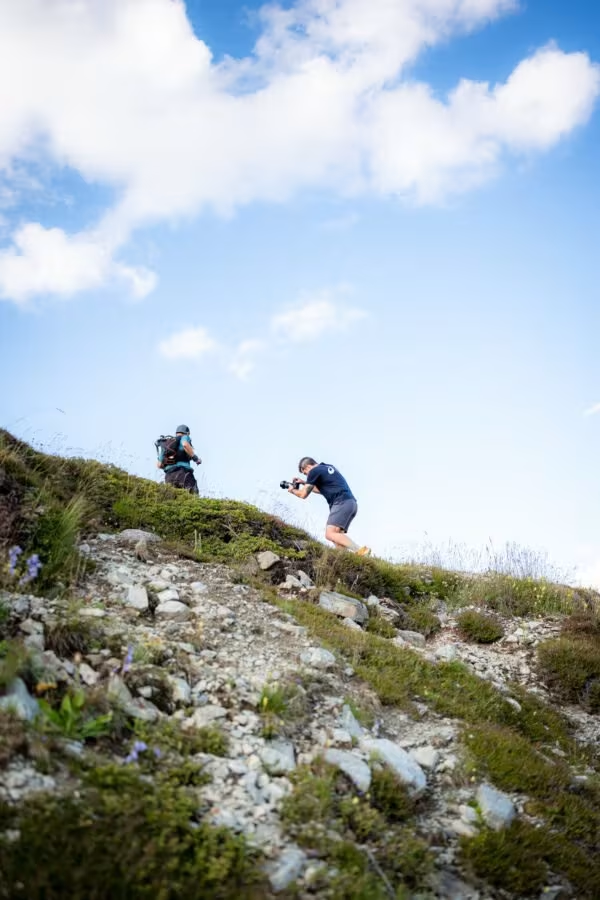
Another long descent followed, heading toward the final checkpoint in Galtür. Before reaching it, we stopped at a beautiful lakeside aid station where Álvaro waited with his drone to capture footage of the incredible scenery.
We moved through the aid station like a Formula 1 pit crew.
Because there had been snow at higher elevations, the race organizers had modified the course. As a result, Galtür was several kilometers farther away than originally planned, but the cut-off time remained unchanged.
During the descent, I joined two other runners, and together we pushed hard enough to reach the checkpoint with just 15 minutes to spare.
After Galtür, it finally became realistic to think about finishing. It would take something serious to stop us now. Only 20 kilometers and 800 meters of ascent remained, with five hours available to complete them.
The final climb felt endless. Temperatures rose, and the seemingly never-ending switchbacks tested everyone's patience.
Fortunately, Álvaro and Víctor were waiting at the top to film the final scenes before the finish and provide one last injection of motivation.
We arrived at the final aid station, Friedrichshafner Hütte, at 2,127 meters. It was kilometer 92. From there, only the descent remained.
Víctor gave me one final piece of advice:
"You've got it now. Take your time on the descent and make sure nothing goes wrong at this stage."
And that's exactly what I did.
I savored every step of the descent, appreciating another finish line earned through effort and determination.
Back in Ischgl, Abelardo was waiting for me with that familiar smile of pride and happiness that I have seen so many times before.
One of the reasons we have shared so many incredible experiences is that we genuinely celebrate each other's achievements more than our own.
Of course, we covered the final meters together and crossed the finish line hand in hand.
It was one of the most emotional finishes of my life.
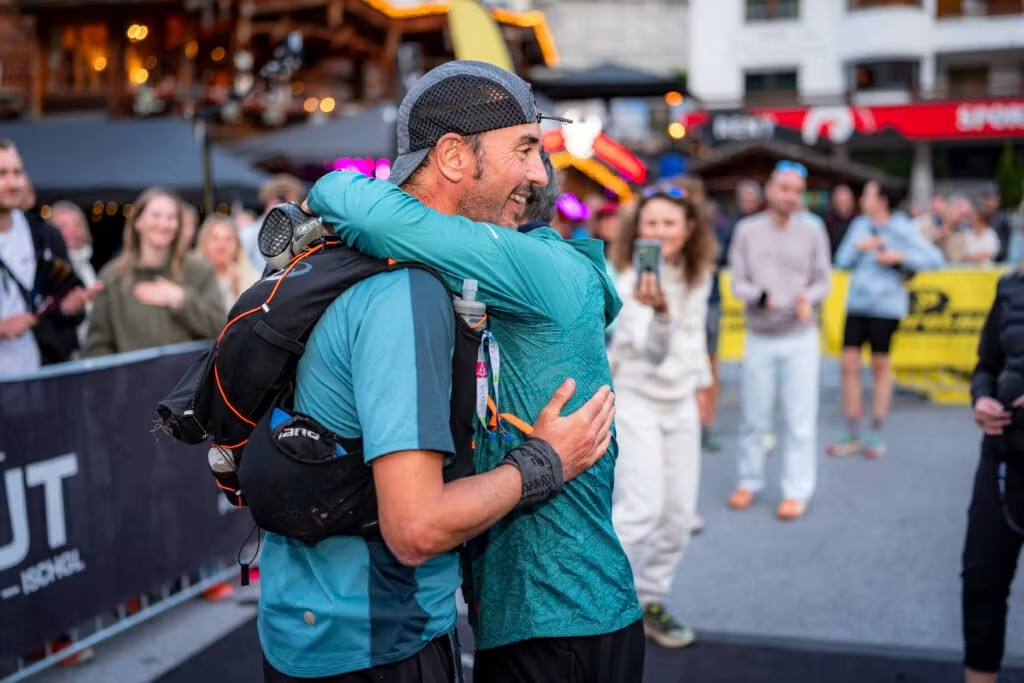
The entire ASICS FrontRunner team was there waiting for us. There were congratulations, laughter, hugs, and the opportunity to thank Víctor and Álvaro, who had been such a crucial part of this adventure.
The way Abelardo and I view this sport gives us a unique advantage: no matter what happens, whether you cross the finish line or not, you always win.
You win memories of unforgettable landscapes. You meet incredible people. You discover new things about yourself. Because when everything is said and done, those are the things that remain. Not the times, not the suffering, but the experiences and the people you shared them with.
Login to your account to leave a comment.


Review gear you already use. Earn Star Points. Qualify to test free running shoes and gear.