Upload / Capture
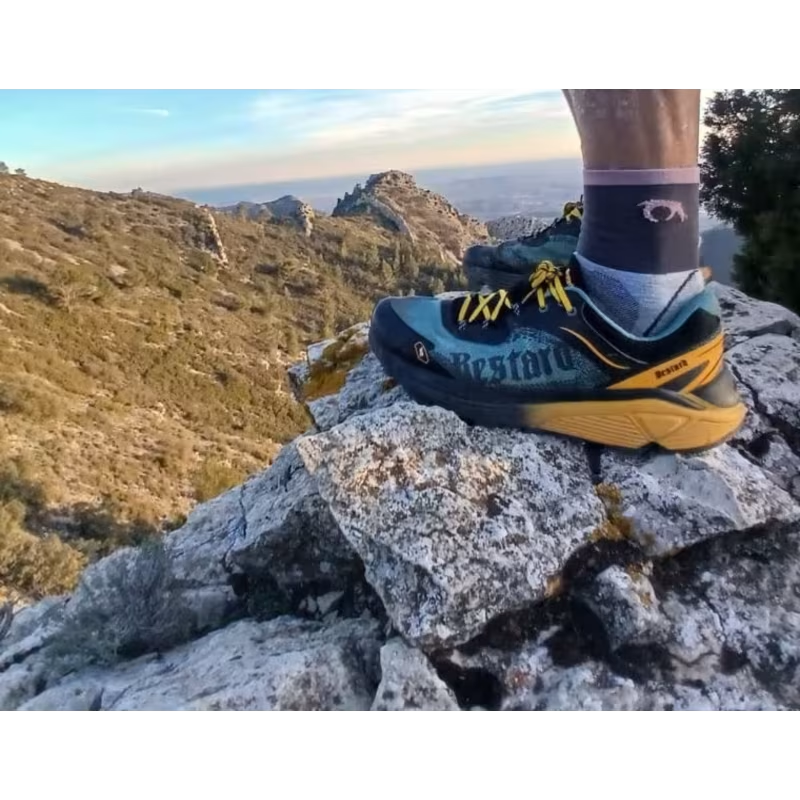
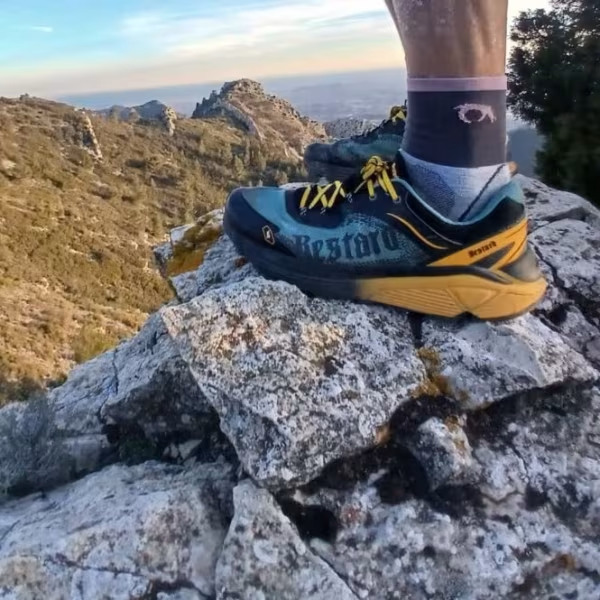
Bestard is a mountain footwear brand that began its journey in 1940. Based in Lloseta, Mallorca, with views towards the Serra de Tramuntana, this Spanish company has always stood out for producing high-quality, durable products made by mountaineers, for mountaineers.
As you already know, sustainability and environmental responsibility are very important within our association, something we consider intrinsic to the sport we practise.
With this in mind, Bestard focuses on producing highly durable and repairable footwear. The brand itself offers a repair service where each pair is assessed and repaired, with the aim of extending the useful life of the footwear as much as possible.
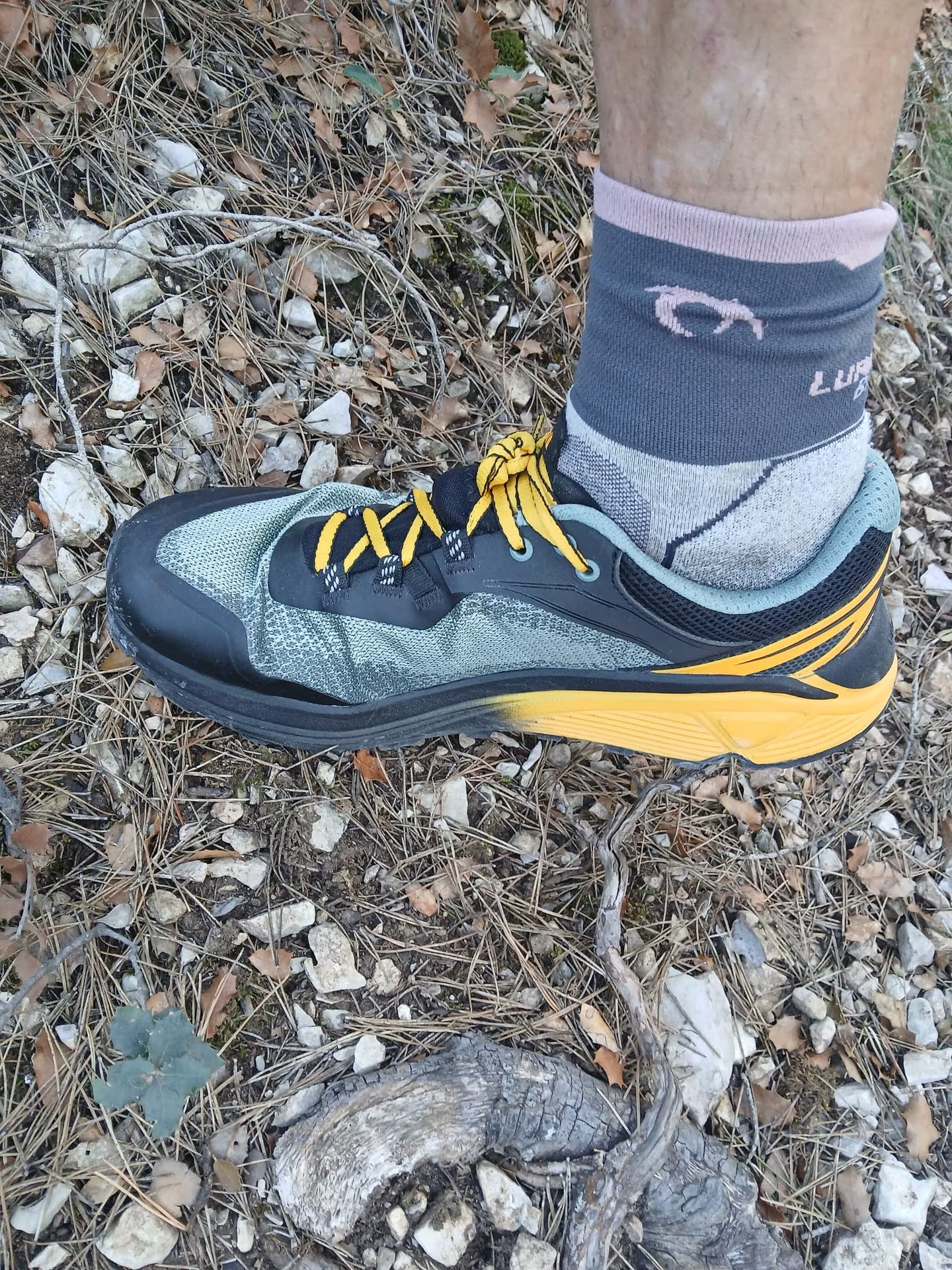
We present one of the brand's first ventures into the world of trail running: the Bestard Guepard.
The shoe is available in three versions. In the Gore-Tex range, there are different models for men and women, in black and blue colourways, while the standard version is a unisex model in grey and orange.
Testing was carried out on the demanding terrain of Alicante, Spain, covering 200 kilometres and a total accumulated elevation gain of 25,000 metres.
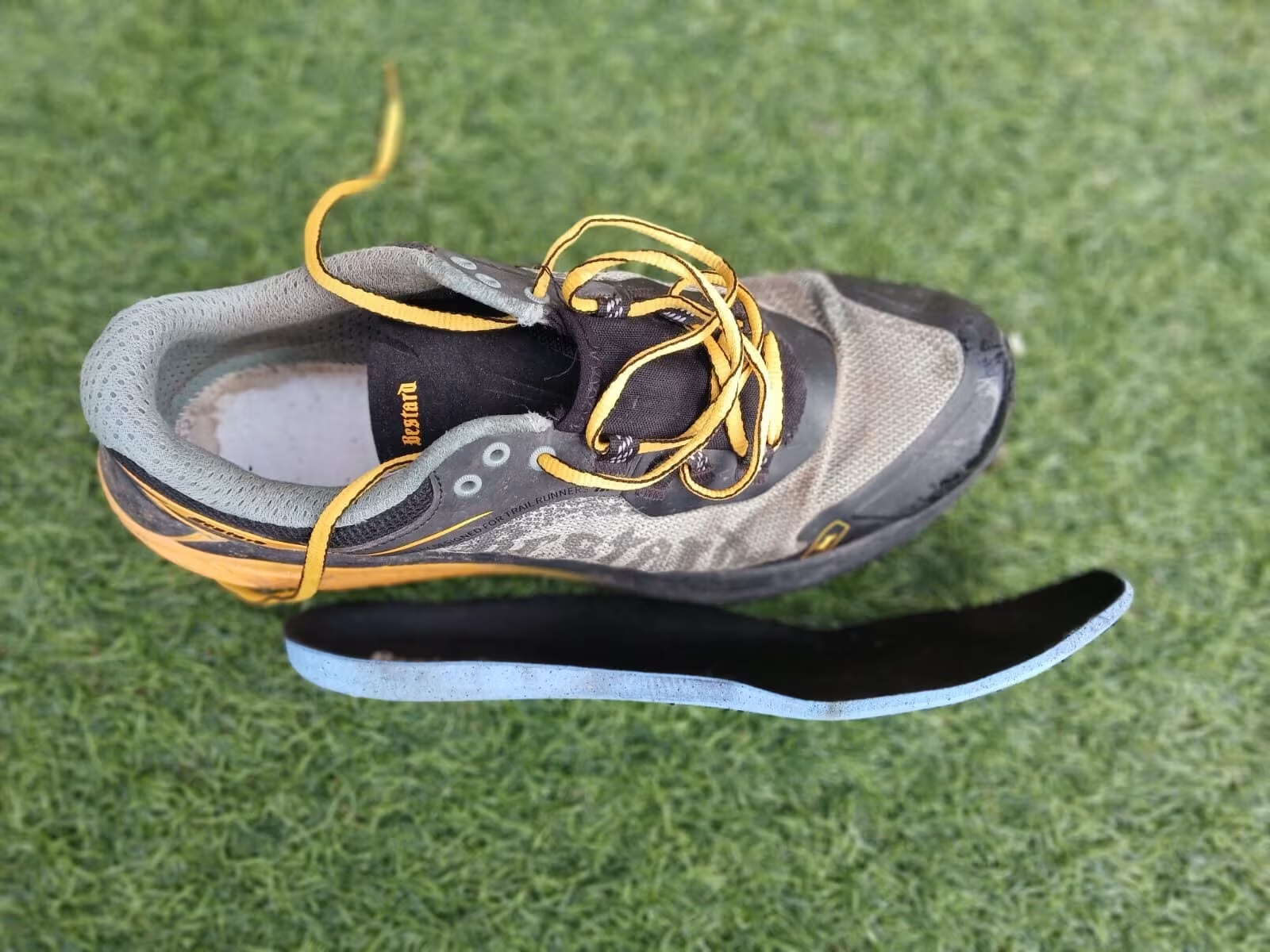
Although it has nothing to do with performance, the first thing we have to say is that the shoe looks great. It is understated, but the colour combination is very well chosen.
We have to remember that this shoe comes from a company specialising in mountain boots, so we are looking at a robust and very well-protected shoe. This does mean that its weight is relatively high, reaching 360 grams per shoe in my size 44.
At 74 kg body weight, however, they do not actually feel as heavy on the feet, and they allow us to run smoothly. During testing, we were able to run on dirt tracks at around 4:30 min/km with very good sensations.
The first thing we notice when taking them out of the box is that the shoes come with two pairs of laces, one black and one yellow. It is a small but welcome detail that reflects the care that has gone into their construction.
My first feeling when putting them on was: “These shoes are made for me.”
They offer a great combination of comfort and secure foot hold.
At the heel, we find a very substantial heel counter with an external TPU support. Visually, this translates into external strips that help keep the heel securely protected. Combined with generous padding, this provides excellent stability.
I am particularly sensitive to this aspect because my former footballer’s ankles tend to roll quite easily. During the testing period, I only rolled my ankle once.
At the front, there is substantial protection that keeps us safe from impacts with rocks and roots. On terrain like that found in Alicante, where there is a lot of exposed rock, this has been a real guarantee on all my outings. The toe protection has performed its job perfectly, even against the typical annoying loose stone that gets kicked into the air and you end up hitting with the shoe.
The lacing area is very well designed.
On one side, we have a tongue that is stitched to the upper. It is extremely thin and has an anatomical shape that makes it longer in the centre and narrower towards the sides, helping it wrap around the foot.
Above this, covering around three quarters of the lacing area and starting where the traditional eyelets begin, we find a fine mesh that covers the entire lacing section and prevents stones from getting inside the shoe.
With a little care, you can tuck the excess lace underneath this mesh, helping to prevent possible snags on branches, roots and other vegetation.
The lacing system is traditional. The first three eyelets use straps that provide a secure hold around the front of the foot, while the final three, including the last eyelet for those who want additional ankle fixation, are traditional eyelets like those found on most running shoes.
Bestard uses flat laces of an ideal length. They do not tend to loosen or come undone, and despite the thinness of the tongue, the lacing system does not put excessive pressure on the foot or cause discomfort while running.
The rest of the shoe uses a fairly substantial Air-Mesh fabric. This provides a feeling of durability and protection, although it may become somewhat warm during the hotter months.
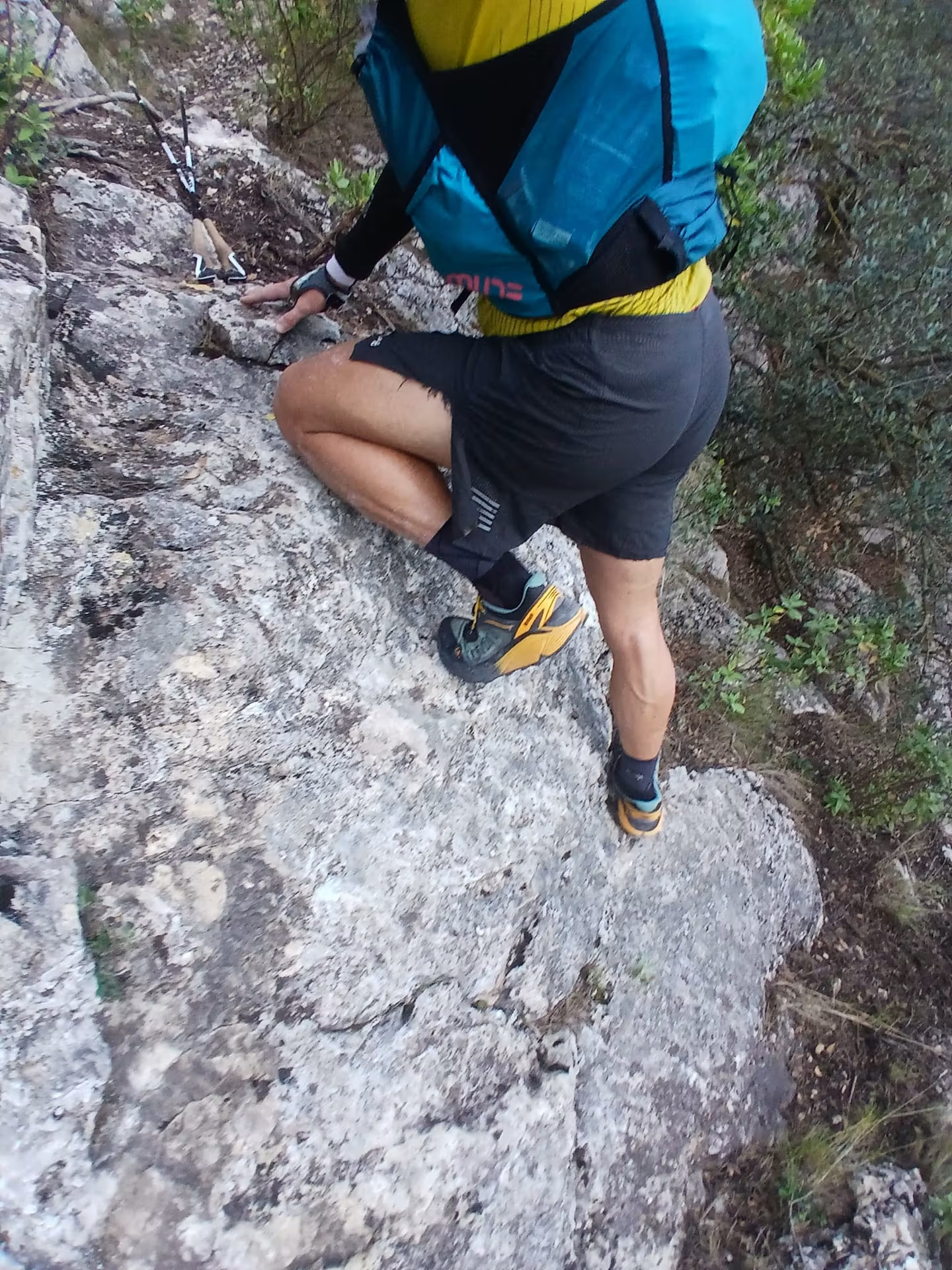
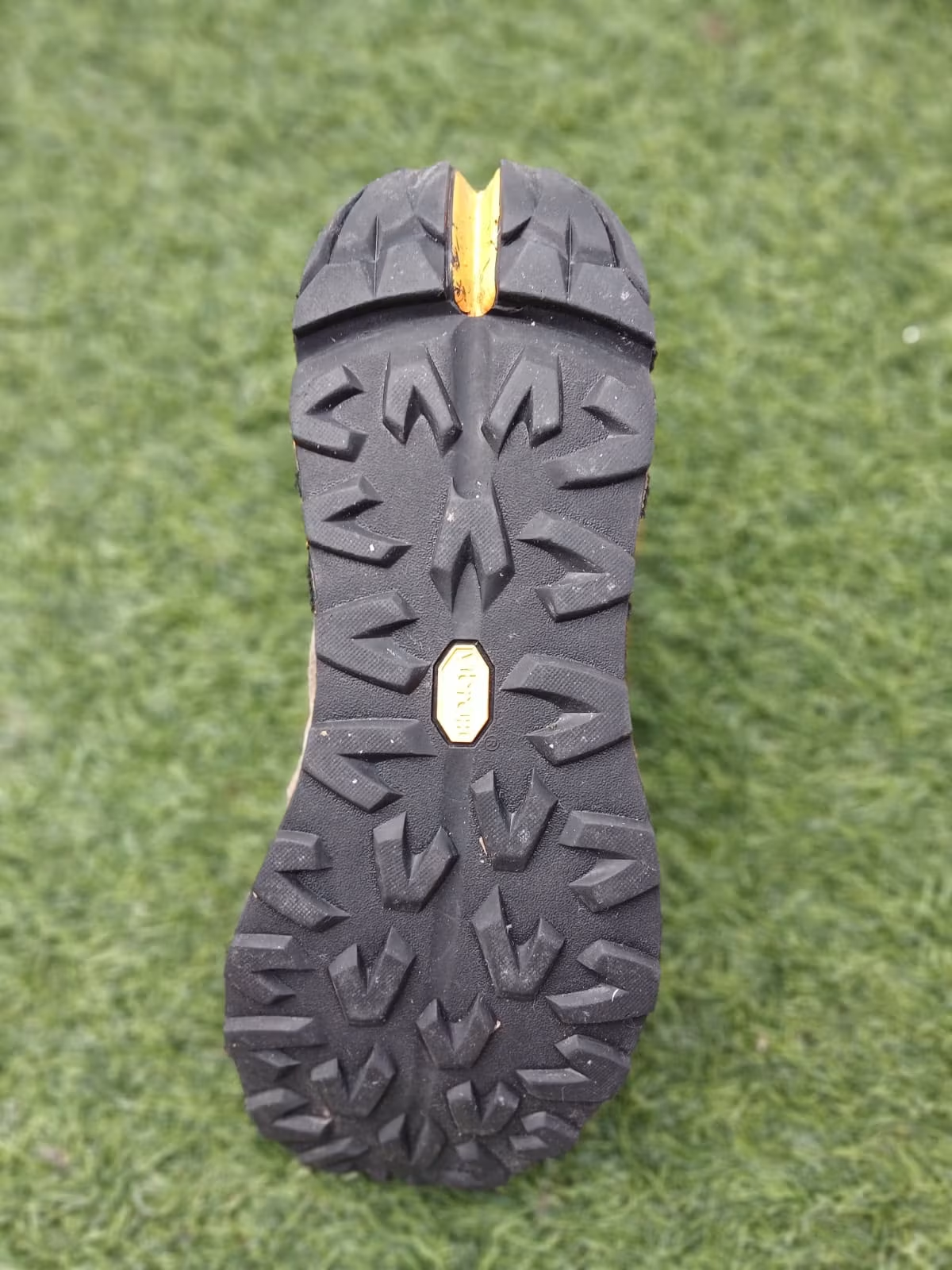
This is one of the most interesting areas of the shoe, as both the outsole and midsole incorporate Vibram technology.
Specifically, we have a Vibram Sphike + EVA construction, providing an 8 mm drop, with a stack height of 32 mm at the front and 40 mm at the rear.
The cushioning is comfortable but firm.
Do not expect the typical soft “cushion” effect that many brands have adopted recently. Instead, this is a very stable cushioning system which, during outings of up to six hours, behaved consistently without any noticeable loss of performance as the kilometres and hours accumulated.
The shoe also features Vibram’s Rolling Gait System, whose midsole combination encourages a more natural foot movement. It provides a rocker that, while not exaggerated, is quite pronounced and makes both the transition into and out of the stride easier.
The Vibram outsole, despite not incorporating some of the brand’s latest technologies such as Litebase and Traction Lug, performs very well across a wide variety of terrain.
As you would expect from a Vibram outsole, running on the rocky terrain of Alicante is a real pleasure.
The outsole can be divided into four main areas.
The central section features nine arrow-shaped lugs pointing in the direction of travel, helping with propulsion.
At the rear, just before the heel, there are three lugs with the same shape, helping with braking.
The entire perimeter of the shoe features another 17 similar lugs, providing additional grip during lateral movements.
Finally, we come to one of my favourite parts of the outsole and one of the reasons I am enjoying this shoe so much: the shape of the heel section.
This is difficult to explain when looking at a full-length outsole, but essentially, the final section of the outsole creates something similar to a heel or “raised heel” — without actually separating the outsole.
This design is particularly beneficial for runners who land on their heels and feel insecure during descents. It helps prevent the heel from slipping on downhill sections, something that happens to me quite often.
With this outsole configuration, the connection with the ground during descents is excellent.
Furthermore, this “heel” section is split to improve its ability to adapt to the terrain. This leaves part of the midsole exposed, but because of its upward-curving shape and the EVA compound used, unlike some other shoes I have tested with exposed midsoles, stones do not become embedded in this area and the EVA does not suffer excessive damage.
In short, it is a simple outsole, but an extremely efficient one.
Finally, and no less importantly, we find another clear example of the care that has gone into the construction of this shoe in the insole.
Bestard has chosen a high-quality Ortholite insole, with a generous thickness that contributes to the overall feeling of comfort and breathability provided by the shoe.
Fortunately, this is another detail the brand has not overlooked — something that many brands, including some premium models, seem to be forgetting lately.
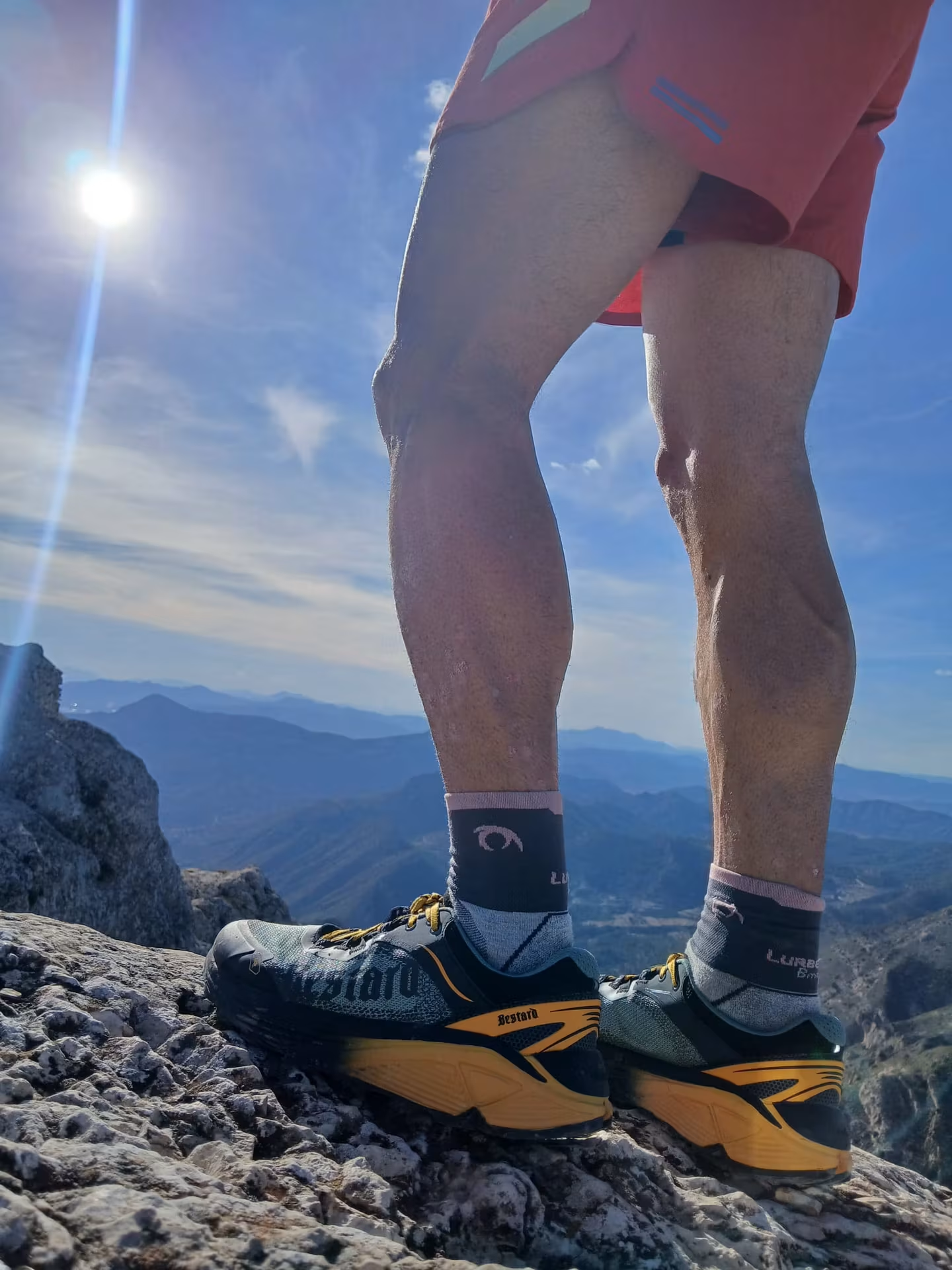
I won't deny it: I have enjoyed running in this shoe more than I have in a long time.
In my case, it fits my foot and matches my running style perfectly. It provides excellent protection and a very secure feeling, and it has performed without any problems on several demanding routes with significant elevation gain over relatively short distances, including 25 km with 2,200 metres of elevation gain.
I have also found it genuinely comfortable to wear during outings lasting up to six hours.
The shoe feels particularly secure on descents thanks to the shape of the outsole around the heel.
I believe one of its greatest strengths lies in its simplicity.
By simplicity, I do not mean a lack of technology. Rather, I mean a straightforward, solid and effective construction that moves somewhat away from some of the current trends in trail footwear, such as heavily segmented outsoles and extremely high-stack midsoles.
Some runners may initially be sceptical because of its relatively high weight. However, this is undoubtedly a shoe that deserves to be tested and could surprise more than a few runners once they have spent some kilometres with it on their feet.
I hope the Mallorcan brand continues investing in trail running because, having produced this model as a starting point, I believe Bestard could do some really interesting things in the trail market.
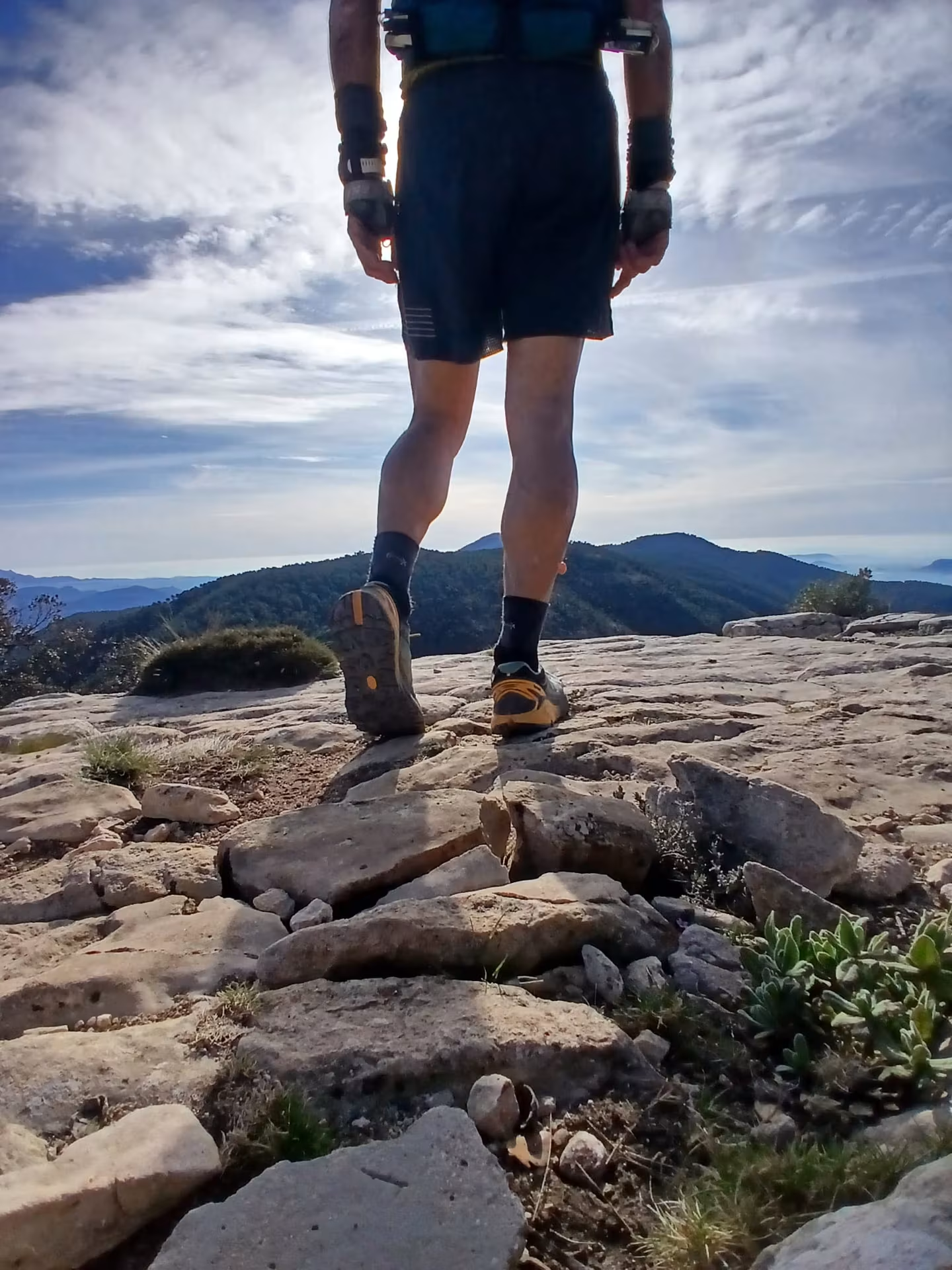
Although we will continue putting kilometres into them and testing them under demanding conditions, I have to say that after 200 kilometres, there are currently no significant signs of wear on either the outsole or the upper.
The midsole has not noticeably compressed and remains firm.
The only visible issue is that, on one of the toe boxes, the final section of the outsole has started to separate slightly where it joins the upper.
Overall, however, the condition of the shoe after this amount of use gives us reason to believe that its long-term durability could be very good.
Login to your account to leave a comment.



Review gear you already use. Earn Star Points. Qualify to test free running shoes and gear.