Upload / Capture
There are trail races, and then there are unforgettable journeys.
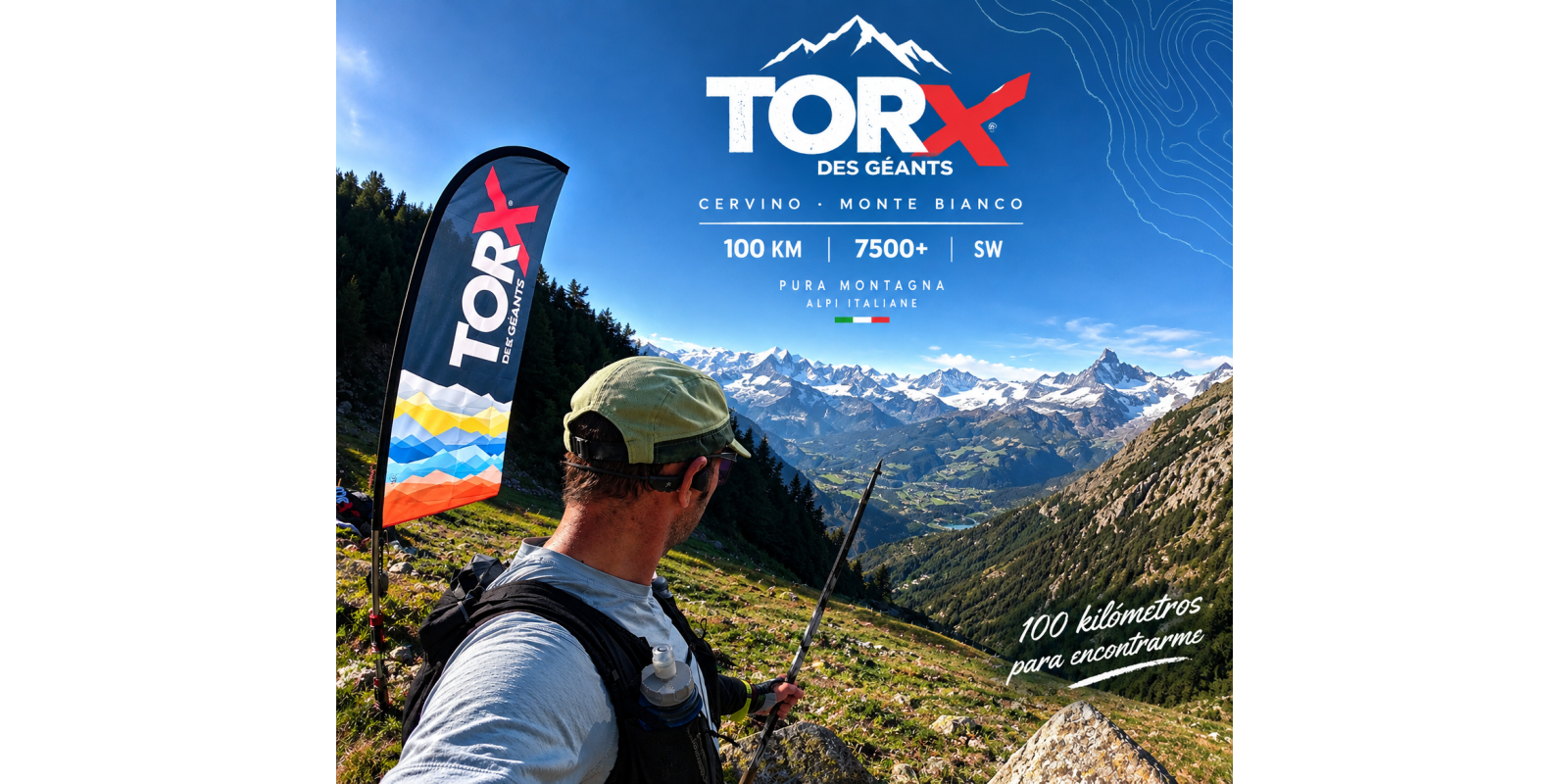
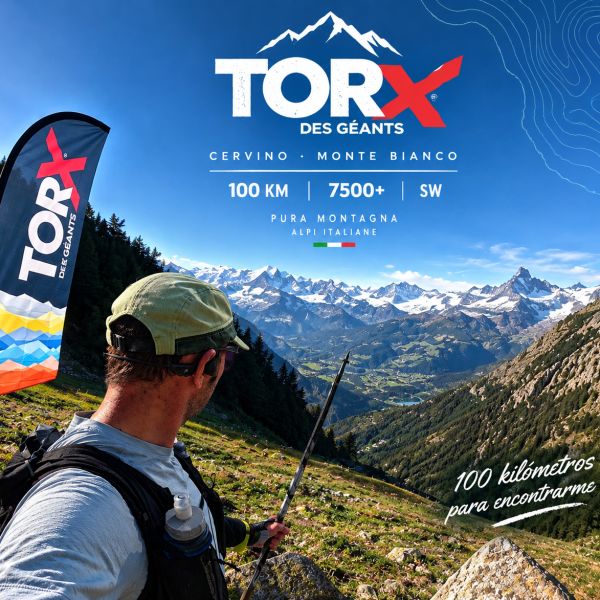
For me, this TOR100 was much more than a race. It was a journey to get to know myself, a journey in which I had time to laugh, to cry and, of course, to suffer. The hardest race of my life and, probably, the one I am most proud of.
When you arrive in Courmayeur a few days before the race, you immediately realise that this is not just another race. The small town breathes mountains from every direction, watched over by the majestic Mont Blanc, which seems to welcome us while, at the same time, warning us that the next few days are not going to be easy.
Everything in the town is dressed for the TOR. Bars, shops and houses are covered in the race colours, and everything revolves around the mountains and the challenge that, for a few days, turns Courmayeur into the heart of trail running. It is Monday and there is still a long way to go before the runners begin crossing the finish line; in fact, the finish area is still being built.
In our case, we go to collect our press accreditation, and the organisation welcomes us warmly and wishes us luck for Wednesday, when our moment will finally arrive. Meanwhile, the 450 km and 330 km runners are already crossing the mountains, and for some of them there are still many days of adventure ahead. It is a huge challenge, whose true scale we will only begin to understand once we set off ourselves on Wednesday.
Because until then, all we can do is imagine what awaits us. But the TOR has already begun to teach us that nothing here is going to be easy.
Tuesday is dedicated to resting at our rented house in Aosta, with incredible views over the valley. We want to arrive at Wednesday with fresh legs and a calm mind, so in the afternoon we take the opportunity to do a short activation session in the mountains around our accommodation.
And that is when the first problem appears.
The glute problem that has been bothering me for the last few weeks immediately makes itself known. Things are not going well, and I do not need much time to realise that the area is not where I would like it to be.
After everything that lies behind this race, after months of training, injuries, doubts and kilometres, worry takes over. I cannot help thinking that everything could be over before it has even started.
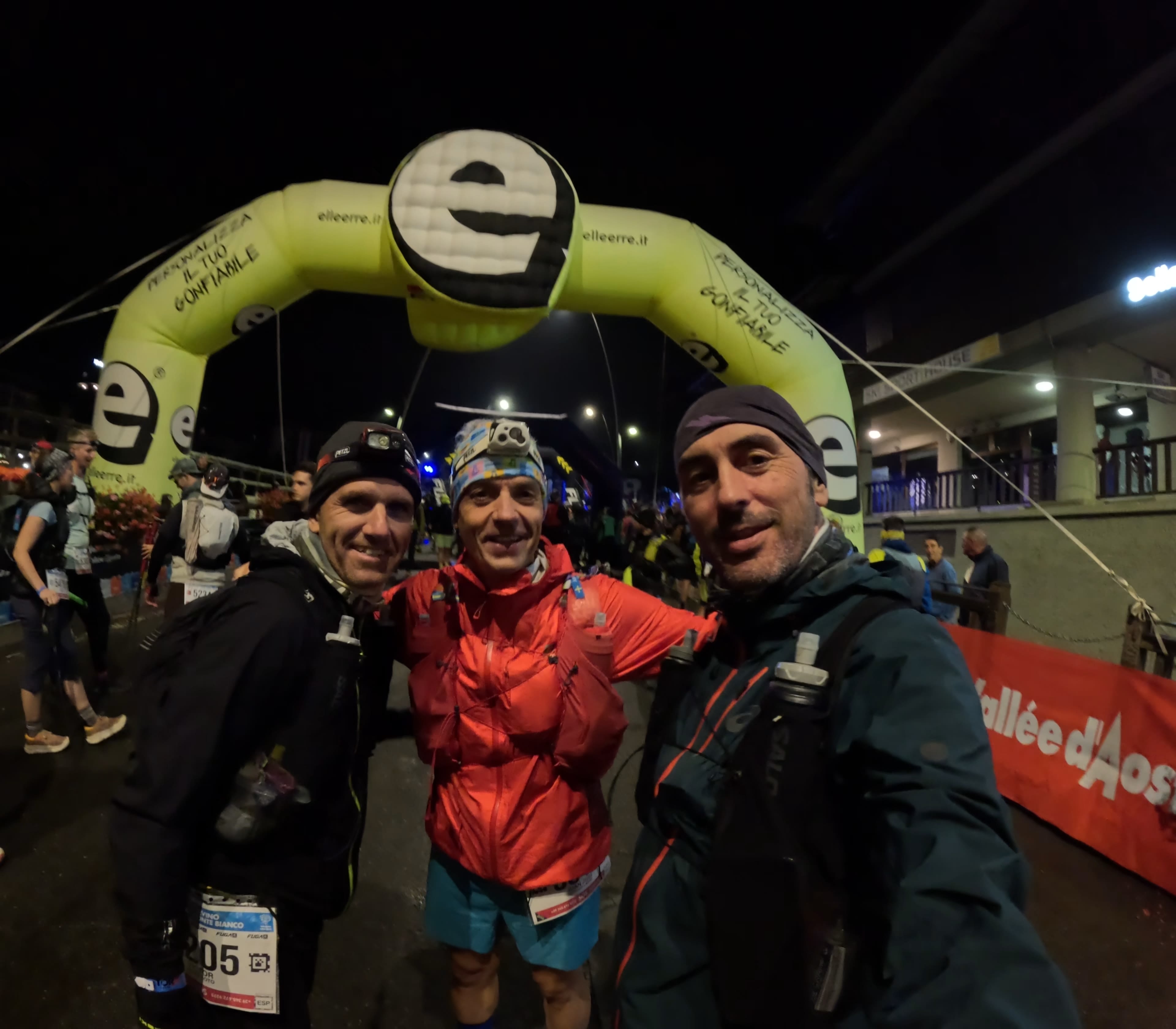
We have to travel to Courmayeur to leave our vehicle and take the bus to Cervinia, the starting point. Since we do not have external assistance, this means leaving our house at midday, many hours before the race begins.
At five in the afternoon, the bus drops us off in Cervinia, and another story begins.
Cervinia is undoubtedly one of the most incredible places from which I have ever started a race. The finish area faces the Matterhorn, an impressive giant dominating the entire landscape, while around the starting area there is music, product stands and runners everywhere, all trying to make the long wait until 9 p.m. a little easier.
Then it starts to rain.
The forecast is good for the race, but the light rain adds another layer of uncertainty. We are about to face 100 kilometres and 7,500 metres of elevation gain, and we know that the mountains always have the final word.
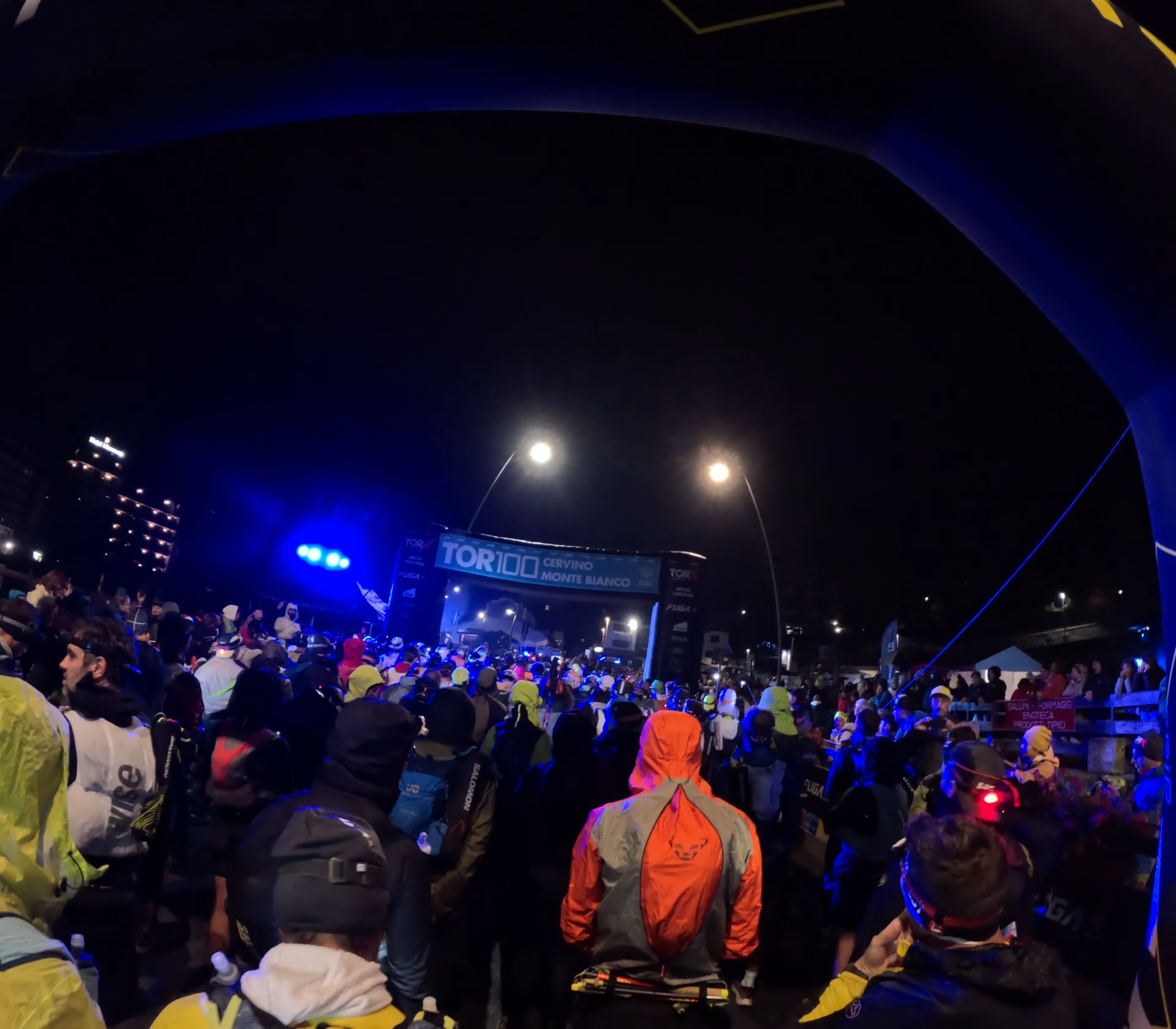
There are huge crowds cheering the runners on, and our headlamps are already switched on because the darkness is complete. The countdown begins and the adventure is underway.
A lap through the town followed by the first few kilometres on asphalt allows the nearly 500 runners who have started to gradually find their place.
In our case, we have calculated that around 30 hours should place us roughly in the middle of the field, which is where we naturally tend to finish in races like this.
Three Spaniards set off together: Juanjo, Víctor and myself. All three of us are experienced runners when it comes to tough races, and all three of us have the Travesera Integral de Picos de Europa among our previous experiences.
We leave the asphalt behind and begin climbing.
The first climbs are gradual, allowing us to maintain a comfortable and agile pace. These first hours of darkness also reveal one of the great strengths of the race: its incredible course marking.
The TOR's yellow flags accompany us throughout the entire route, and their reflective elements are clearly visible in the beam of our headlamps, even from many metres away.
Without a doubt, this is the best night-time course marking I have ever experienced in a race. At no point do you wonder where you are supposed to go.
At kilometre 12, we reach the first aid station, Rifugio Barmasse, at 2,173 metres. It is also here that we begin to appreciate another of the race's defining characteristics: a large part of the course remains above 2,000 metres, and at certain moments this will become important.
But something is not right.
The pain in my glute is still bothering me and begins creating doubts that are starting to affect me mentally.
On the climb towards Col de Chaleby, at 2,653 metres, I tell my companions that I cannot continue. I ask them to leave me the car keys and tell them that I will drop out at the next aid station.
We have barely been racing for two hours and I cannot see myself physically or mentally surviving another 28.
I continue alone, and the climb feels endless.
My legs and my mind seem to have disconnected from each other, and every step becomes incredibly difficult.
I reach the top of Chaleby and begin the descent towards Rifugio Magia, at around 2,000 metres.
It is kilometre 25 and, just as I arrive, I see my companions leaving the aid station.
There, I have a conversation with myself.
I think that if I drop out at that point, between being taken out of the mountains and everything else, I will lose several hours anyway. So I decide to try to make it to the life base at Oyace.
From Magia, a long climb takes us first to Rifugio Cuney, at 2,442 metres, and then to Col de Vessonaz, at 2,794 metres.
And something begins to change.
The pain does not bother me on the climbs and, little by little, I feel my morale returning.
I start thinking that perhaps I can continue.
A long descent of around 10 kilometres takes us down to Oyace, at kilometre 44, where the life base is located.
My surprise comes when I see my companions there.
The look on their faces says everything.
"Tu sei uguale al morto che resuscita."
“You're just like a dead man who has come back to life,” they tell me.
I take the car keys out and hand them back.
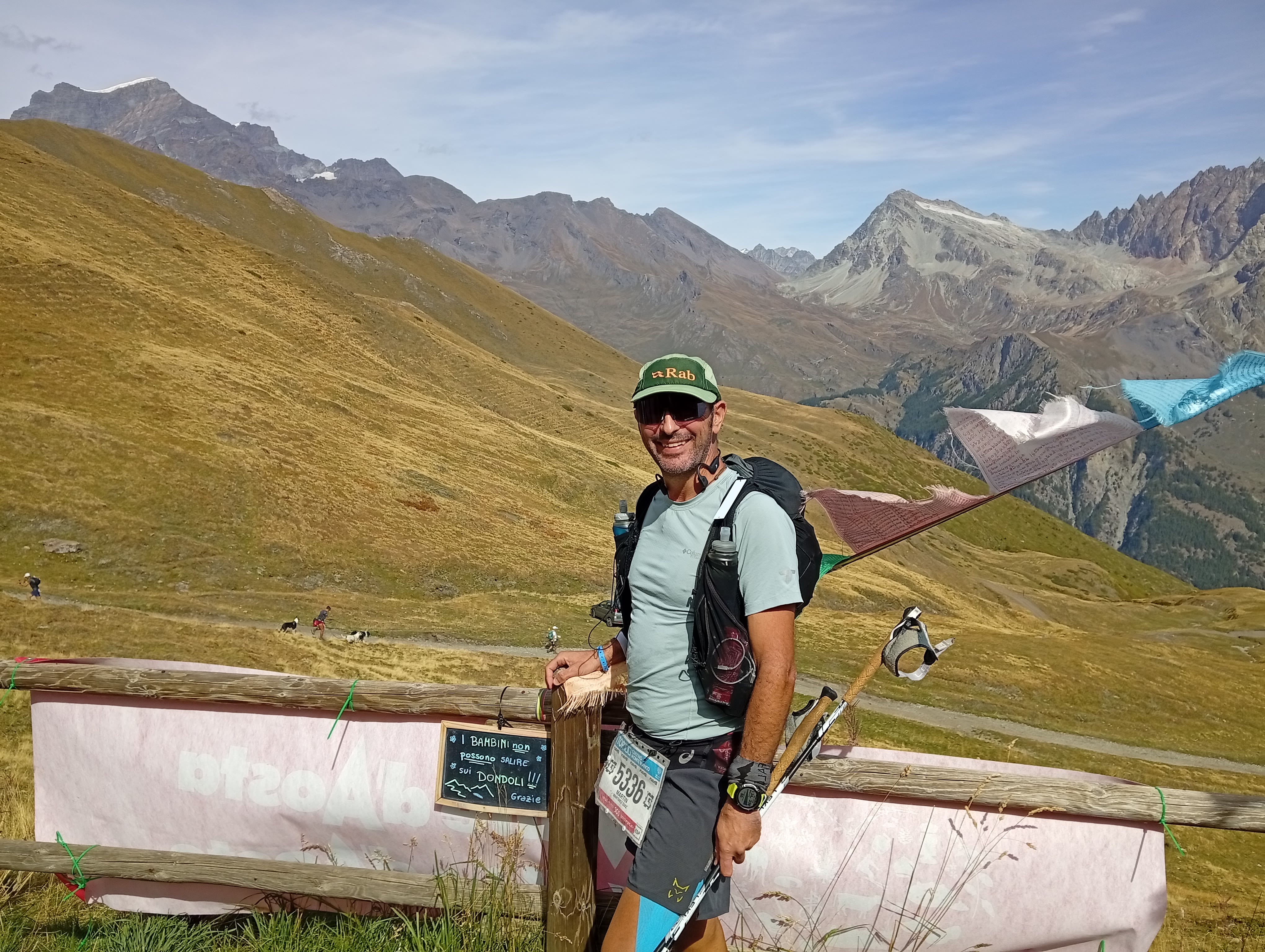
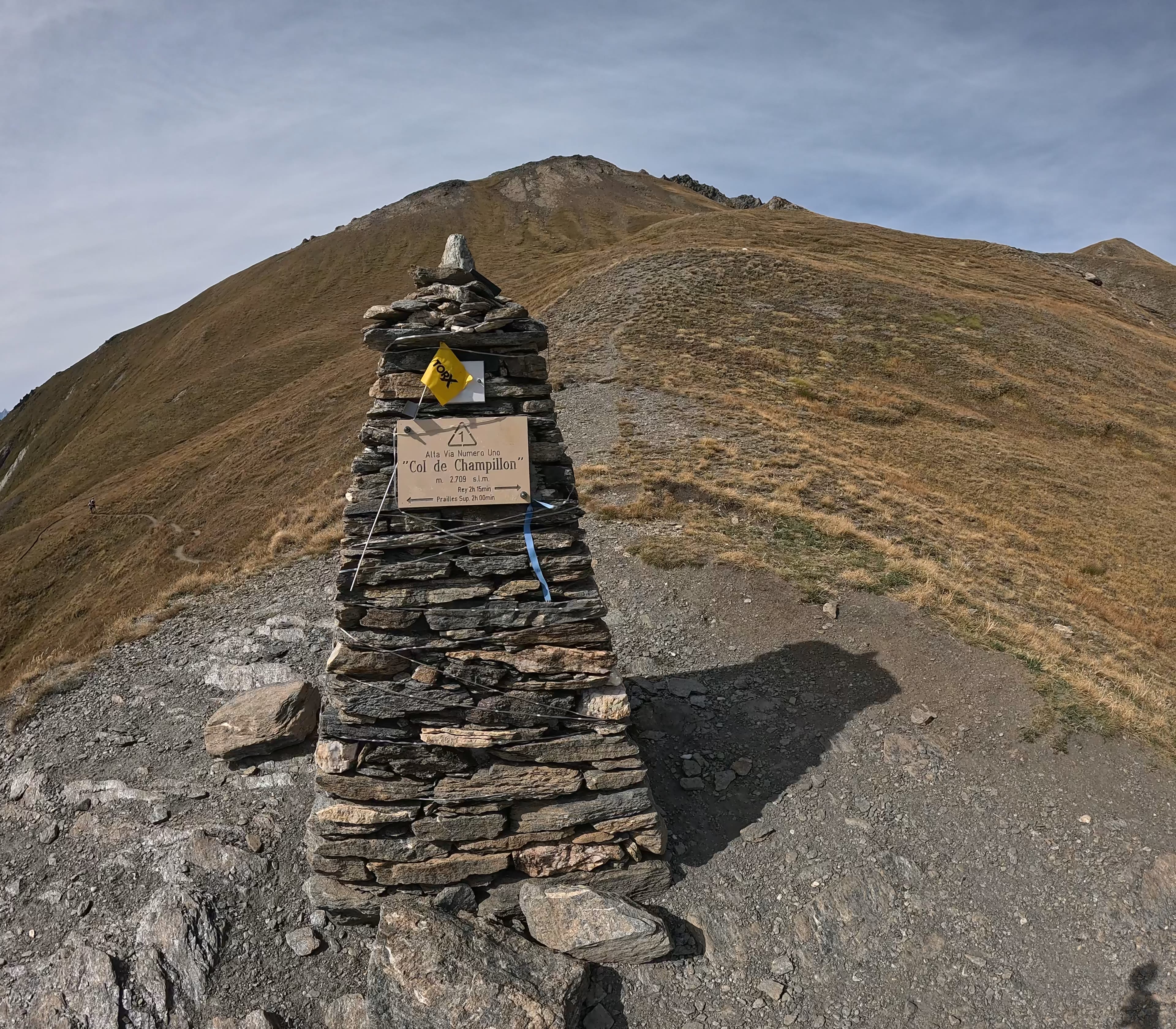
Because at that moment, I decide that I am going to finish this race.
They tell me they will wait for me, but I tell them that I would rather continue alone.
At Oyace, another race begins.
The race that I know I am going to finish.
I become myself again. My head becomes clear again and, as has happened to me so many times in ultras, I stop doubting.
I know I am going to make it.
The pain is still there, but it allows me to continue. I change my clothes and head back out.
Ahead of us is a loop featuring two climbs of around 1,400 metres of elevation gain and two descents with the same amount of elevation loss.
This is where the race will be decided.
It is already daylight when we begin the climb to Col de Brison, at 2,519 metres, followed by a brutally steep descent towards Ollomont, at 1,384 metres.
The magnificent aid station, like all the TOR aid stations, allows us to refuel before immediately taking on the climb to Col de Champillon and its 2,708 metres.
Then comes another savage descent towards Ponteille, at 1,880 metres.
By this point, the pain in my right glute has disappeared. But I assume that, as a result of compensating, the outside of my left knee begins to complain.
It is a pain I know well, one I have experienced in other races with major elevation loss.
At Ponteille, we take advantage of the medical assistance and they apply functional taping to my knee, which will relieve the pain for the rest of the race.
From here, we begin the final section.
But before continuing, it is worth taking a moment to talk about the 330 km and 450 km runners, true warriors whom we encounter throughout the race.
Their physical and mental strength is incredible.
Whenever we have the opportunity, we cheer them on and, when possible, share a few moments with them.
After so many kilometres, these encounters also become part of the race.
We reach the section that comes closest to being flat anywhere on the entire course: the connection between Ponteille and Saint-Rhémy-en-Bosses.
We take advantage of this village to change our shirts and prepare ourselves for the final major climb of the race: Col de Malatra, at 2,921 metres, passing by the iconic Rifugio Frassati.
On this climb, we form a small group with an Italian female runner, and together we make our way towards Frassati.
Halfway up the climb, the sun gives way to the moon and darkness once again takes over the mountains.
The climb is much harder than we expected.
I had imagined it would be a relatively gentle ascent, but I was wrong.
It is brutally hard.
We reach Rifugio Frassati and refuel before tackling the final metres towards Col de Malatra.
Our headlamp batteries are running out, so we stop to replace them.
At that moment, we lose the company of the Italian runner and are left alone.
The Malatra pass at night is challenging.
Towards the final section, we even have to follow the rope marking the route.
Finally, we reach the summit.
I think about the views we would have during the day: glaciers, mountains, the incredible spectacle of the Alps.
But now, all we can see is darkness.
The hardest part is behind us, although there is still one final effort.
We are at kilometre 88 and everything ahead of us is downhill, although there are still a few small climbs to overcome.
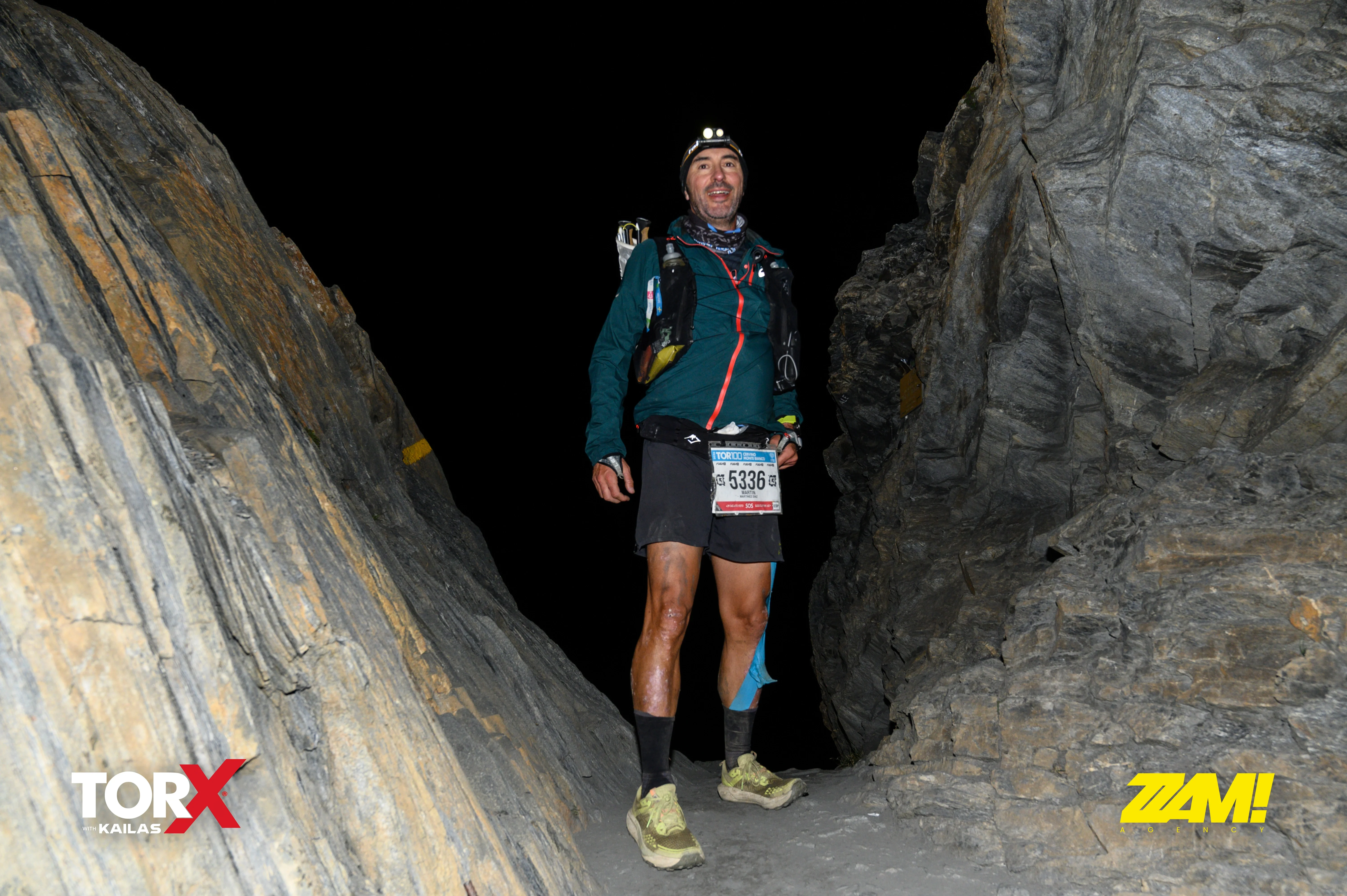
We pass Rifugio Bonatti and later Rifugio Bertone, two classic locations in the Alps.
Running is becoming increasingly difficult and the section seems endless, but knowing that we are getting closer and closer to the finish gives us the determination to keep moving.
Ultras are not easy, and they have to be fought for until the very last metre.
At the TOR, that rule applies in every possible sense.
From Rifugio Bertone to Courmayeur, there are around seven kilometres and 700 metres of descent.
A truly hellish descent, and probably the hardest finish to a race that I can remember.
The darkness, rocks everywhere and completely battered legs mean that our only objective is to avoid making one wrong step.
After what feels like an eternity, we reach the entrance to Courmayeur.
We run through the town still unable to believe that we have done it.
It is three in the morning and barely 30 people are waiting at the finish line.
But it does not matter.
The times and positions are no longer important.
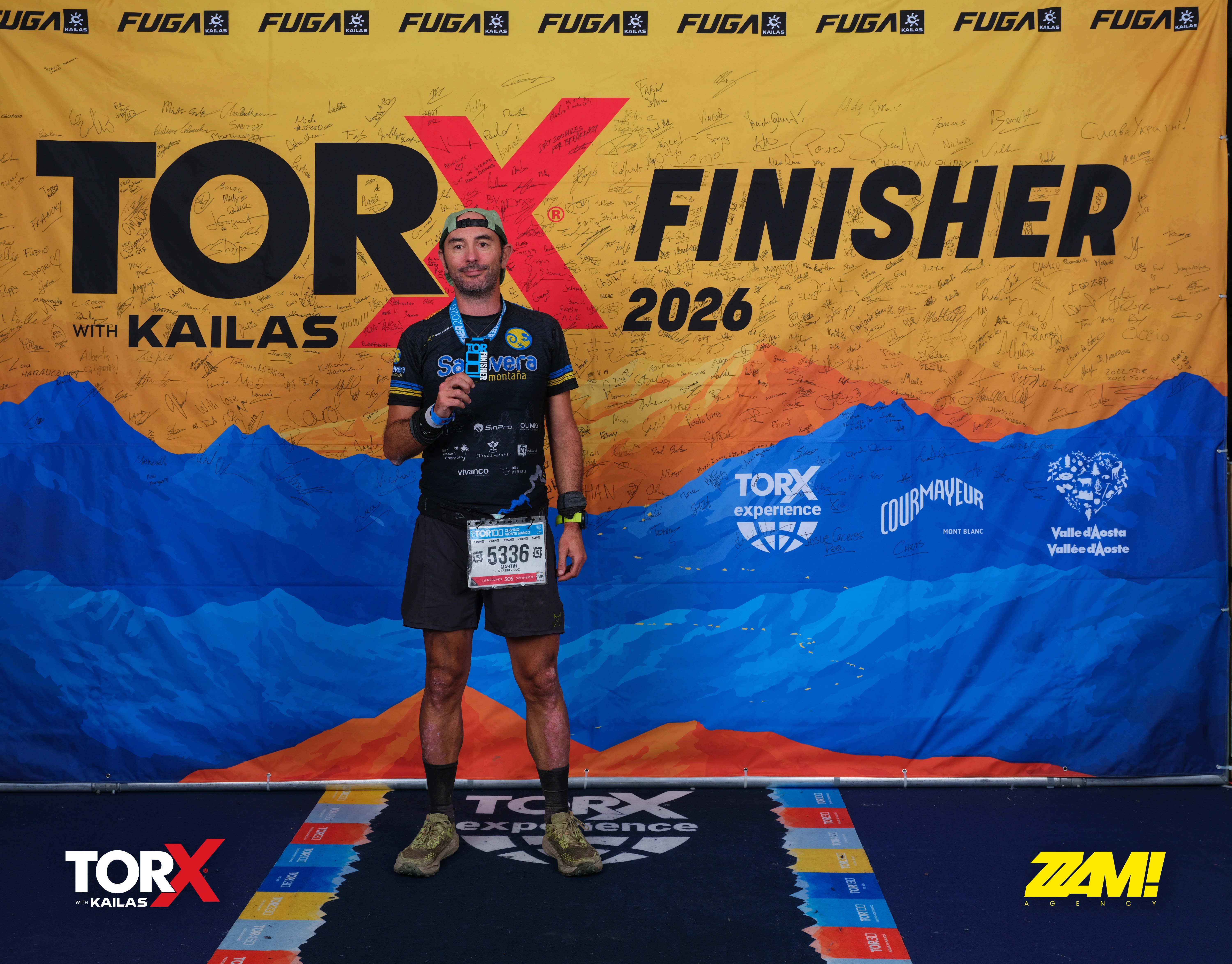
The pride I feel at that moment is possibly the greatest I have ever felt after finishing a race.
You cross the finish line and everything comes to an end.
Another one finished.
But fortunately, the journey does not end there.
Over the following days, we are able to enjoy the Aosta Valley and its villages, and it is absolutely worth taking the time to do so.
Places such as the incredible Cogne make the journey continue long after crossing the finish line.
On Sunday, we attend an emotional awards ceremony where all the finishers of the 330 km and 450 km races are recognised and presented one by one, with the stage set beneath the legendary Mont Blanc.
And so, for now, my first experience at the TOR comes to an end.
I leave with the feeling that I have experienced the beginning of a dream.
And I say the beginning because now, more than ever, I know that one day I will return to complete that dream I imagined barely five years ago.
100 kilometres to find myself.
And perhaps, one day, there will be 330.
Login to your account to leave a comment.

Review gear you already use. Earn Star Points. Qualify to test free running shoes and gear.