Lems ZenSpeed+: A Stable Low-Drop Daily Trainer

Lems ZenSpeed+: A Stable Low-Drop Daily Trainer

WeeViews

Posted Sep 22, 2026

The Lems ZenSpeed+ pairs a roomy toe box with secure lockdown, a firm, stable ride and excellent traction. It shines for shorter runs, gym sessions and everyday wear, but may lack the cushioning and versatility expected from a $175 daily trainer.

Total
Form
Performance
Value

As an Amazon Affiliate WeeViews earns from qualifying purchases.

Shop Now
Lems Zenspeed+
3.7/5
(1)
Pros
  • Roomy toe box with secure heel and midfoot lockdown
  • Accommodates different foot shapes without feeling loose or sloppy
  • Stable, planted platform with excellent ground feel
  • Natural, smooth ride with enough responsiveness for strides and faster pickups
  • Grippy outsole performs well on wet pavement and mellow trails
  • Promising durability with no premature wear
  • Breathable, comfortable upper with unobtrusive arch support
  • Works well for shorter runs, gym sessions and everyday wear
Cons
  • Firm ride offers limited cushioning, shock absorption, and energy return
  • Limited long-run and recovery-run versatility
  • Cork insole grips the sock
  • $175 price feels steep for its narrower range of uses
  • Subtle rocker may feel fatiguing for heel strikers who rely on more assistance through transitions

Lems ZenSpeed+: A Stable Low-Drop Daily Trainer

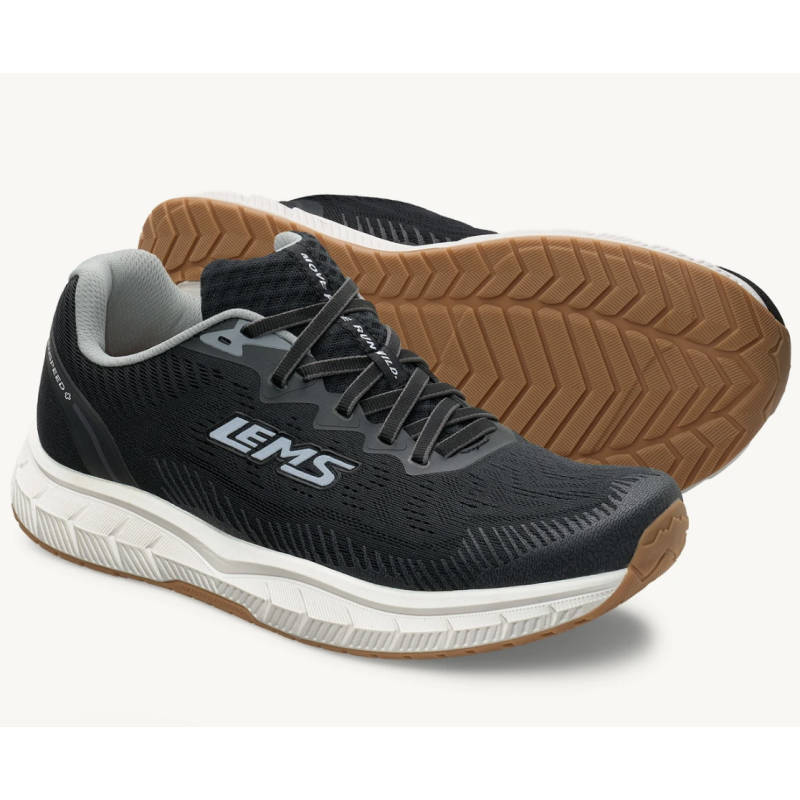
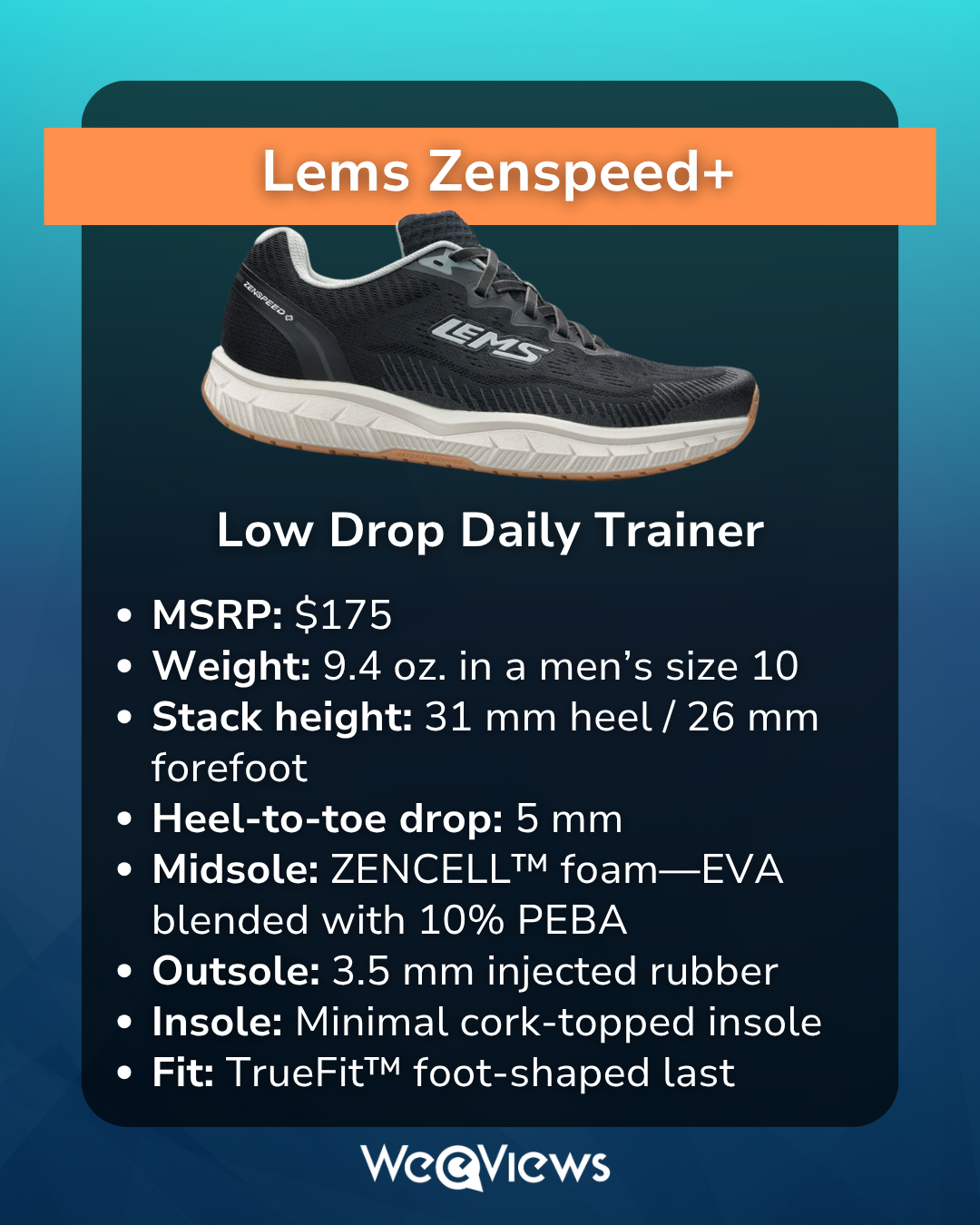
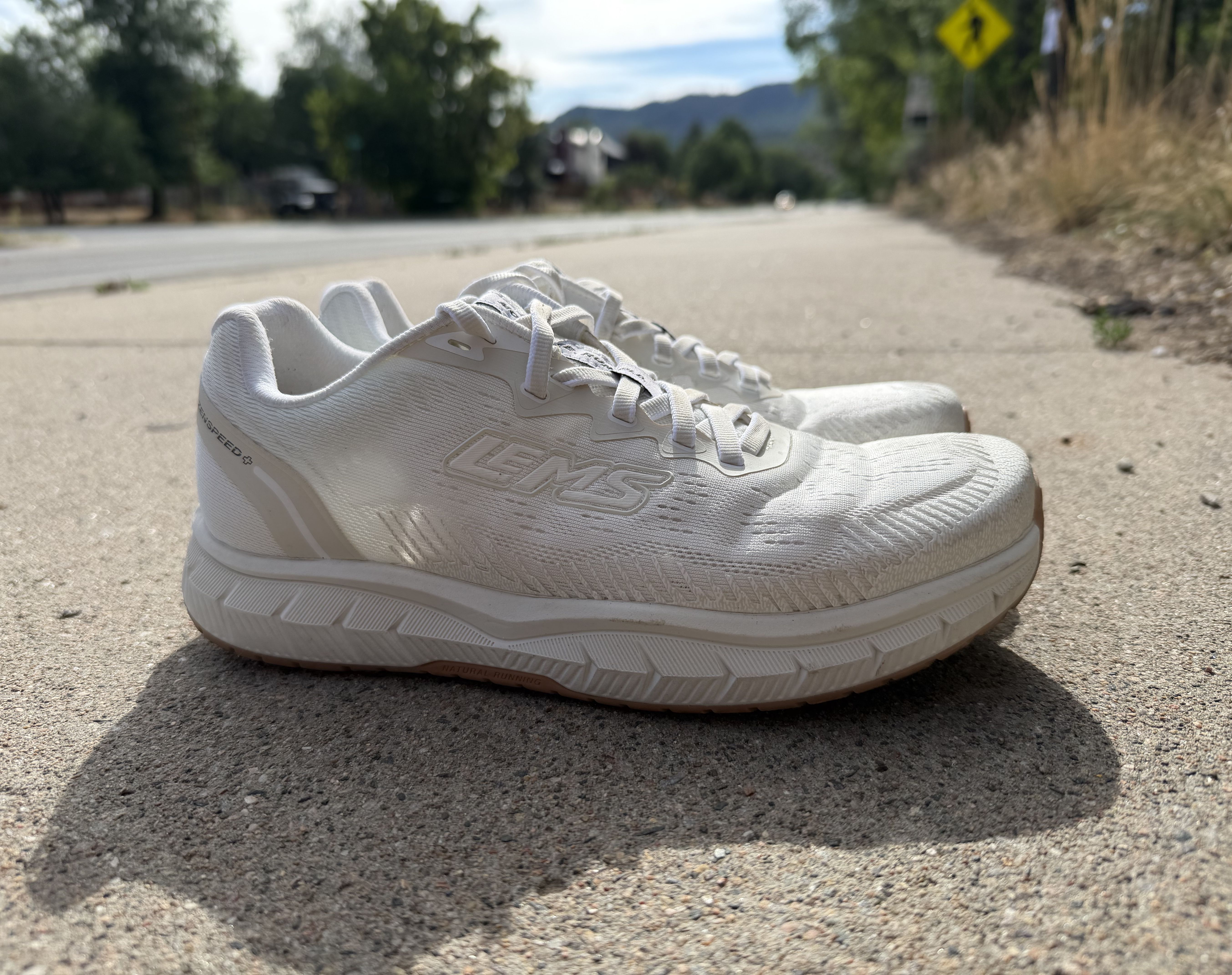
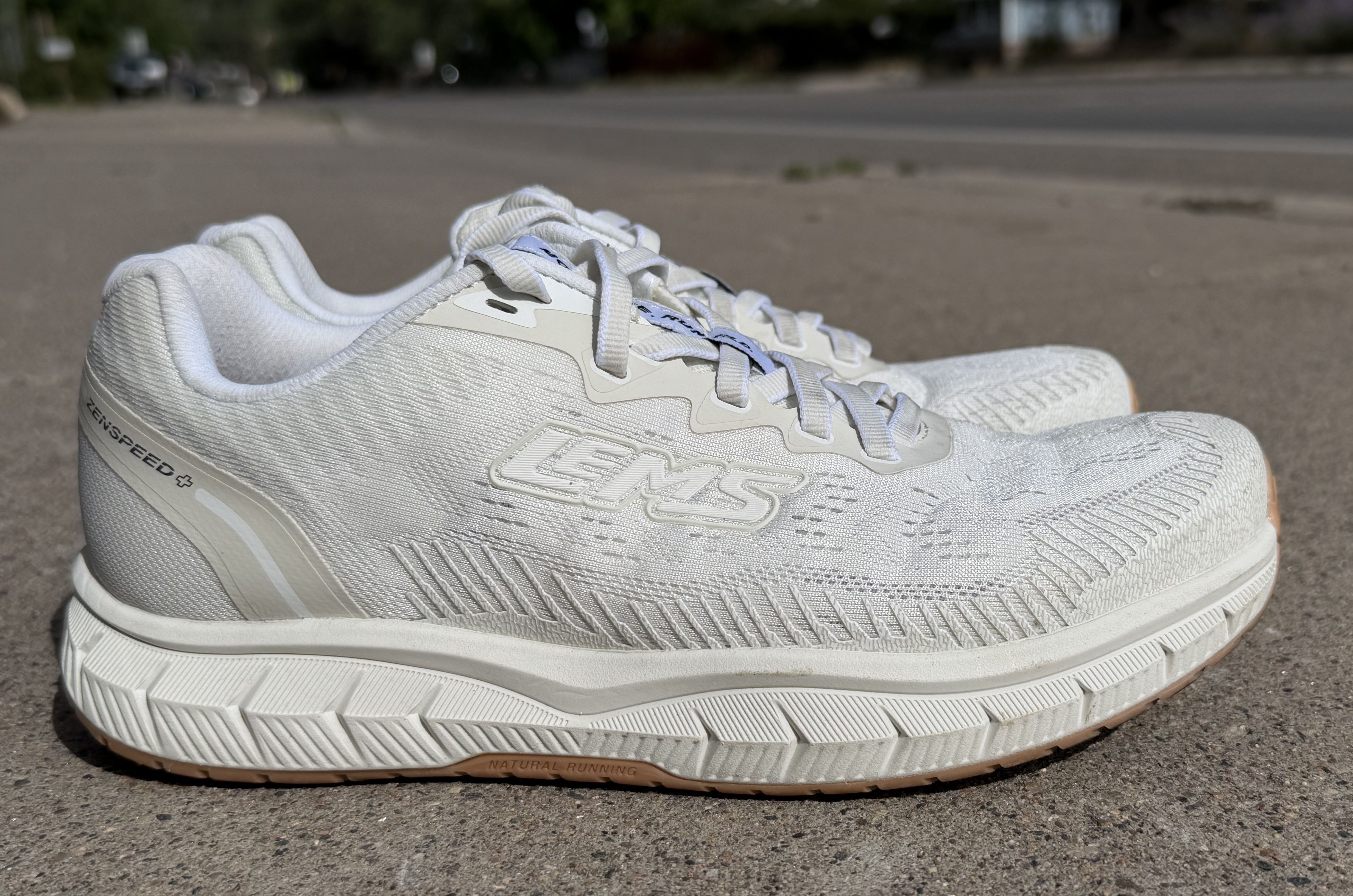
The Lems ZenSpeed+ occupies the middle ground between minimalist footwear and daily trainer. Lems pairs its foot-shaped TrueFit last with a 5 mm drop, 31 mm heel stack, subtle rocker, and ZENCELL midsole made from EVA and 10% PEBA. The brand positions the $175 shoe as a moderate-cushion road trainer capable of handling daily and longer mileage, but its natural shape offers an alternative experience from the towering, heavily rockered trainers now crowding the category.

Abby and David brought different feet but similar histories with low-drop footwear. Abby tested her usual women’s size 8.5 and has narrow feet with flat, flexible arches. Although she ran in zero-drop shoes years ago when the minimalist movement was at its peak, recurring lower-leg injuries eventually pushed her toward more cushioned footwear; she now uses some 3–4 mm drop running shoes while reserving more minimalist options primarily for lifting and walking. David has a wide, low-arched, medium-volume foot and tested a men’s size 11 in standard width, a half-size larger than he typically wears. A heel striker with experience in Altra shoes, he generally prefers extra cushioning and some assistance moving through his stride.

Together, Abby and David logged approximately 70 running miles in the ZenSpeed+. Abby’s 35 miles included several 45- to 60-minute runs, one 90-minute effort, strides, pavement, and some crushed-gravel trail. She also wore the shoe for gym sessions, errands, and work. David covered another 35 miles on pavement, primarily through easy four- to eight-mile runs, with wet-road testing and occasional faster pickups mixed in.

In short, the ZenSpeed+ delivered a secure, foot-shaped fit with strong stability and grip, but its firm platform limited its appeal for longer mileage. 

The Specs

Foot-Shaped Fit For All

Lems ZenSpeed+: A Stable Low-Drop Daily Trainer
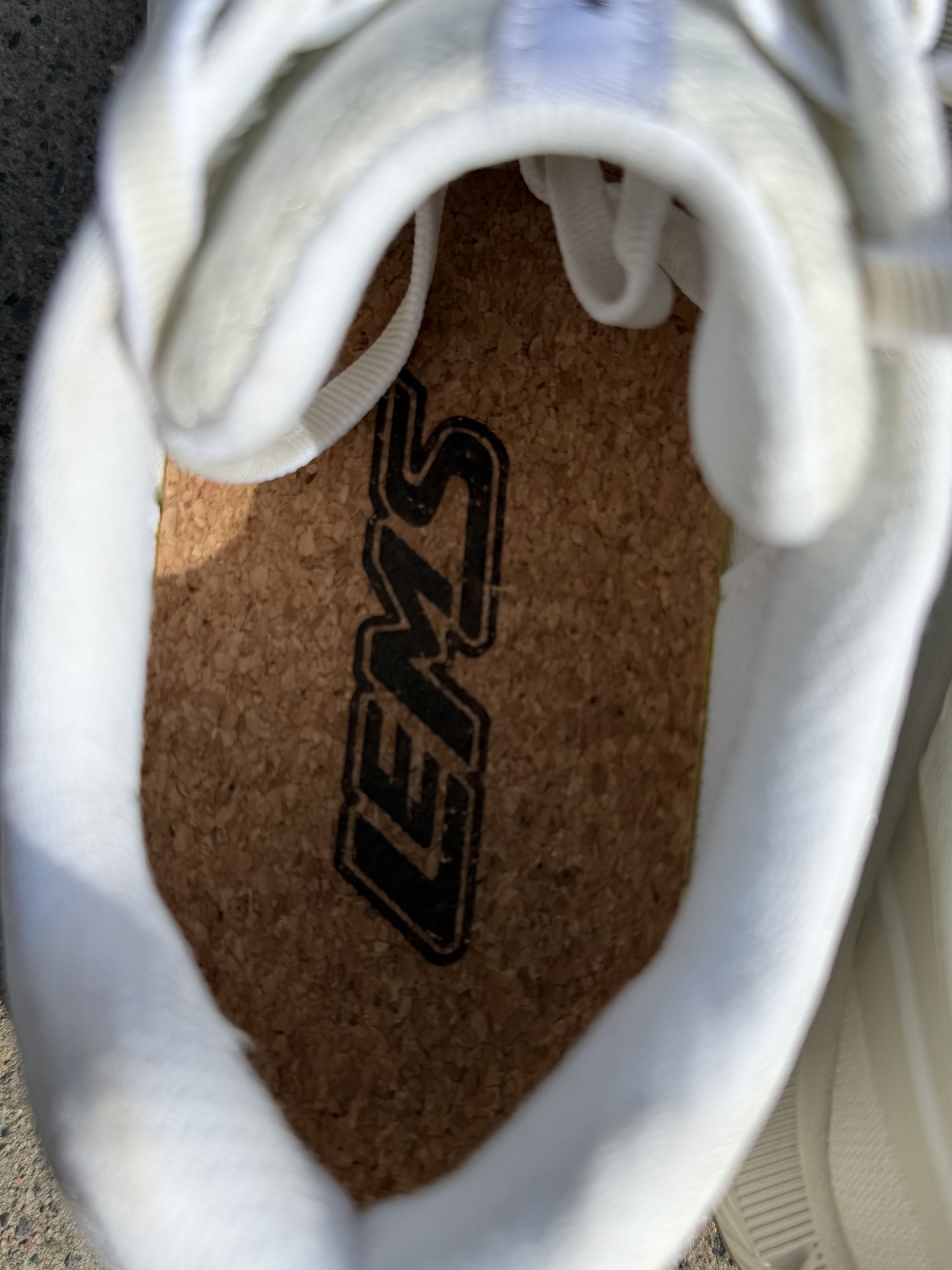
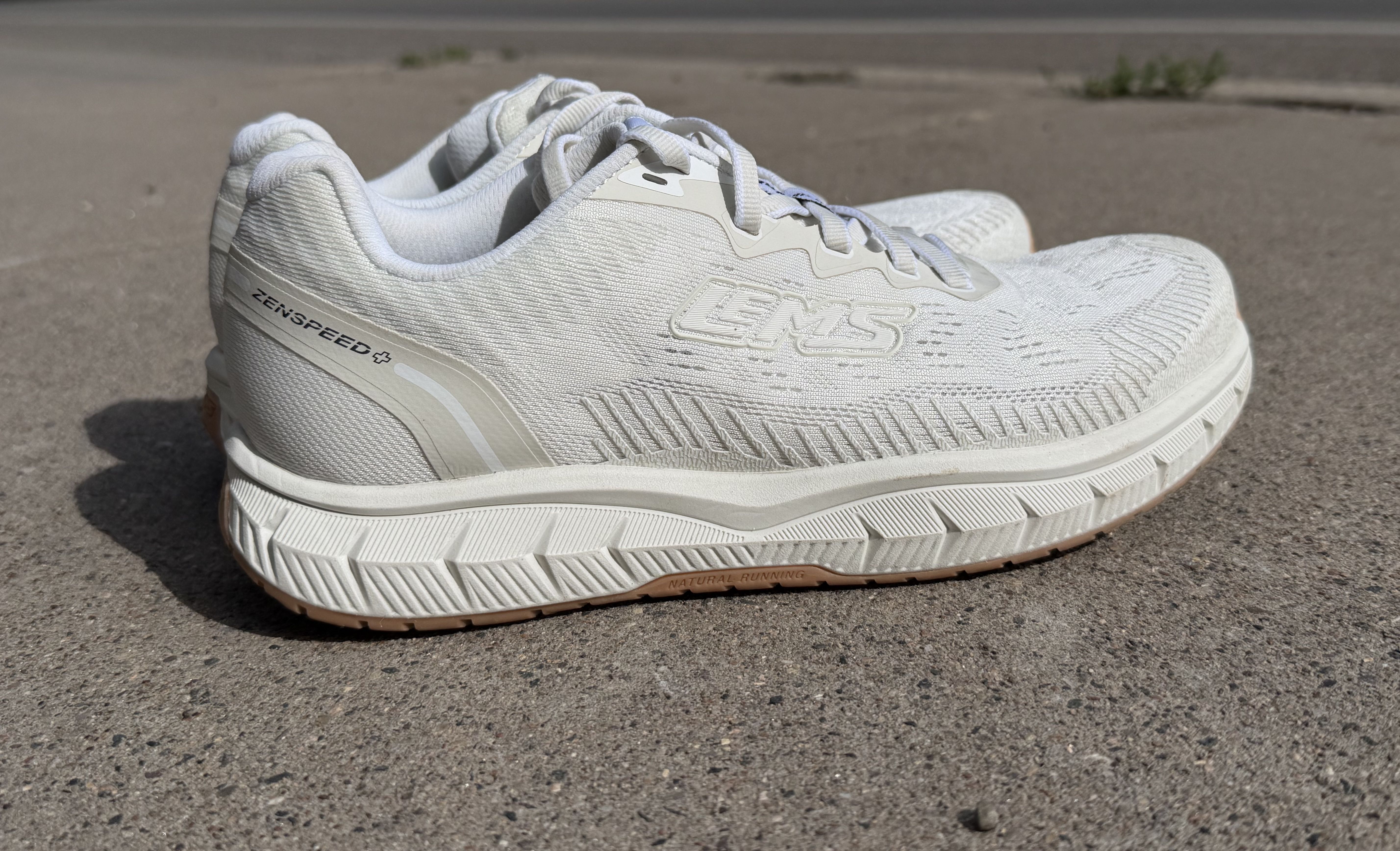
Cork insole pictured above.

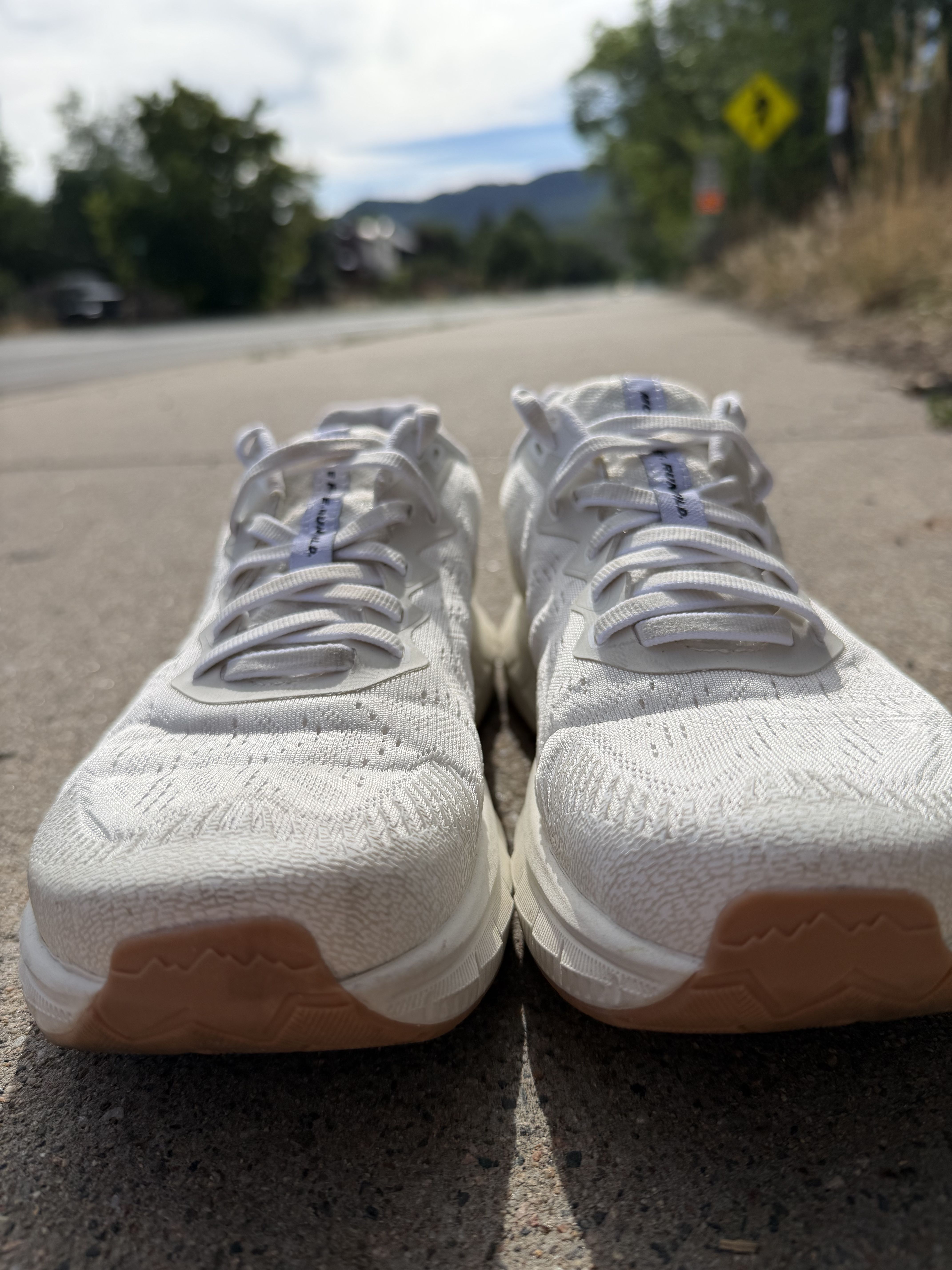
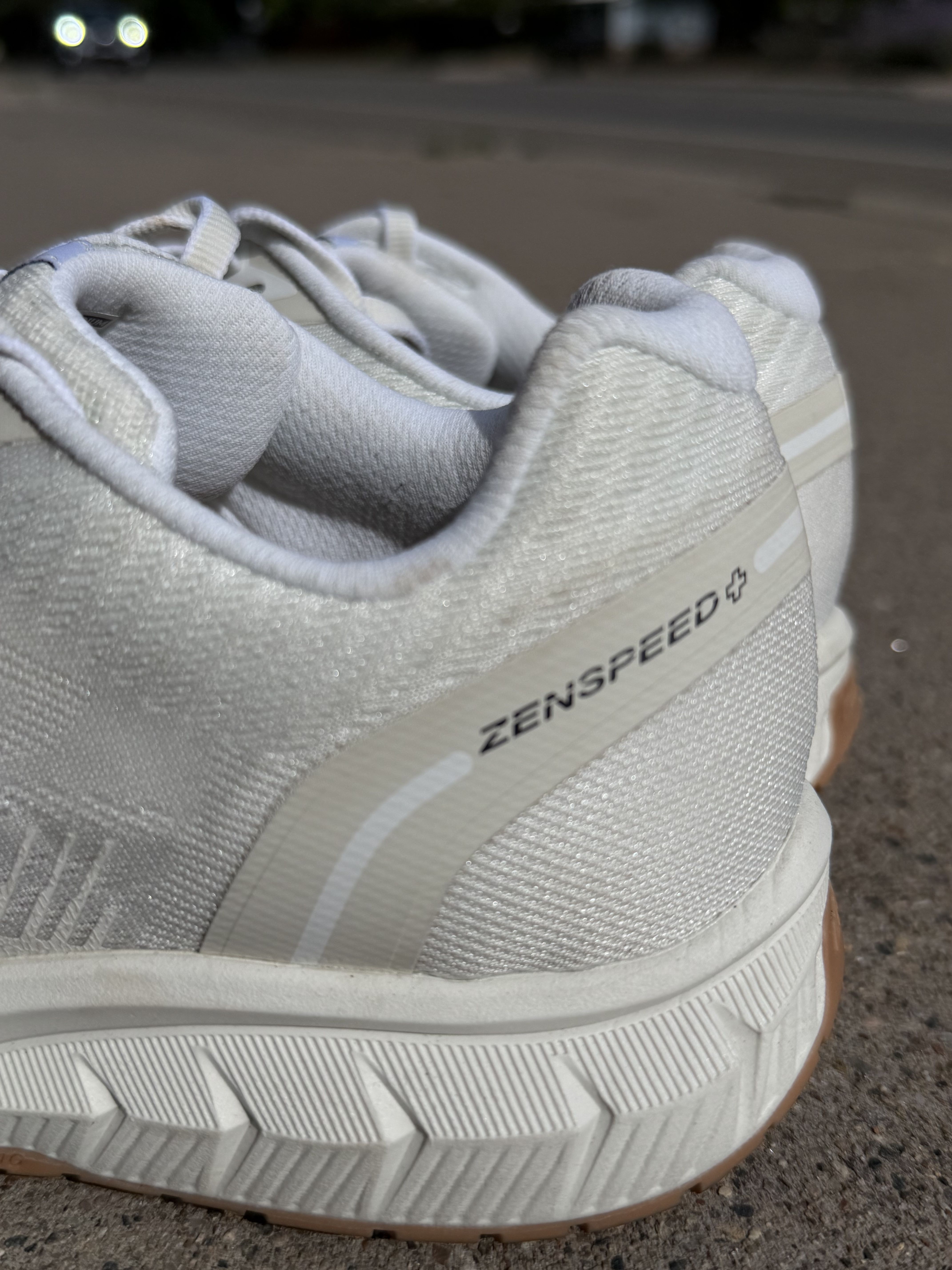
The ZenSpeed+’s fit was its clearest success. Foot-shaped shoes sometimes create generous toe room by adding volume everywhere, leaving narrow-footed runners swimming through the midfoot and heel. Lems avoided that tradeoff.

Abigail Lock
“The fit was a highlight for me. It hugged my midfoot and provided arch stability without being obtrusive. The heel never slipped and I didn't have to crank down the laces.”

Its TrueFit last gave both testers space to spread their toes while maintaining a secure hold through the rest of the foot.

That agreement carries extra weight because Abby and David sit on opposite sides of the width spectrum. Abby’s narrow foot felt comfortably hugged through the midfoot, and the shoe provided noticeable arch support without pressing or feeling intrusive. Her heel remained secure without aggressive lacing, while the toe box supplied the room she prefers. David’s wider foot also fit comfortably in the standard width. He found ample forefoot space without slipping, pressure points, or a sloppy sensation through the heel and midfoot.

The upper continued the theme of comfortable minimalism. Abby appreciated the breathable material and the tongue’s balance of light cushioning and low bulk. Neither tester experienced hot spots, pressure points, heel movement, or a break-in period. Abby’s usual women’s 8.5 fit true to size. David tested a men’s 11, which is a half-size larger than his typical 10.5, but said he would order his normal size in the future.

The thin cork-topped insole was the lone fit-related wrinkle. Both testers noticed that its surface gripped their socks. David primarily felt that friction while sliding his foot into the shoe and did not experience discomfort once it was on. Abby found the material hotter and more abrasive during wear and would have preferred a conventional insole. While the cork adds an interesting natural-material detail, it did not meaningfully soften the underfoot experience.

A Midsole with Groundfeel

The ZENCELL midsole may include 10% PEBA, but the ZenSpeed+ does not deliver the soft, springy sensation runners might associate with PEBA-based foams. Both testers described the shoe as firm, stable, and closely connected to the ground. That firmness created a controlled ride with little compression, although Abby and David interpreted its responsiveness somewhat differently.

David Moore
“The ZenSpeed+ is quite firm underfoot and does not have a lot of noticeable energy return. I think that is largely intentional. The shoe prioritizes stability and ground connection rather than trying to create a highly cushioned or bouncy ride.”

Abby found that the solid platform responded quickly enough for strides and short pace increases. David, however, noticed little energy return and characterized the ride as more traditional than propulsive. Rather than bouncing runners forward, the ZenSpeed+ provides a consistent surface from which to push. Runners who equate responsiveness with firmness and direct ground contact may appreciate that quality; those looking for softness or obvious rebound are unlikely to find it here.

Despite its listed 31 mm heel and 26 mm forefoot stack, the ZenSpeed+ feels more minimal than the numbers suggest. Both testers thought the 5 mm drop felt lower underfoot, and David said he could have mistaken it for a zero-drop shoe. The rocker was similarly understated. Abby enjoyed the shoe’s smooth, natural movement, while David wanted more assistance transitioning from his typical heel strike through toe-off. He found himself working harder as runs grew longer, although the platform felt better when faster paces moved him naturally toward the front of his foot.

The result is a ride built around stability and ground feel rather than cushioning and mechanical assistance. That gives the ZenSpeed+ a distinct identity among modern daily trainers, but it also places some boundaries around when each tester wanted to use it.

The Outsole

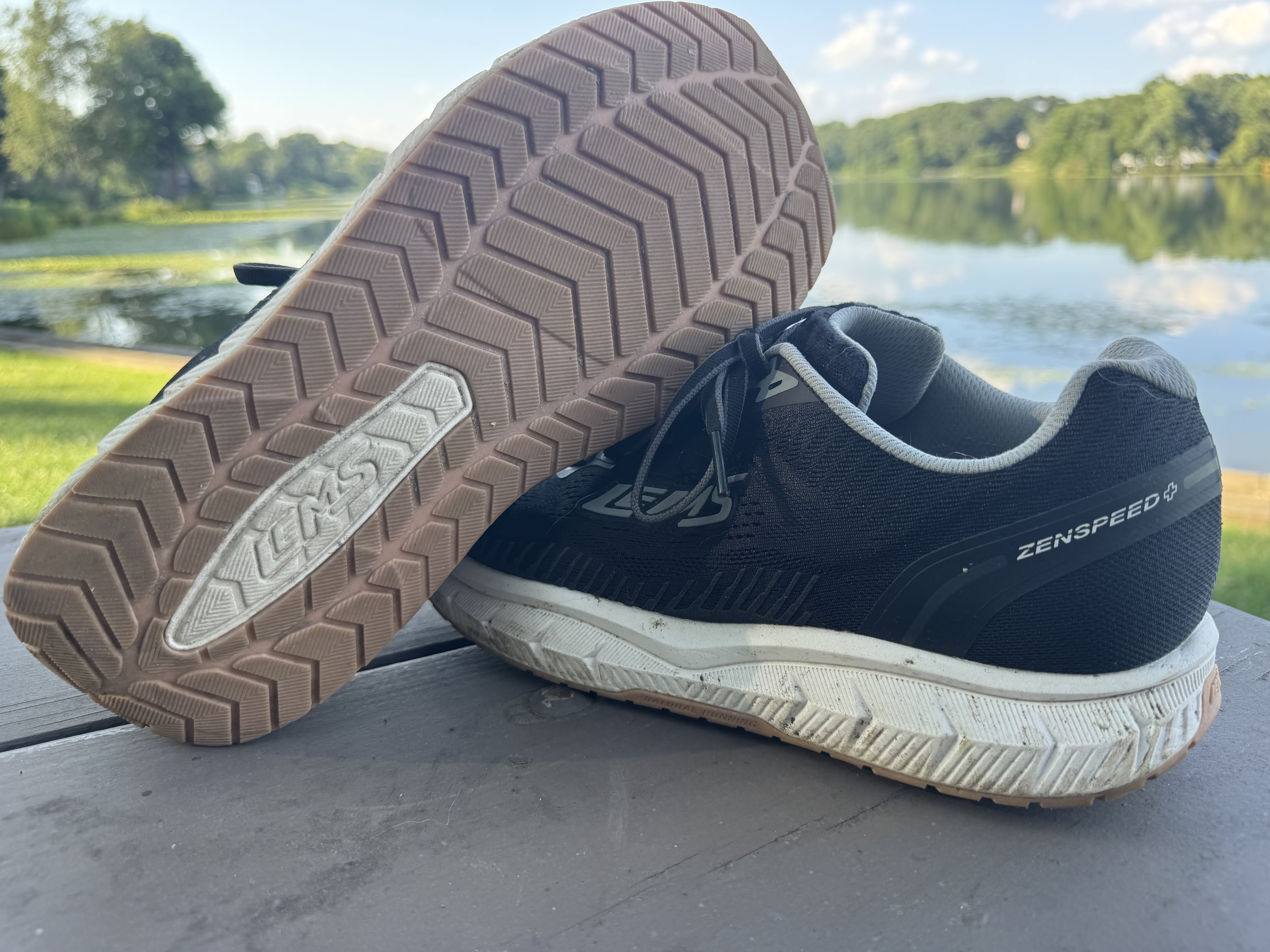
The ZenSpeed+’s 3.5 mm injected-rubber outsole was another point of agreement between testers. Lems designed the rubber layer to provide road durability without the weight of a conventional solid-rubber covering, and neither Abby nor David thought the shoe felt burdened by its substantial coverage. Instead, the outsole reinforced the broad platform’s planted, secure sensation.

Abigail Lock
“The outsole is a standout feature from Lems Zenspeed+. It grips incredibly well and has enough tread to handle mellow trail. The shoe doesn't feel particularly heavy despite the quality of this outsole, but that could be due to the low amount of cushioning.”

David encountered no slipping or uncertainty during his road testing, including runs on wet pavement. The shoe maintained solid contact with the ground and felt predictable across the conditions he encountered. Abby similarly praised its grip on pavement and found that the tread handled crushed gravel comfortably. Based on her testing, she thought it had enough lug material for mellow trails, extending the shoe’s usefulness beyond purely roads without turning it into a true trail model.

Early durability also looks promising. David observed no meaningful outsole wear after approximately 35 miles and reported no upper damage or noticeable changes in fit or cushioning. Abby reached a similar conclusion after her combination of running, lifting, and everyday use. Longer-term testing would be needed to estimate the outsole’s full lifespan, but after 70+ combined running miles, neither tester identified premature wear. For a shoe whose underfoot appeal comes largely from stability and ground connection, the outsole does its job without getting in the way.

Lems Zenspeed+ Performance & Versatility

Although Lems positions the ZenSpeed+ for daily training and longer mileage, both testers preferred it in a narrower role. The shoe felt most at home during shorter easy runs, recovery-paced outings, and brief increases in speed. Its stable platform and direct ground contact made it predictable for everyday mileage, but neither tester would reach for it first when the distance began to climb.

David Moore
“I think the ZenSpeed+ works best as a daily mileage shoe and as part of a rotation rather than as my first choice for long runs.”

David remained comfortable through runs of seven to eight miles and liked the ZenSpeed+ as a way to introduce a different stimulus into a rotation. As a heel striker, however, he began to fatigue sooner than he would in a softer trainer with a more pronounced rocker. Abby encountered a similar limit during her 90-minute run. The shoe provided enough protection for shorter mileage, but its firm foam did not absorb enough impact for her to consider it a long-run option.

The ZenSpeed+ performed better at quicker paces than its minimalist feel might suggest. David thought the ride improved when he accelerated because the firmer platform encouraged him to land farther forward rather than settling into his usual heel strike. Abby also found enough pickup for strides, although she would not choose the shoe for sustained speed over a longer distance. It can handle a few faster gears, but neither tester viewed it as a dedicated workout shoe.

Its usefulness extended beyond running for Abby, who frequently reached for the ZenSpeed+ during lifting sessions, errands, and work. The secure fit, stable base, and natural ground feel translated especially well to the gym. For runners accustomed to low-drop footwear, the ZenSpeed+ could serve as a short-run daily trainer with crossover appeal. For those seeking one shoe to cover easy miles, long runs, and workouts, its firm ride may prove too specialized.

Who should buy the ZenSpeed+?

At $175, the ZenSpeed+ asks a higher price for a relatively specialized running experience. Both testers rated its value 3 out of 5. This was not because the shoe felt poorly constructed, but instead because neither found it versatile enough to cover the full daily-training role Lems advertises.

David thought a price between $140 and $160 would align more naturally with comparable trainers. Still, the difference was not large enough to rule out a purchase if the ZenSpeed+ offered the exact qualities he wanted. Its secure foot-shaped fit, stable platform, promising durability, and distinct ride give it a place within a rotation. Abby had a harder time justifying the cost because the limited shock absorption kept her from using it regularly for longer runs, although its crossover value for short runs, lifting, and everyday wear helped broaden its usefulness.

The ZenSpeed+ makes the most sense for runners who prefer a firm, natural ride with strong ground connection. It offers a roomy toe box without the loose midfoot or heel that can accompany foot-shaped footwear, making it especially appealing to runners who have struggled to find that combination. Those already comfortable with low-drop or minimalist shoes may appreciate the added protection, stable base, and durable outsole for shorter daily mileage.

David Moore
“I would recommend the ZenSpeed+ to runners who want a very stable shoe with a firm connection to the ground, a roomy toe box, and a secure overall fit.”

Runners seeking a cushioned cruiser, pronounced rocker, or obvious energy return should look elsewhere. The same applies to those hoping to make one $175 shoe handle recovery runs, long mileage, and sustained faster efforts. The ZenSpeed+ can pick up the pace and stretch into moderate distances, but those are supporting skills rather than its core strengths.

Ultimately, the ZenSpeed+ is a well-built bridge between minimalist footwear and a conventional daily trainer. Its fit and outsole are excellent, while its firm ride is more dependent on individual preference. For the runner who wants toe room, lockdown, stability, and an uninterrupted connection to the ground, it offers a distinctive package. For everyone else, the price may be difficult to reconcile with its narrower range.
This is an incentivized review

Both reviewers were provided with a pair of shoes in exchange for their honest review.

Comments

Login to your account to leave a comment.

Subscribe

and never miss our new running content!
(you also score chances to win gear)
1.3k
WeeViews
Moderator
43 Followers
13 Following

WeeViews gets right to the heart of the running experience through micro-reviews on all the gear, events, gadgets, and nutrit...

More WeeViews

Image of New Balance FuelCell Rebel v5
Full Review
Image of 361 Degrees Futura 3
Image of New Balance FuelCell Rebel v5
Image of Other Swift Running Apus
Full Review
Image of 361 Degrees Centauri 2
Full Review

Recent Rundown

Search

Want Free Running Gear to Test?

Review gear you already use. Earn Star Points. Qualify to test free running shoes and gear.

 Run it. Test it. Review it.