Concurve GORE-TEX Jacket Review

Concurve GORE-TEX Jacket Review

WeeViews

Posted Jan 15, 2026

A true waterproof running shell for cool, wet weather. Lightweight, windproof, and easy to carry, with a slim athletic fit that moves naturally on the run. Best for overcast, stormy days and mountain adventures, but runs hot near 40°F+.

Total
Form
Performance
Value

As an Amazon Affiliate WeeViews earns from qualifying purchases.

Shop Now
Concurve GORE-TEX Jacket
4.1/5
(1)
Pros
  • True waterproof performance — real GORE-TEX protection in sustained rain
  • Ultralight at 7.1 oz — easy to carry in a vest or pack
  • Excellent elastic cuffs — comfortable, functional, and well sealed
  • Magnetic hood retention — eliminates hood bounce when not in use
  • Slim, athletic running fit
  • Strong visibility and reflective detailing
  • Superior to minimalist shells for serious objectives
Cons
  • No pit vents or mechanical ventilation — overheating is easy at higher temps or intensity
  • Slim fit may not suit muscular builds
  • Torso runs slightly long when sizing up
  • Mesh pockets not ideal for keys or bouncing electronics

Concurve GORE-TEX Jacket Review

Ultralight, runner-cut waterproofing for cool, wet training

The Gorewear Concurve GORE-TEX Jacket is marketed as a waterproof shell built specifically for runners who want true weather protection without giving up freedom of movement. Not a casual rain jacket. Not a paper-thin emergency layer. A purpose-built piece designed to block wind, shed rain, and move naturally with a running stride.

To evaluate how well it delivers on that promise, we tested the Concurve across two very different environments:

  • Northeast Ohio, during winter training in cold, humid conditions with steady drizzle and rain on both roads and trails.
  • Southwestern Colorado (6,512 ft elevation), in a much drier climate with strong sun exposure, variable mountain weather, and cool, stormy trail and road runs.

Between the two testers, the jacket saw temperatures from the high teens to the low 40s °F, runs lasting 30 minutes to 2 hours, and conditions ranging from overcast rain to cold wind and intermittent storms. Layering underneath was typically limited to lightweight or midweight base layers to reflect realistic training use.

What became clear quickly is that the Concurve is unapologetically focused on one thing: serious weather protection in a lightweight, runner-specific package. In the right conditions, it feels dialed—quiet for a GORE-TEX shell, highly mobile, and confidence-inspiring when the weather turns ugly. In others, especially as temperatures rise or effort increases, its design tradeoffs become more noticeable.

This review combines both testers’ experiences to show where the Concurve excels, where it struggles, and for whom it ultimately makes the most sense. 

Weather protection and features

Concurve GORE-TEX Jacket Review
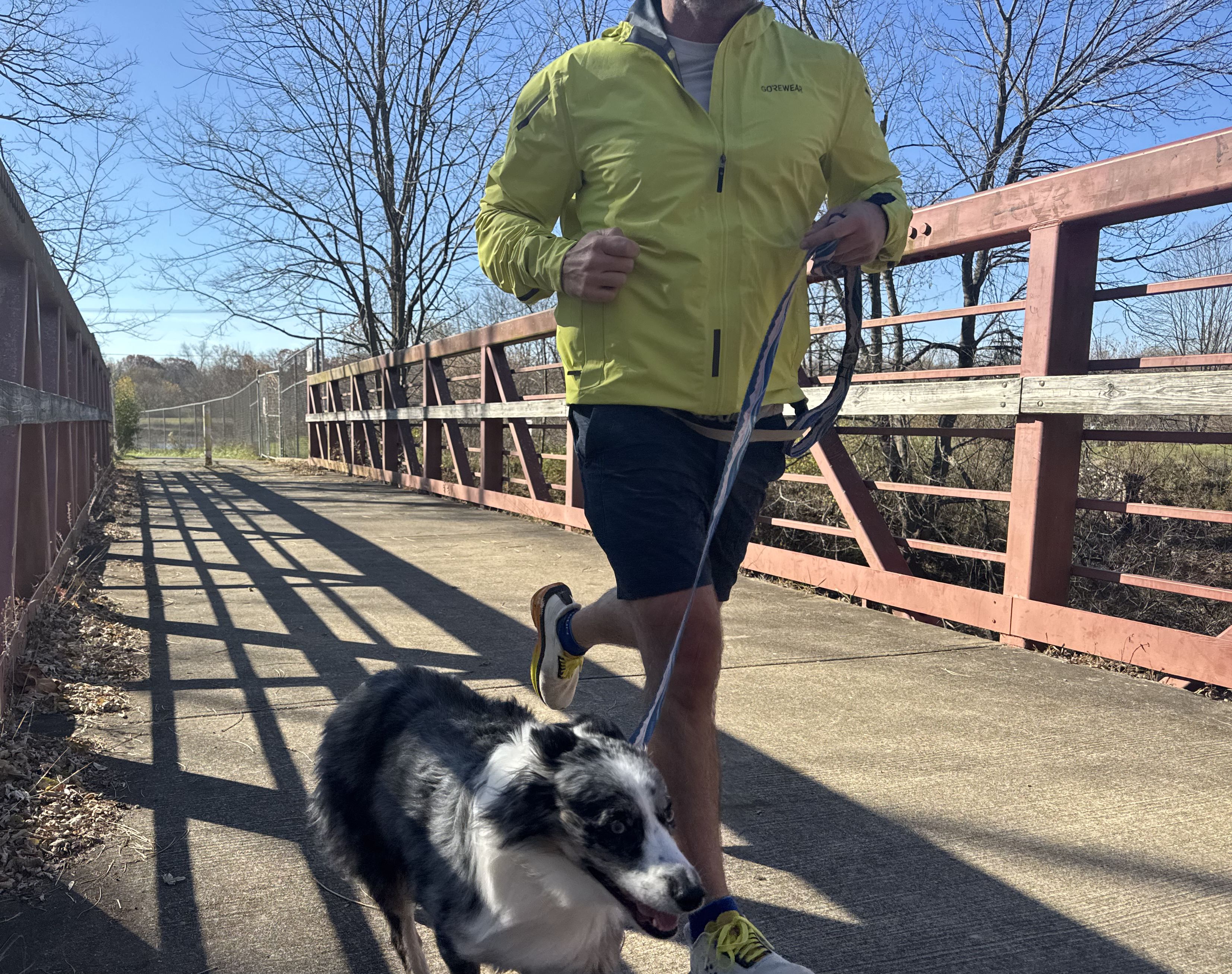
Cold-weather miles in the Concurve during Northeast Ohio winter testing. User is 5'7", 165 pounds and wearing size large.

Cold-weather miles in the Concurve during winter testing in Northeast Ohio confirmed what you’d expect from a jacket carrying the GORE-TEX name: excellent waterproofing and strong wind protection. In steady rain and cold wind, moisture never penetrated the fabric, and the shell consistently blocked gusts that would normally cut through lighter, more breathable layers.

David Moore
Weather protection is superior — it’s GORE-TEX. I didn’t have any moisture penetrate while using and the jacket provided a great block to wind.

In Colorado testing, the story was similar from a protection standpoint. Even in variable mountain weather—cold rain, wind, and rapidly shifting conditions—the jacket provided a reassuring barrier from the elements. Where the experience diverged wasn’t in whether the jacket protected from weather, but in how noticeable that protection became as effort level and sun exposure increased (more on that in the breathability section).

From a design standpoint, Gorewear clearly prioritized features that support running and not just general outdoor use.

Pockets: The jacket includes two large zippered front pockets. Both testers found them useful for stashing soft items. The mesh lining helps reduce weight and allows moisture to drain, but isn't ideal for heavier items that bounce.

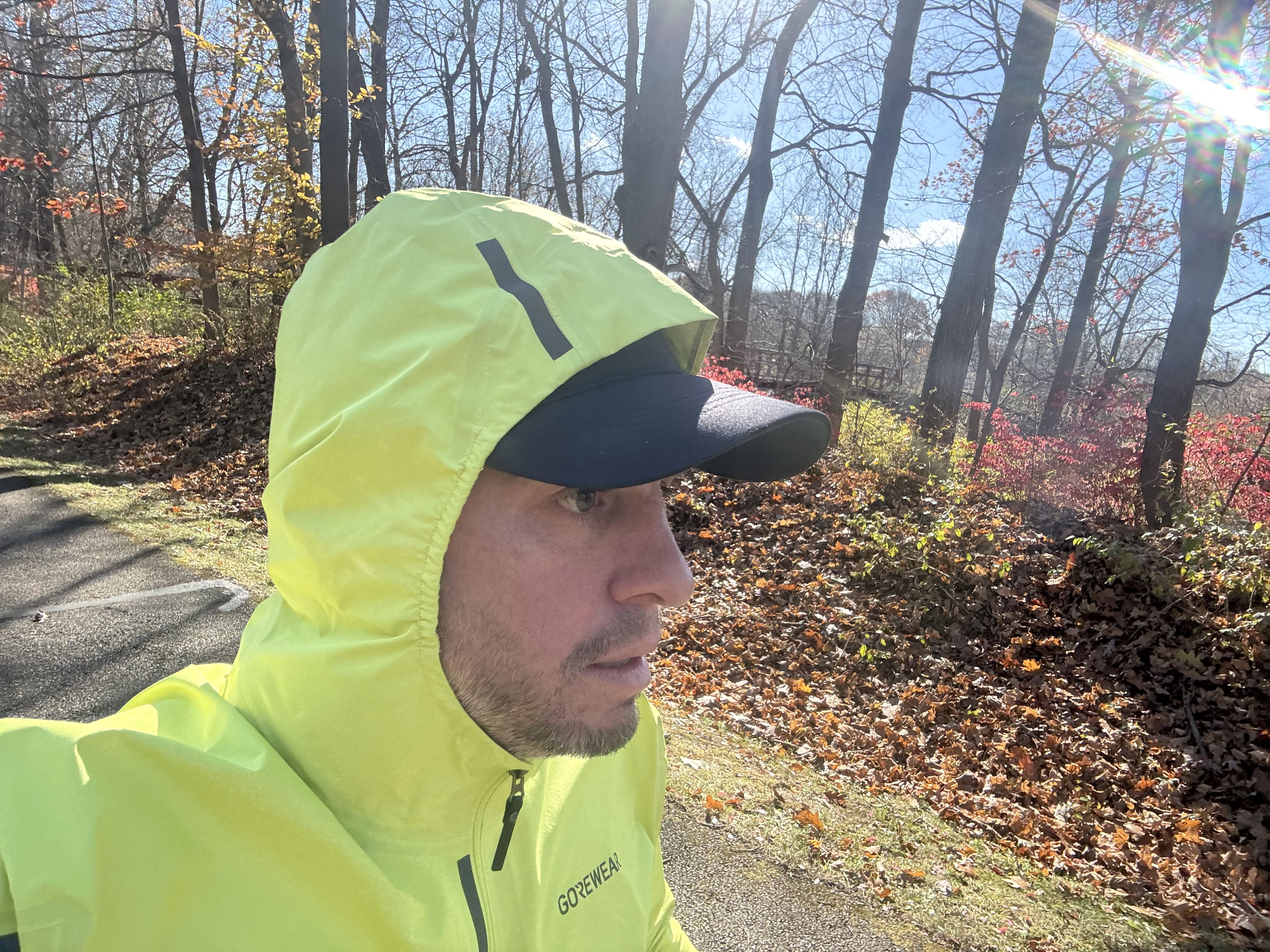
Hood system: The hood is one of the Concurve’s standout features. When worn fully zipped, it stays secure and doesn’t interfere with peripheral vision. A single rear drawcord allows for adjustment, though neither tester found it necessary in most conditions.What truly separates it from typical running shells is the magnetic hood retention system on the back panel. When the hood is down, it snaps neatly into place and stays there, eliminating flapping, bouncing, and excess fabric noise. This detail matters more than it sounds. Hooded shells often become distracting when worn down, especially in windy conditions or when paired with stiff waterproof fabrics. The Concurve avoids that entirely.

Abigail Lock
"The magnetic hood is such a small detail, but it completely changes how enjoyable a hooded jacket feels while running. No flapping, no noise, no distraction."

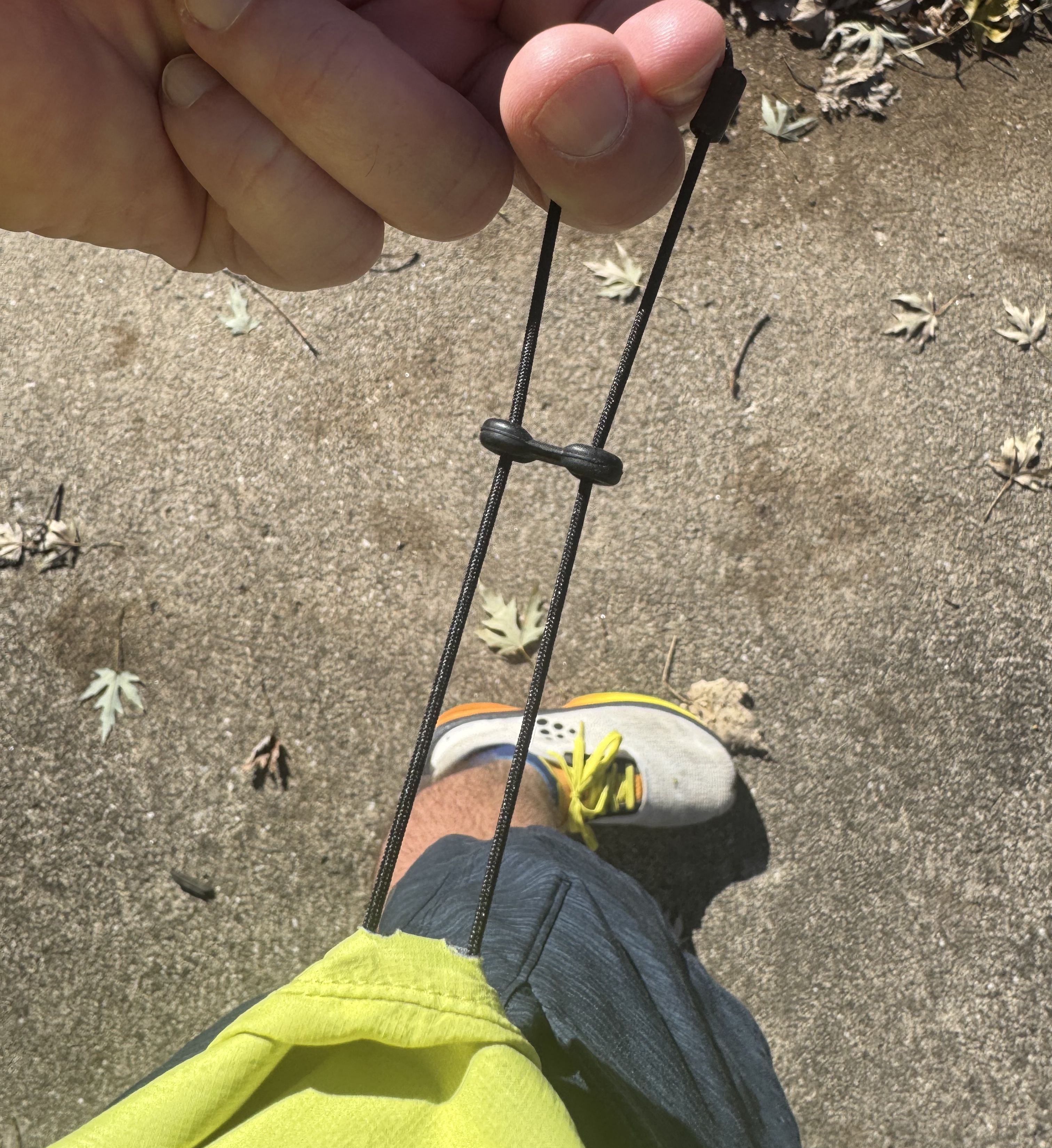
Cuffs & hem: The elastic wrist cuffs are soft, low-profile, and effective at sealing out rain. They’re comfortable against bare skin and don’t dig in when layered over gloves, an underrated feature during long winter runs. The hem uses a lightweight, one-hand-adjustable cinch system. David found this helpful for managing the slightly longer torso length when sizing up, while Abby noted that the longer cut could feel excessive for smaller frames (expanded further in the fit section).

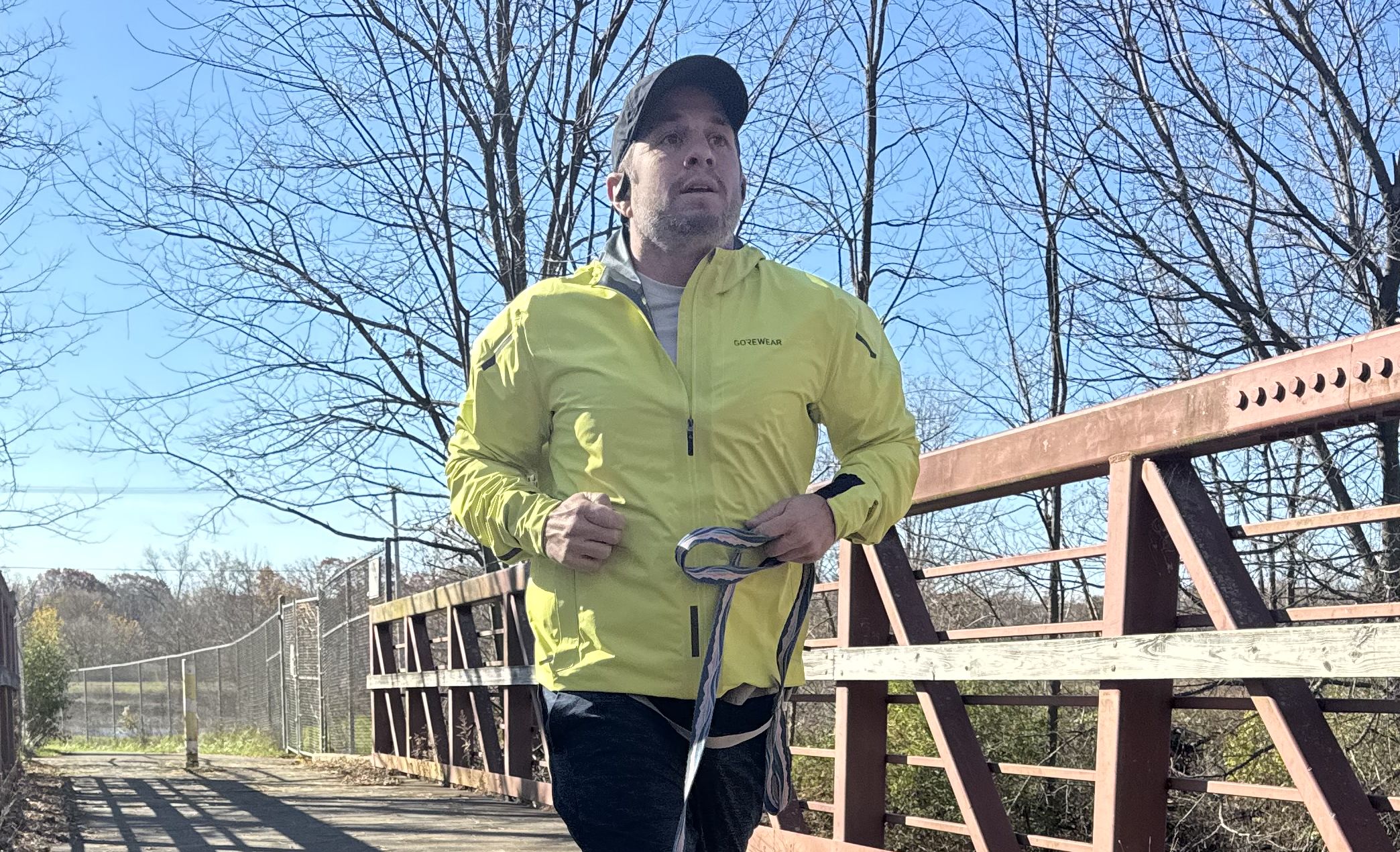
Visibility: David's test color (Lime Yellow) strikes a balance between visibility and aesthetics. It’s not harsh safety-vest neon, but it stands out well in low-light conditions and overcast weather. Reflective detailing is strong enough for early morning or night runs and adds confidence for roadside training. Abby's test color (graphite) retains reflective elements against the more subdued gray.

Overall weather performance takeaway:

  • Waterproofing: excellent
  • Wind blocking: excellent
  • Construction: premium, with clean seam taping and smooth-running zippers
  • Design execution: clearly runner-focused, not just a generic rain shell

Where opinions begin to diverge is not in whether the jacket protects from weather, but in how comfortable that level of protection feels once internal heat and moisture begin to build.

Breathability and best-use window

Concurve GORE-TEX Jacket Review
Testing the hood fully zipped on a cool run. The hood stays secure in motion.

The Concurve’s biggest limitation is also the most predictable one: heat management.

David Moore
My biggest complaint is the lack of vents. For a high output athletic jacket, it would be great to have a better way to dump excess heat.

As a fully waterproof GORE-TEX shell with no pit zips or mechanical ventilation, the jacket prioritizes keeping weather out, not dumping heat quickly once effort rises. Both testers found that internal warmth and moisture can build fast, even in relatively cool conditions.

In Northeast Ohio testing, David found the jacket most comfortable during steady, easy-to-moderate runs in cold rain, with its sweet spot landing roughly between 30–50°F. Within that range, the jacket excels at maintaining warmth and dryness without feeling overly restrictive. Above that, especially during harder efforts, overheating becomes the limiting factor.

Colorado testing narrowed that window even further. At higher elevation with stronger sun exposure and drier air, Abby consistently found the jacket began to feel uncomfortably warm as temperatures approached 40°F, even on overcast days. Direct sunlight accelerated heat buildup dramatically, turning the Concurve into “too much jacket” far sooner than temperature alone would suggest.

In practice, this makes the jacket best suited for:

  • Overcast or stormy days
  • Cold rain or wind-driven precipitation
  • Lower-intensity training efforts
  • Environments where weather protection outweighs ventilation

And less suitable for:

  • Hard workouts
  • Variable-intensity runs
  • Sunny winter days
  • Situations where layers are frequently shed

Below about 30°F, both testers noted that conditions often shift toward snow, where softer, more breathable fabrics or insulated layers can sometimes be more comfortable and versatile.

Because the jacket traps heat and moisture efficiently, both testers recommend pairing it with a true moisture-wicking base layer. Cotton or heavier fabrics can quickly feel clammy once sweat accumulates, while lightweight synthetics or performance merino help manage internal moisture more comfortably.

Abigail Lock
"This jacket requires a wicking base layer. Once moisture builds up inside, it takes a while to move out."

While the Concurve’s optimal running temperature range is narrow, it becomes much broader when viewed as a storm shell rather than a daily trainer layer. For mountain running, long trail days with unpredictable weather, cool-weather cycling, hiking, and even backcountry skiing, the jacket’s weatherproofing becomes an asset rather than a drawback. In those scenarios, protection and safety outweigh breathability, and the Concurve’s design makes far more sense.

David Moore
I'll definitely use this as a shoulder season cycling shell when inclement weather is a possibility. I sized up to large to accommodate the slim fit and the extra length will be perfect while on the bike.

Fit, Feel, & Quality

Concurve GORE-TEX Jacket Review
Close-up of the lightweight cord and adjuster used for the hem cinch — simple, functional, and easy to adjust on the move.

For a fully waterproof shell, the Concurve feels impressively natural while running. Both testers noted that movement remains unrestricted and the jacket avoids the stiff, crinkly, “trash bag” sensation common in heavier rain shells. The cut clearly favors running mechanics over casual or general outdoor use.

David Moore
"The freedom of movement is excellent. Nothing bunches in the shoulders and arm swing feels totally natural."

At just 7.1 ounces, the jacket also feels appropriately lightweight on the body. It never creates a dragging or top-heavy sensation, even when wet, and disappears more than expected once running settles into rhythm.

Men’s fit (David): David tested a size Large after intentionally sizing up, noting that the jacket runs slim through the torso and shoulders. The larger size provided comfortable room for light layering without restricting movement, though it did result in a slightly longer torso length. Sleeve length and cuff placement were highlights, sitting cleanly at the wrist and staying secure without bunching. Overall, the fit felt athletic and dialed for lean builds, but potentially restrictive for broader or heavily muscled runners.

Women’s fit (Abby): Abby tested a women’s Small (typically wears XS) and found the jacket ran long in the torso and boxier than expected for a runner-focused shell. While the extra length could benefit cycling or colder, windier conditions, it felt excessive for her frame (5'5", 106 lb) and detracted from the otherwise streamlined design.

Sizing down would likely provide a more tailored, performance-oriented fit for smaller runners or those who don’t plan to layer heavily underneath.

Abigail Lock
"I should’ve sized down. The women’s small felt long and a little boxy on me—an XS would’ve been much more streamlined."

Several small design choices meaningfully improve long-run comfort:

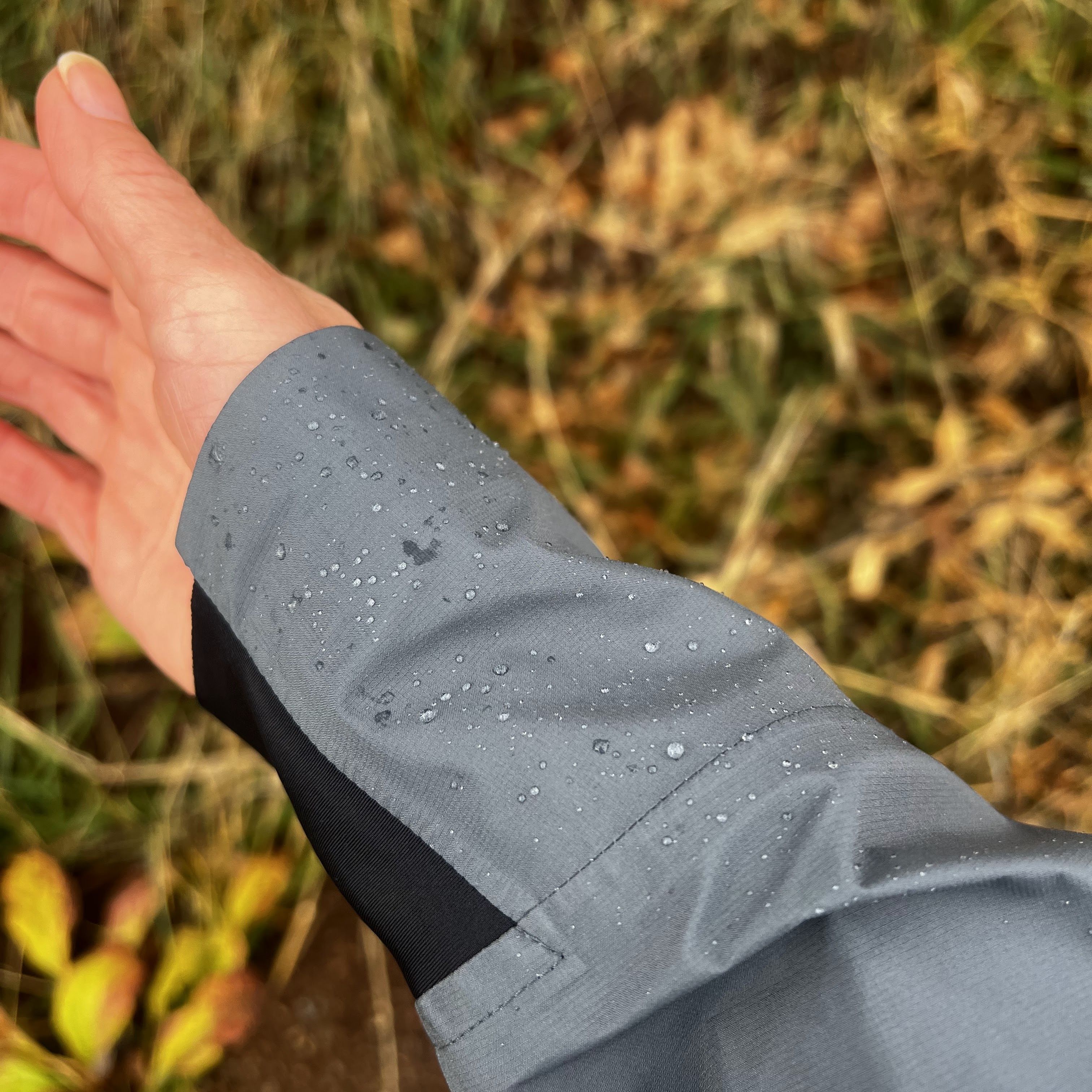
  • Soft elastic cuffs seal out rain without digging into the wrists, even when gloves are layered underneath. The soft cuff material also allows for easier cleaning of glasses/goggles or wiping of sweat. 
  • The GORE-TEX fabric, while still producing some noise, is noticeably softer and quieter than heavier hard shells.
  • The magnetic hood retention system eliminates bouncing, flapping, and excess fabric noise when the hood is down—making the jacket far less distracting than most hooded shells during steady running.

Despite offering true GORE-TEX protection, the jacket packs down surprisingly well. David found it easy to carry in a vest during long winter runs when rain was uncertain. Abby confirmed it folds compactly enough to fit into her running belt, even during warmer runs when the jacket needed to be shed mid-effort. This level of packability makes the Concurve viable for long trail runs, mountain days, and variable forecasts where carrying a shell “just in case” is non-negotiable.

With the Concurve's premium pricing ($270 MSRP), Gorewear didn't skimp on materials and design. The jacket has clean seam taping, smooth zippers, and durable fabric that inspires confidence against brush, wind, and repeated packing/unpacking.

The Concurve is firmly a high-end piece, but both testers agreed it feels purpose-built rather than overdesigned—engineered to survive hard use in bad weather, not just look technical on a spec sheet.

How It Compares to Other Lightweight Rain Shells

Concurve GORE-TEX Jacket Review
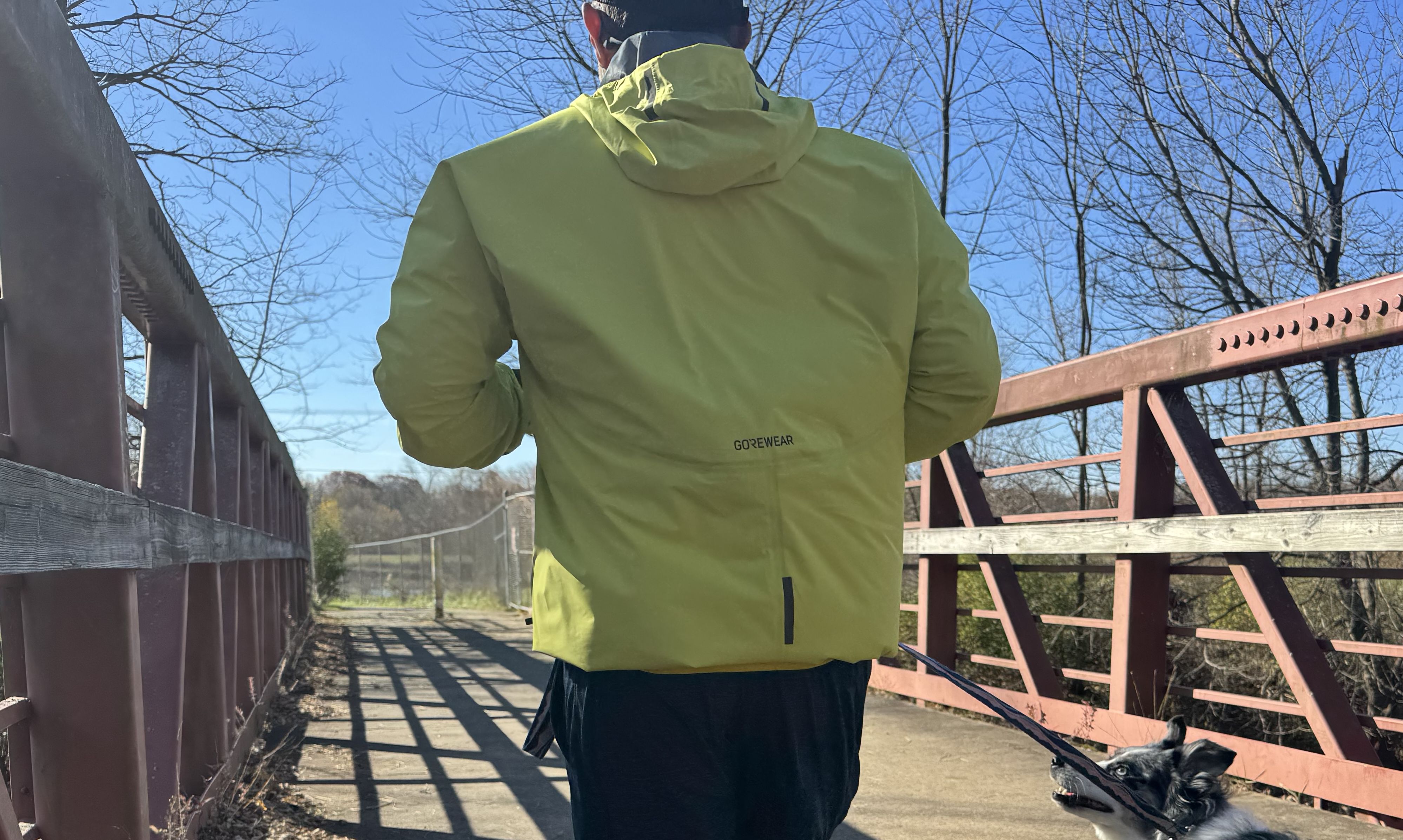
Rear view during a winter run shows the jacket’s slim cut and natural movement while running.

The Concurve sits in a different category than many of the lightweight running shells currently on the market, largely because of what it prioritizes.

A growing number of “race-ready” shells are designed to be as light and breathable as possible, even if that means sacrificing long-term waterproof performance. Those jackets shine during hard workouts, fast mountain races, and situations where overheating is the bigger concern than staying completely dry. In comparison, the Concurve is noticeably more protective. It blocks wind more effectively, shrugs off sustained rain without compromise, and feels far more confidence-inspiring when conditions deteriorate. The tradeoff is comfort at higher effort levels. Where minimalist shells feel barely noticeable, the Concurve makes its presence known once body heat builds.

There’s also a clear distinction between the Concurve and ultraminimal “emergency” shells that prioritize pack size above all else. Those jackets often function as just-in-case layers rather than something you’d choose to run in for hours. The Concurve packs down surprisingly well for a true GORE-TEX piece, but it’s built to be worn, not merely carried. Its hood system, cuff design, and overall structure feel intentional for real running rather than compliance with race gear requirements.

Abigail Lock
"For big adventure days in the high country, I care more about staying protected than shaving a couple ounces. This feels like a dependable safety layer."

Compared to general-purpose rain jackets, the Concurve again separates itself through fit and movement. Everyday shells tend to be louder, bulkier, and cut more loosely through the shoulders and torso. While they may offer features like pit zips, they often feel cumbersome once running form and cadence come into play. The Concurve’s tailored cut and articulation make it far easier to forget you’re wearing a hard shell at all.

Among running-specific shells from brands like Outdoor Research (Helium Jacket), Janji (Rainrunner 2.0), Inov-8 (Stormshell), and Salomon (Outscape Shell), the difference becomes more philosophical than technical. Many of those jackets aim for balance, blending moderate weather protection with improved breathability for mixed conditions. The Concurve makes a clearer choice. It leans decisively toward protection. In humid Midwest winters, that means staying dry and warm through steady rain. In the mountains, it means having a shell that still feels trustworthy when wind, cold, and precipitation collide. It also means accepting that the jacket will feel like too much on sunny days or during high-intensity sessions.

David Moore
"It’s not the most breathable shell I’ve worn, but it’s the most confidence-inspiring in real rain.”

In short, the Concurve is not trying to be the most versatile shell in every scenario. It’s designed to be the right tool when weather becomes the main variable rather than a mild inconvenience. If your training regularly includes cold rain, exposed terrain, or unpredictable mountain conditions, that focus makes sense. If most of your runs are fast, sunny, or effort-driven, a lighter and more breathable shell will likely feel better.

Who This Jacket Is For

David Moore
I would highly recommend the Gorewear Concurve GORE-TEX Jacket for runners who frequently train in cool, wet conditions between roughly 30–50°F and want true waterproof protection without sacrificing mobility or packability.

The Gorewear Concurve GORE-TEX Jacket is best suited for runners who regularly train in cool, wet, and windy conditions and want reliable protection without sacrificing mobility.

In the Midwest, it proved ideal for winter runs where steady rain and wind are common. In the mountains, it stood out as a shell you can trust when storms move in quickly and exposure becomes part of the run. It’s especially well suited for long trail days, shoulder-season training, and environments where weather can shift fast.

The jacket also works well beyond running, particularly for cool-weather cycling, hiking, travel, and backcountry skiing, where wind blocking and waterproofing matter more than ventilation.

Related: 13 Picks for Waterproof Running Gear

Where it makes less sense is for high-intensity workouts, racing, sunny winter days, or runners who prioritize breathability above all else. In those scenarios, lighter and more ventilated shells will feel more comfortable.

If you view weather as something to train through—not around—the Concurve is built for you.

The Gorewear Concurve GORE-TEX Jacket is available directly from Gorewear

This is an incentivized review

Both testers were provided with samples in exchange for their honest review.

Comments

Login to your account to leave a comment.

Subscribe

and never miss our new running content!
(you also score chances to win gear)
1.1k
WeeViews
Moderator
42 Followers
13 Following

WeeViews gets right to the heart of the running experience through micro-reviews on all the gear, events, gadgets, and nutrit...

More WeeViews

Image of Other Minus33 Heritage Elite WeeRun Socks
Full Review
Image of Other Mud Gear Trail Running Socks
Full Review
Image of Other WAIR: Mk1 Ultra: Seamless Thin Mens Boxer Brief
Full Review
Image of Other Merino Country Apparel
Full Review
Image of Feetures Elite

Recent Rundown

Search

Want to Earn Free Running Gear?

We Want to Give it to You!

Earn Free Gear by Sharing Reviews